John Salafia and Briana Smith got into boating a decade ago while living in Essex, Connecticut. The couple’s first boat was a 1989 Boston Whaler 13 with a 25-hp outboard. They sold the Whaler after a year-and-a-half and moved up to a 2003 Trophy 1802 walkaround with its original 125-hp Mercury. That boat got them out on Long Island Sound, where Salafia fed his appetite for saltwater fishing. They unloaded the Trophy and started a boat project on a fixer upper that didn’t end well and left them boatless.
In 2018, Salafia took a new job, and the couple moved to Newport, Rhode Island. One year later, they purchased a house in Wakefield, Rhode Island, and got married. With room for a boat, they began thinking about their next vessel. They were hoping to spend between $15,000 and $25,000, but this was during Covid, and boats were expensive. “The used-boat market was an absolute joke,” Salafia says.
Then he discovered pangas, the open, outboard-powered boats widely used throughout Central America, the Caribbean, Mexico and beyond. Pangas have a high bow, narrow waterline beam and shallow draft. The tall bow provides buoyancy and cuts through chop, while the narrow beam and flat running surface aft help the hull run up to 35 knots or more with a modest-sized outboard. Pangas were designed to launch through the surf with a couple of fishermen carrying nets or longlines, travel 40 to 50 miles, and bring back a sizable catch without using much fuel.
Salafia wanted to get offshore on a budget, and the panga made sense. He contacted Panga Sports, a Tennessee company that at the time offered a 22-footer with a 90-hp Honda on a trailer in the mid-$30,000 range. Getting his wife to spend more than $25,000, however, was a tall order, though he eventually got her hooked on the idea.
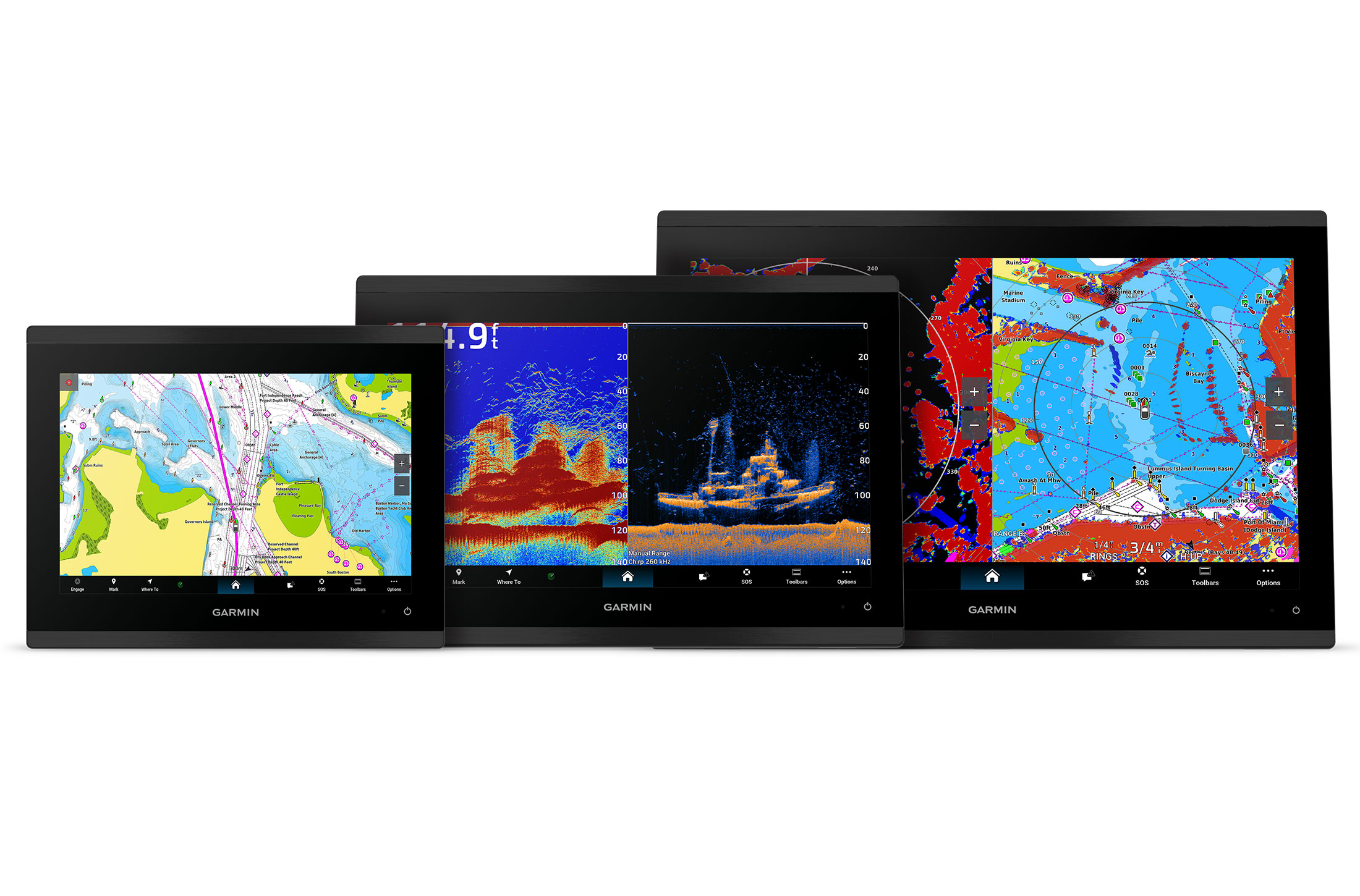
The boat, trailer and engine arrived in the spring of 2022, and except for electronics, it was ready to go. Salafia added a 9-inch MFD — he upgraded to a 12-inch within a year — and made some small improvements. They also added a Clarion stereo system.
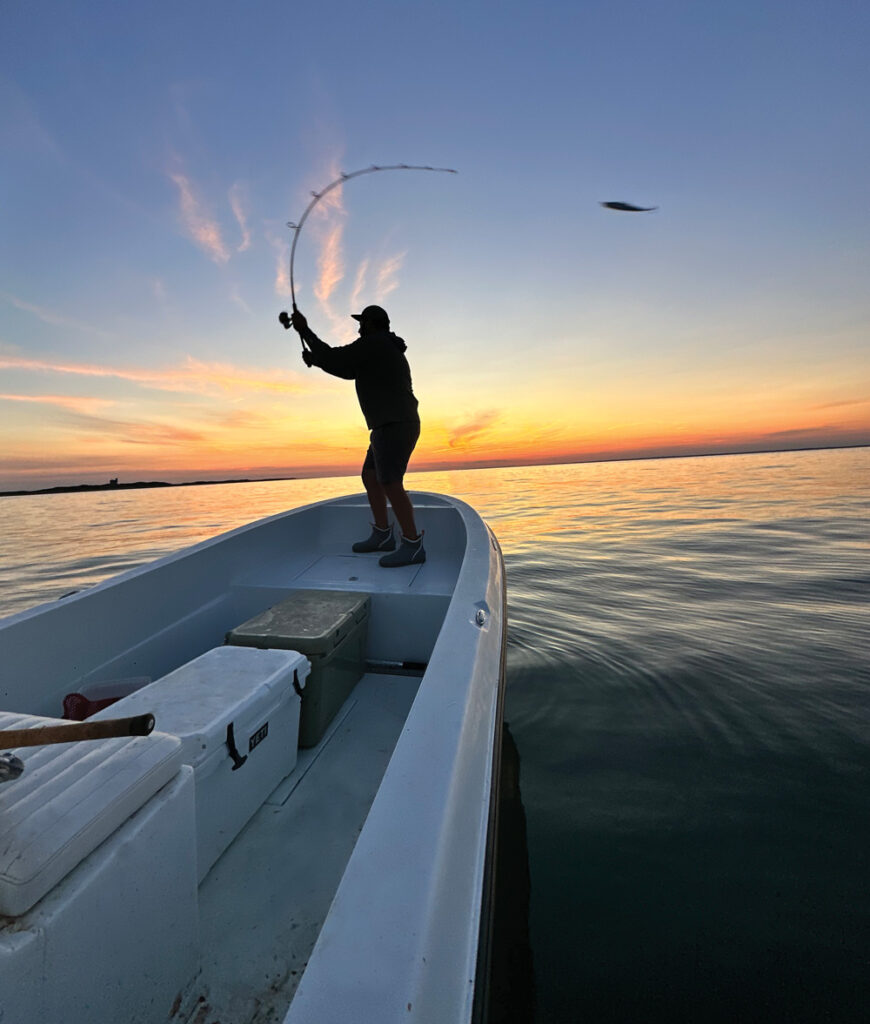
The couple has run the panga all over Rhode Island waters — to Jamestown, to the Newport Folk Festival, way up Narragansett Bay, even offshore to Block Island. They keep the boat in nearby Jerusalem on Point Judith Pond in a friend’s slip. Not only is it a huge financial break, but keeping the boat in the water lets Salafia go fishing at the drop of a hat. At about 26 knots, the boat averages 5 to 6 miles per gallon, and the 40-gallon tank gives them a 200-mile range. “The fuel efficiency is unbelievable, and the range is probably my favorite part,” Salafia says.
The panga has also lived up to its offshore reputation. “It’s a lot more seaworthy than it looks,” he says, but they pick their days. “If you have to drive into a 2- to 3-foot chop in a headwind, you’ll hate it, but it’s good downwind and in a quarter. The bow never dips. You can’t really beat it.”
The shallow draft allows the family — which now includes 3½-year-old daughter Nella — to beach the boat or go gunkholing. “We have a salt pond, and everybody likes to anchor and hang out,” Salafia says. “We can get into a foot-and-a-half of water.”
The panga gets a ton of use each season. “Overall, it’s been a good boat,” Salafia says. “I put this thing through hell, with no cracks or anything.”
Salafia has caught tuna and taken the panga past Tuna Ridge, a 30-plus-mile run, but he wants to venture farther. Though the 22 is doing the trick, Salafia is already thinking about a bigger boat, a 28-foot panga. Panga Sports doesn’t build a 28, so he’s looking at Imemsa or Eduradono, which have been building pangas since the 1970s. “That’s probably who we’ll go with when we get a bigger boat,” Salafia says.