The U.S. government is considering a rushed proposed rule to implement 10-knot speed restrictions for boats 35 feet and larger from Massachusetts to Florida. The slow-speed zones are part of the revisions to the Right Whale Vessel Strike Reduction Rule. However, whale strikes by recreational boats are extremely rare. There have been 24 known right whale vessel strikes in the last 24 years of which eight were attributed to boats from 35 to 65 feet.
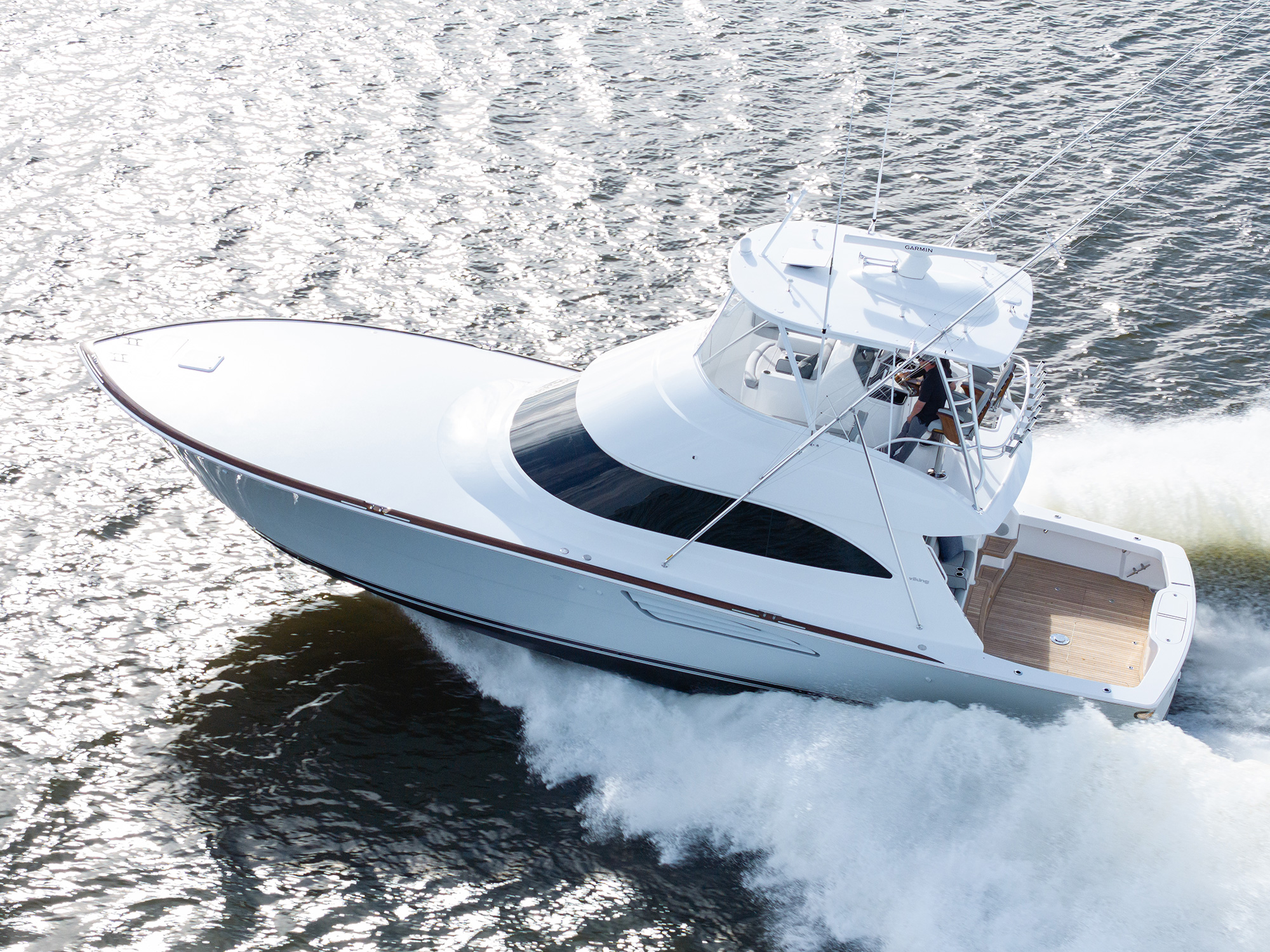
The National Marine Fisheries Service, an agency within the National Oceanic and Atmospheric Administration (NOAA), is proposing amendments to the North Atlantic Right Whale Vessel Strike Reduction Rule to reduce the likelihood of vessel strikes. The federal rule would broaden the current 10-knot speed limit to include boats 35 feet and larger (down from 65 feet); expand the zones from discrete calving areas to virtually the entire East Coast as far out as 100 nautical miles; and extend the go-slow mandate for up to seven months a year.
“The proposed rule, as written, would be the most consequential maritime regulation that we have ever seen imposed on the recreational boating and fishing sector,” says John DePersenaire, Director of Government Affairs and Sustainability for Viking Yachts. “It will affect not only boat owners but marinas, tackle shops, charter boat operators – basically all maritime-related businesses on the Atlantic Coast.”
The proposed rule was published without any engagement with the recreational boating and fishing community.
HOW TO HELP
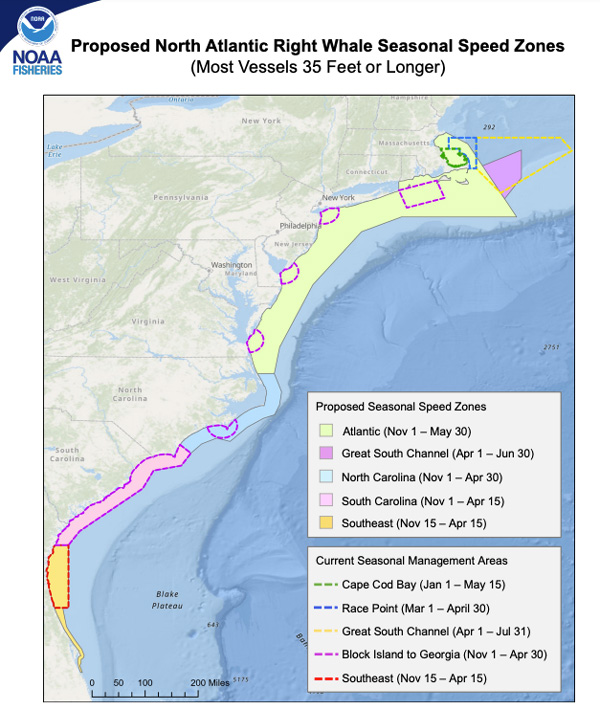 NOAA Fisheries is proposing to modify the boundaries and timing of current vessel speed restrictions along the U.S. East Coast and create proposed Seasonal Speed Zones.
The primary way to voice your concerns about the amendments to the North Atlantic Right Whale Vessel Strike Reduction Rule is via the Federal Rulemaking Portal. Click here to comment. You can also provide comments through various boating and fishing groups, such as the National Marine Manufacturers Association’s Boating United group and the International Game Fish Association.
All comments will be read and considered, according to NOAA’s Office of Protected Species, which advises participants to supply specific information about how the rule would impact their boating and fishing activities or business. You can also make suggestions for changes to the rule. The purpose in crafting these amendments is to ensure that the North Atlantic right whales are protected and do not go into extinction while placing as little burden on the mariner as possible, according to NOAA.
Given the limited amount of time for the public to weigh in on these rule changes, “It’s critical that you immediately contact your member of Congress and ask that they demand NOAA to put the proposed rule on pause,” says DePersenaire. “The additional time can be used to develop measures that seek balance between the needs of the right whale and our industry. Congress also needs to know that the rule has far-reaching implications beyond our sport. It will disrupt shipping and ports and exacerbate supply-chain issues and inflation.”
THE FACTS
The facts do not support the sweeping changes being proposed by NOAA. Since 1998 – 24 years – there have been 24 known right whale vessel strikes across 10 states. Of those, eight were attributed to boats from 35 to 65 feet.
“In our 58-year history, with more than 5,000 boats delivered, we have never had a report of our boats having an encounter with a right whale,” says Viking’s CEO Pat Healey. “And we would know because it would cause significant damage that would be repairable only by us.”
The odds of a vessel from 35 to 65 feet striking a right whale are less than one in a million, according to the American Sportfishing Association (ASA).
“The bottom line is this is far too consequential of an issue for it to be developed and implemented unilaterally with no meaningful input from our industry or the public,” adds DePersenaire. “Many of these impacts could have been eliminated or significantly reduced – while still reducing risks of vessel strikes – by working with fishermen and boaters.”
For an in-depth analysis and more information about the issue, listen to this ASA podcast.