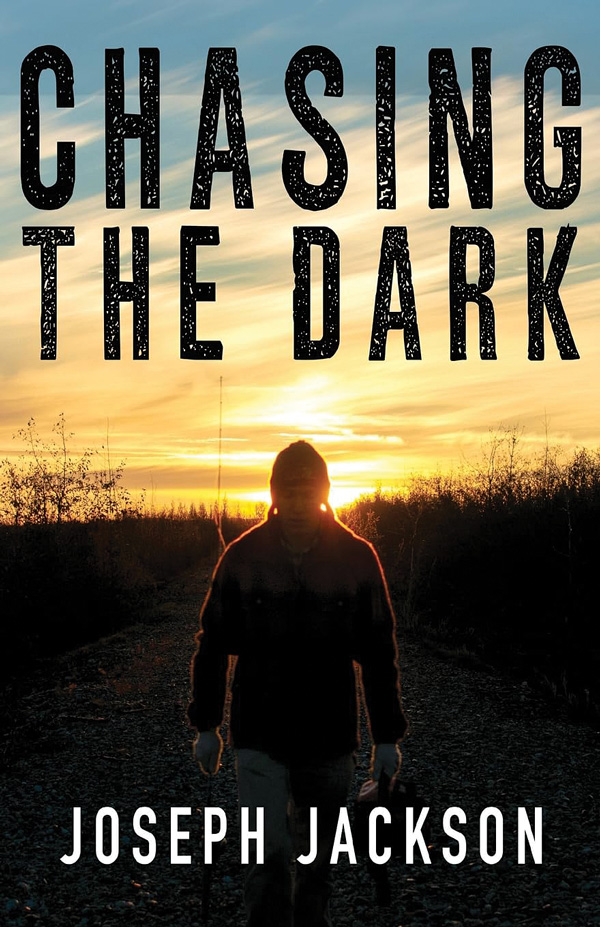
Chasing the Dark By Joseph Jackson (Epicenter Press)
Joseph Jackson frames the proclivity anglers have toward night, and the edges of night, in the introduction of his second book, Chasing the Dark, as he describes fishing for Alaskan burbot: “And it’s not just for burbot; name an animal, and chances are that it’s more active in the dark than in the daylight, or at least in the transitional periods of dawn and dusk. Snowshoe hares, for example. Or steelhead. There are biological reasons for this, of course, but all we really know is that, if you’re a serious outdoorsman, you should be in the woods or on a stream while this is going on. That’s how I’ve come to operate. That’s the only right way to do it.”
Those familiar with Jackson’s work will recognize the Alaskan landscape and the maniacal fishing habits detailed, as well as the advancement of his craft and maturation of meditations on topics such as the possibility of fatherhood, teaching and rural living. Those moments that often happen in the dark.
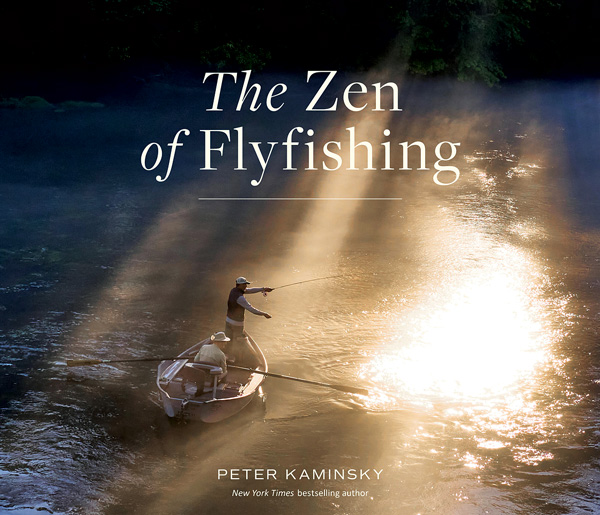
The Zen of Flyfishing By Peter Kaminsky (Workman)
Peter Kaminsky has the sensibilities of a poet when it comes to his angling collections. In his most recent book, The Zen of Flyfishing, Kaminsky weaves the missives of such angling and literary luminaries as Nick Lyons, John McPhee, Annie Proulx and Roderick Haig-Brown with stunning photography and his own humorous, entertaining and insightful essays. A true trifecta.
It’s this compression, the skill to rely on an image, to use three words instead of six, that makes this book feel poetic. The form Kaminsky has chosen shows the reader that the moments that make up a day of fishing, in turn make up seasons of fishing and thus a life of fishing. When has an angler achieved a more complete realization of themselves than on the water casting to fish? Kaminsky celebrates that lucidity. (See Page 32 for an excerpt.)
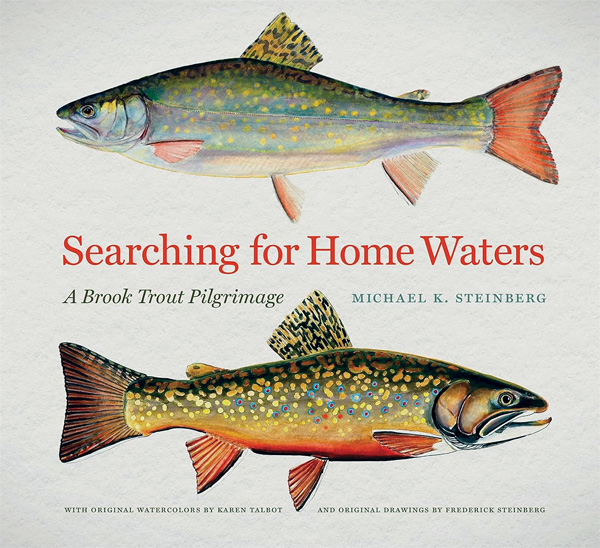
Searching for Home Waters By Michael K. Steinberg (University of Georgia Press)
Anglers love place. For many of us, no matter how exotic our travels are, the pull of familiar water and fish is a gravity we cannot combat. Michael K. Steinberg, a professor of geography, is an angler obsessed with brook trout and their long home of the Appalachian Mountains. A large home water, indeed. By blending biology, environmental history, original watercolors by Karen Talbot and narratives of chasing brook trout from Georgia to Maine, Steinberg achieves a detailed catalog of the status of these fish, conservation efforts, and the wilderness brookies hold with their presence.
“Wilderness is a place where native species still dominate, where one can find peace, meaning and some mystery in the natural landscape,” Steinberg writes in Searching for Home Waters. “These places are the mountaintops, gorges and remote ponds where colorful brook trout still hover in cool, dark waters. If wild and native brook trout are still out there, wilderness and clean, pure water abide.”
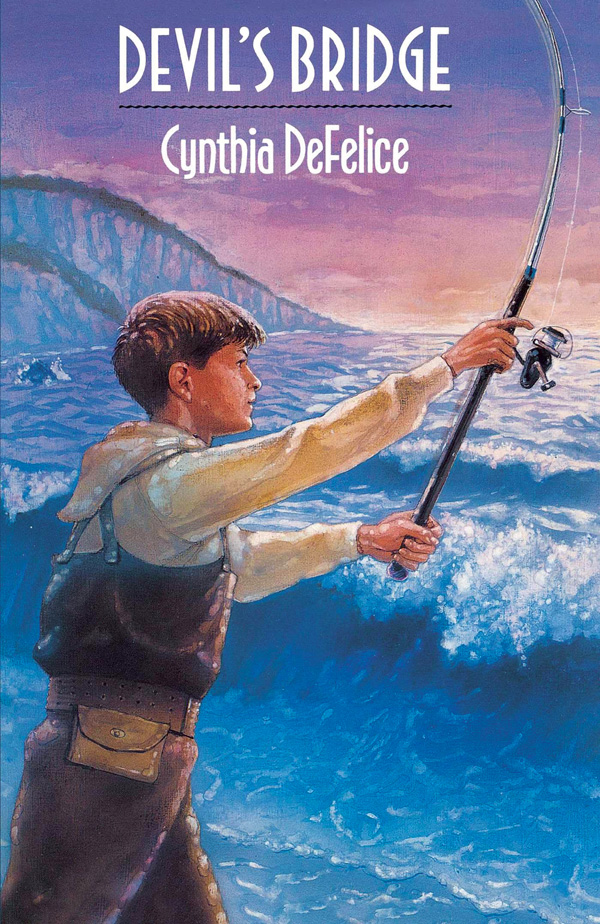
Devil’s Bridge By Cynthia DeFelice (MacMillan Publishing Co.)
I was gifted Devil’s Bridge after my recent move to New England, which also means my impending foray into surfcasting. It couldn’t have been a more fitting gift. Published in 1992, this young-adult novella follows 12-year-old Ben as he copes with the loss of his father and his mother’s overprotective tendencies as he strives to become a striper-fishing legend. Ben’s father holds the record for the largest striper caught during the annual Striped Bass Derby on Martha’s Vineyard at 66 pounds, 7 ounces, and with a year having passed since his death, Ben feels the weight of expectation to succeed.
Themes of legacy, conservation, place and honor bolster this exciting book. One that should be read by young and old surfcasters alike.