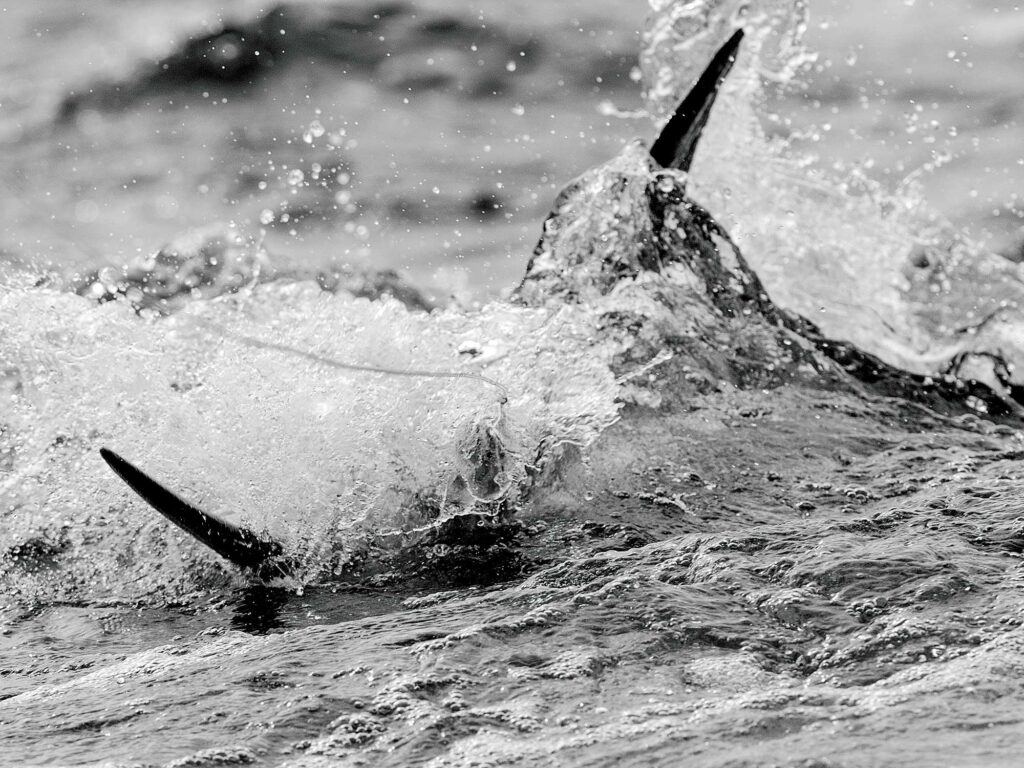
Growing up in Vancouver, British Columbia, I was always on or around the water. My dad was a tugboat captain, and the marine environment was my favorite thing to photograph.
I worked as a photographer for a fishing lodge in northern British Columbia on and off for 15 years, and when the company opened an offshore operation in Panama in the early 2000s, they offered to send me south. I was shooting for the Vancouver Canucks as a backup photographer at the time, and the NHL team made it to the Stanley Cup Finals. I had to pick between game seven or Panama. I found out that rather than shooting the final game of the series, I was going to be stationed under the arena doing edits for the main photographers. So I spoke with one of the veteran shooters about the trip, and he said, “Just go! This is a great opportunity.”
I made my choice.
I flew to a remote, little island in the Las Perlas Archipelago, got picked up by a panga and headed out to the boat. It was May 2011. I’d only ever shot salmon fishing, pro hockey and weddings.
Marlin on the Wire
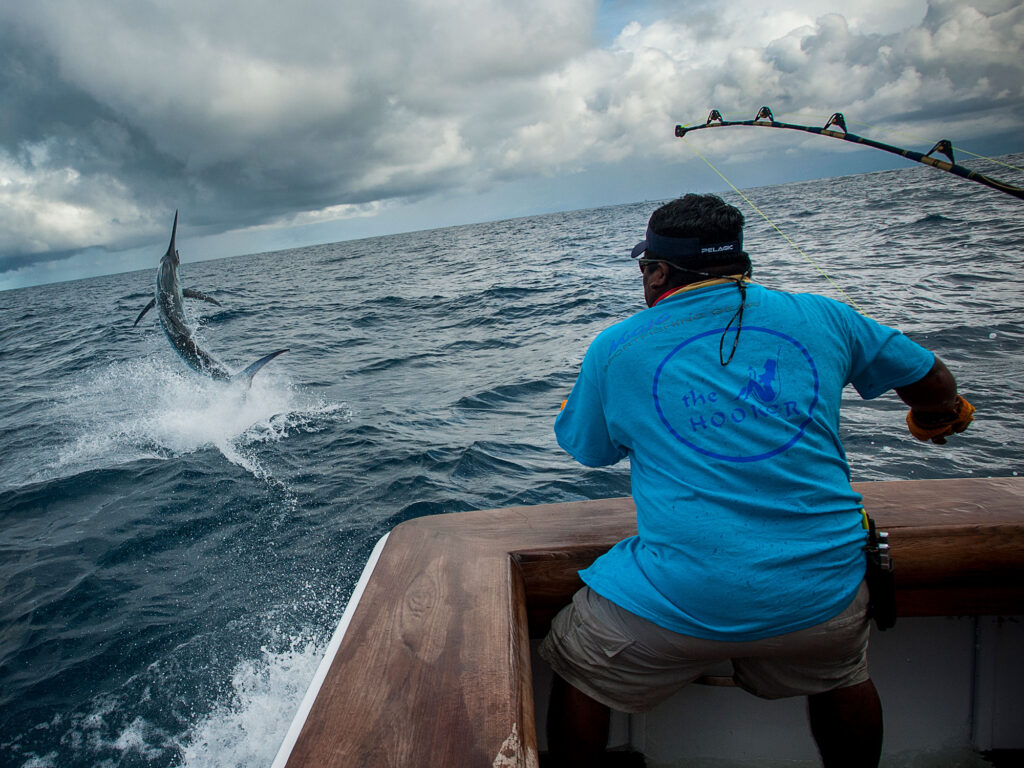
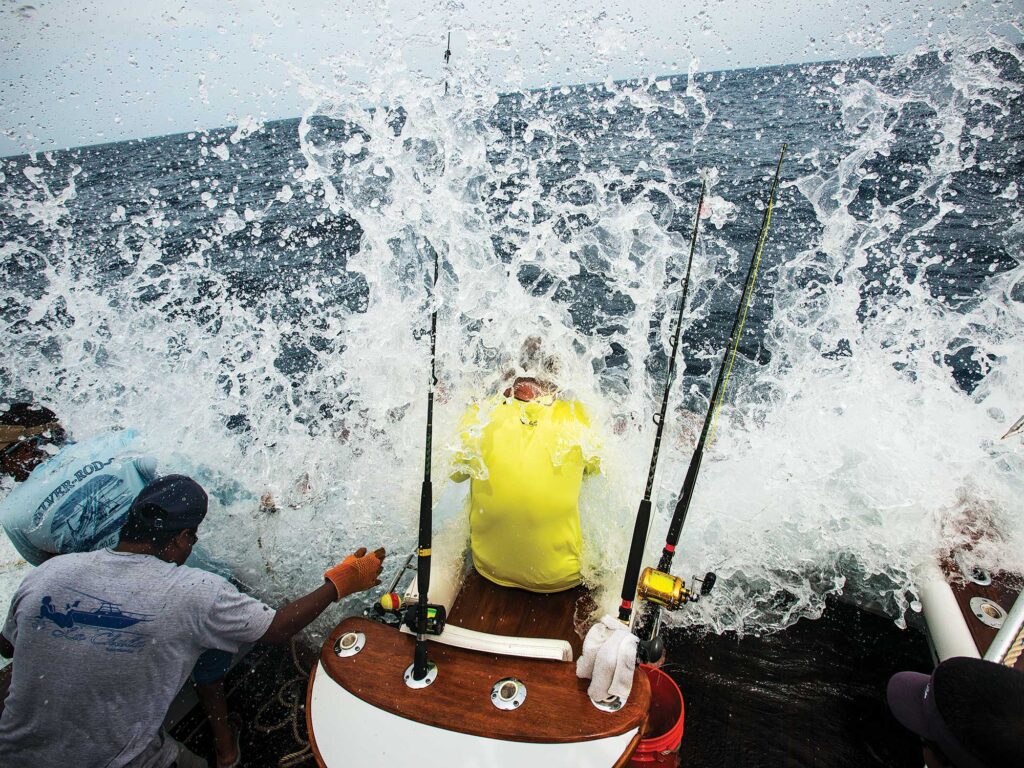
I got spoiled by the first marlin I ever saw. We were following Hooker, the famous, record-setting bluewater boat that the lodge I was working for had chartered. We had lines in the water when the captain radioed our boat saying they’d hooked up. We rolled over to them, and the mate had the fish on the leader. Then the fish jumped. It was the first time I’d ever experienced a jumping marlin.
The black marlin porpoised right in front of us, and I was able to capture the action of the fish and the reactions of the guys in the cockpit. It’s one of the best marlin photos I’ve taken. I’ve never forgotten that marlin’s eyeball looking at me. I was shooting a Nikon D3 at the time, a 12-megapixel camera. It was a serendipitous moment in my life. That set of images helped catapult my career as a fishing photographer.
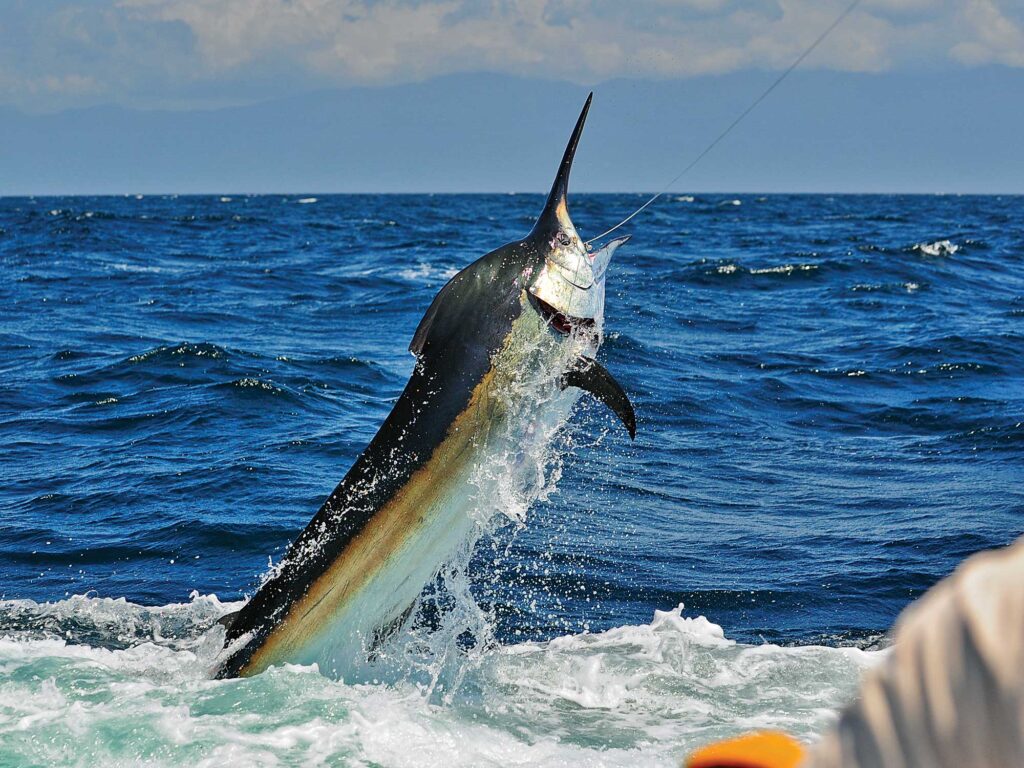
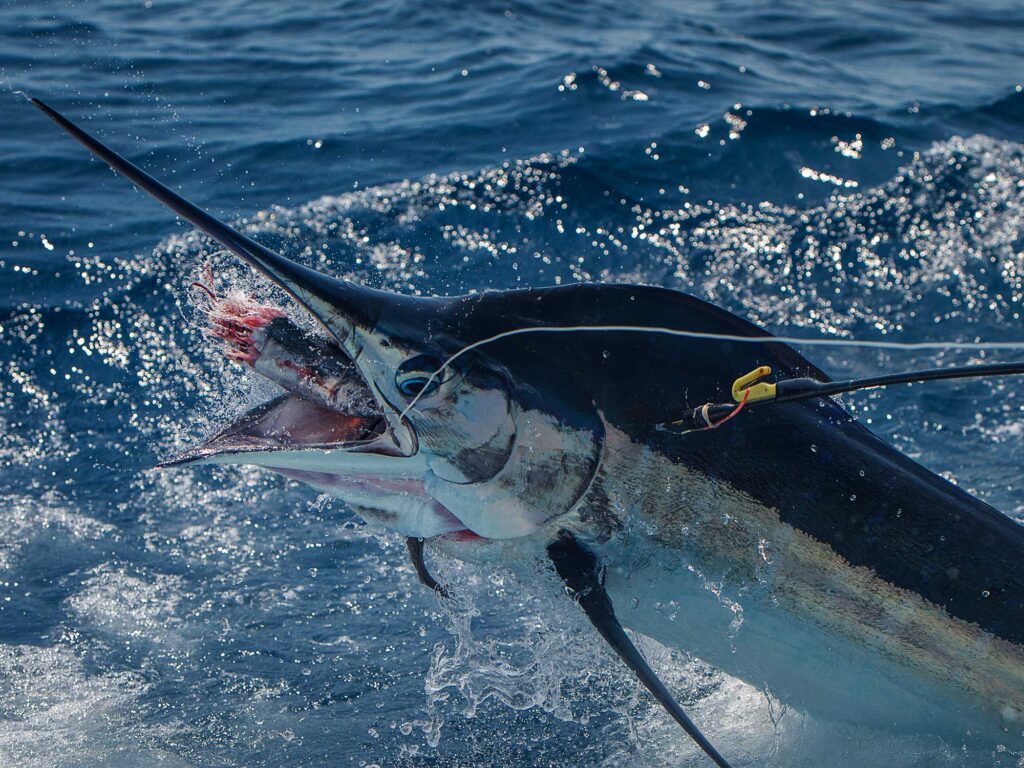
After a couple of weeks, I went home to Canada and returned to Panama in 2012. The captain of Hooker, Wade Richardson, was also running a mothership operation and happened to be anchored next to us. Wade was spending 200-something days a year fishing in Panama. He would anchor up in various areas and had brought his clients to our mothership for dinner. Someone had shown him the marlin photo I took. “I heard you took this photo,” he said. That was the first time I met him, and we talked about the photo and the very first marlin I had ever seen. Life is weird — sometimes you say yes to something, and it leads you down a path you were meant to take.
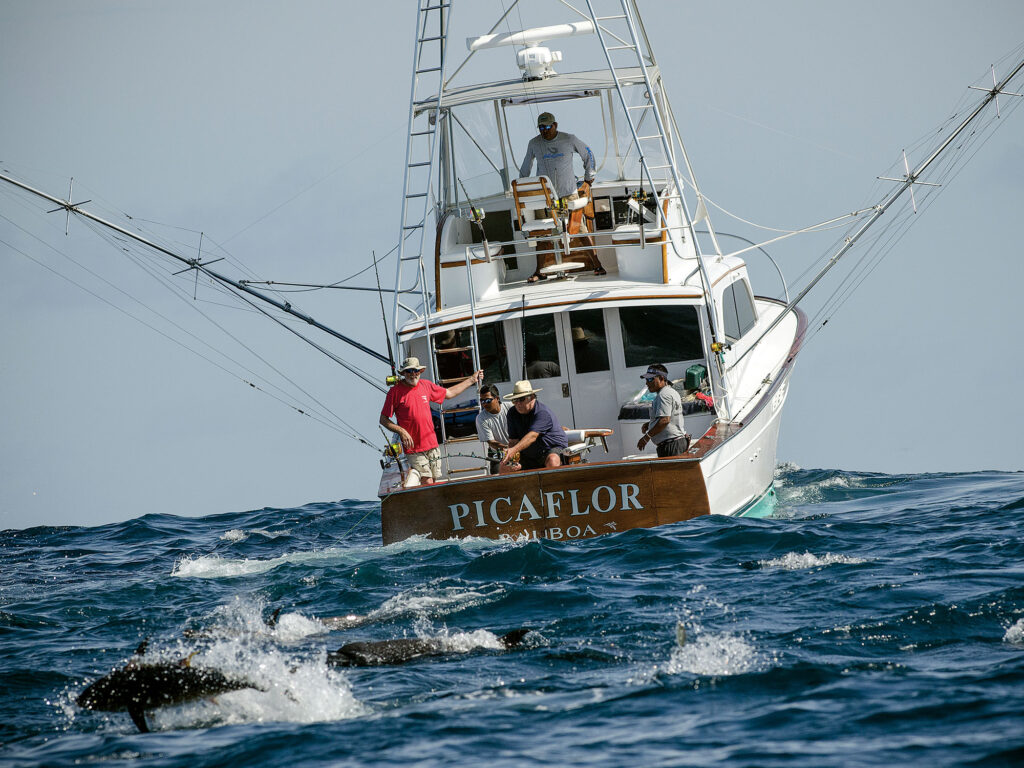
I came back to the lodge a few times, and Wade happened to be in all the same places. He and I started dating and I began spending a lot more time in Panama. I was in my late 20s. In 2012, I began working with Wade. We were doing about 200 days a year in Panama till 2015. It was a fun time. Wade and I married in the summer of 2015.
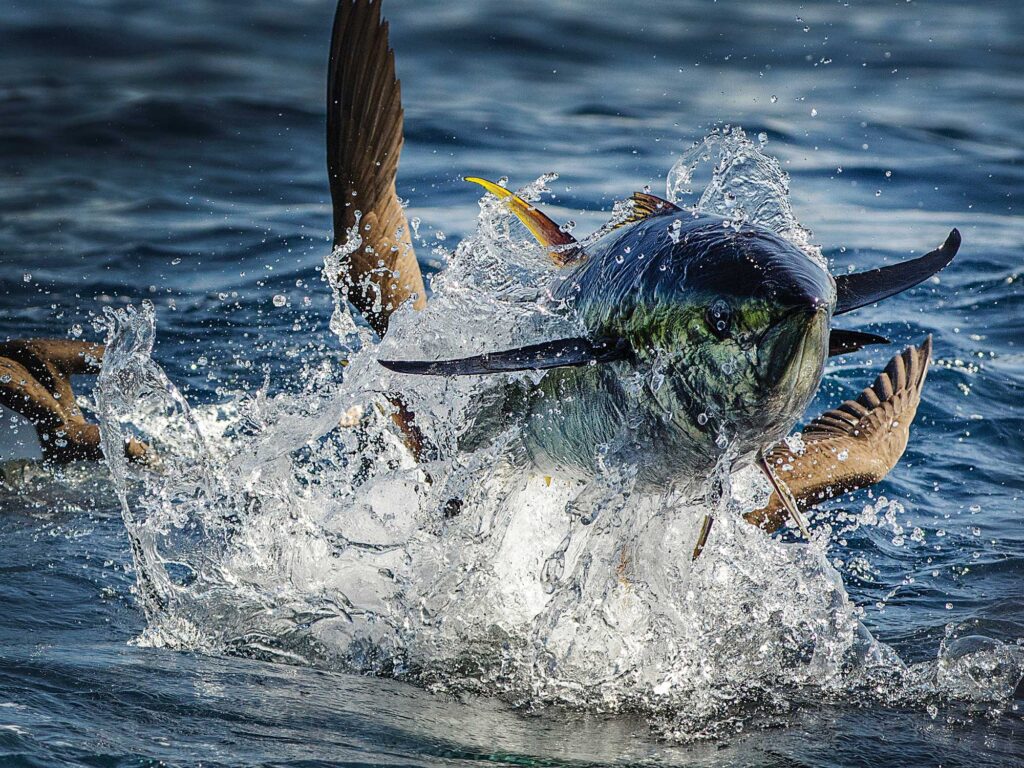
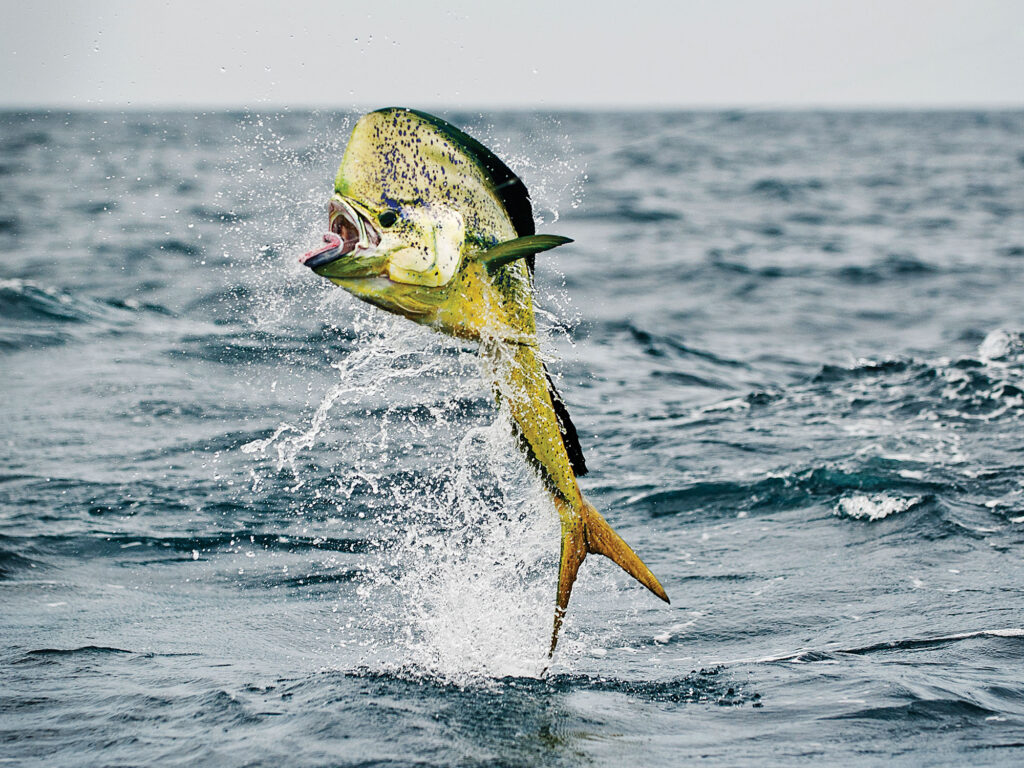
My fishing images improved immensely in Panama. I approached fishing the same way I shot hockey. The NHL moves at a super-fast pace. You have to be quick and anticipate what’s going to happen before it happens, similar to fishing for marlin. You learn where the fish is about to jump. You can tell by looking at the line, how it raises and how the mates grab the leader. I could tell which way a fish would go.
Capturing the Culture
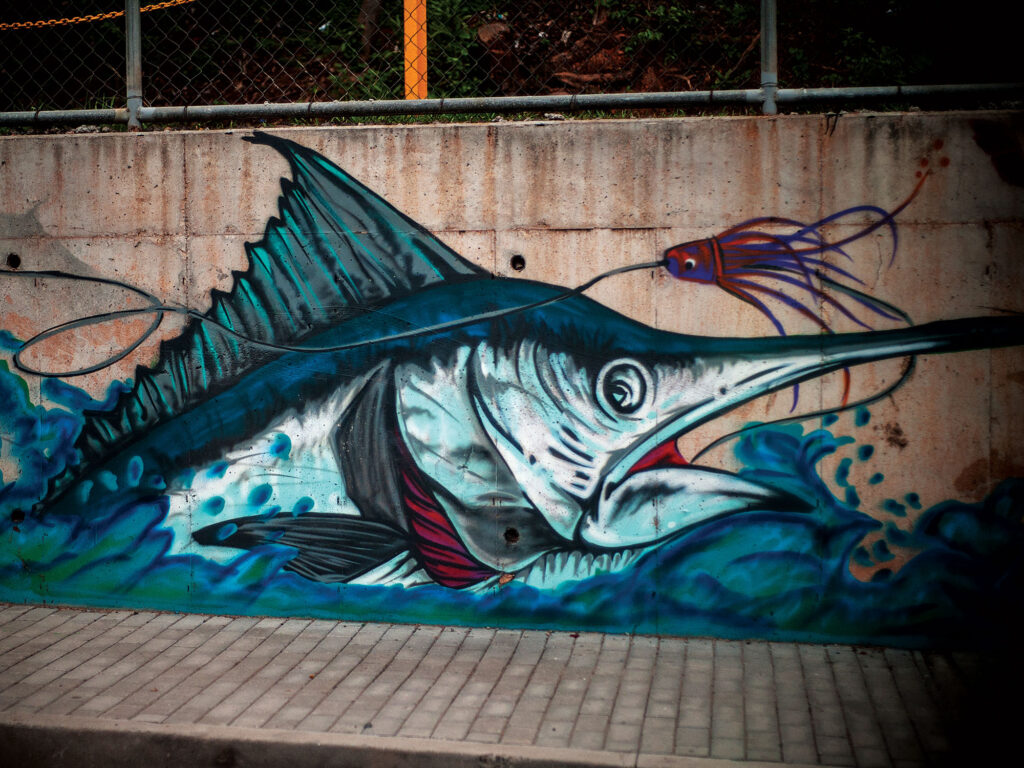
I built up a catalog of images and started publishing photos in fishing magazines; I’m very passionate about this side of my work. I lean heavily on the journalistic side with my photography. I like to capture life unfolding in front of me. When I discovered Panama’s historic district, Casco Viejo, it was absolutely stunning — all types of people walking around, old buildings, historic architecture and the ocean. I started documenting everything — street photography, in a way.
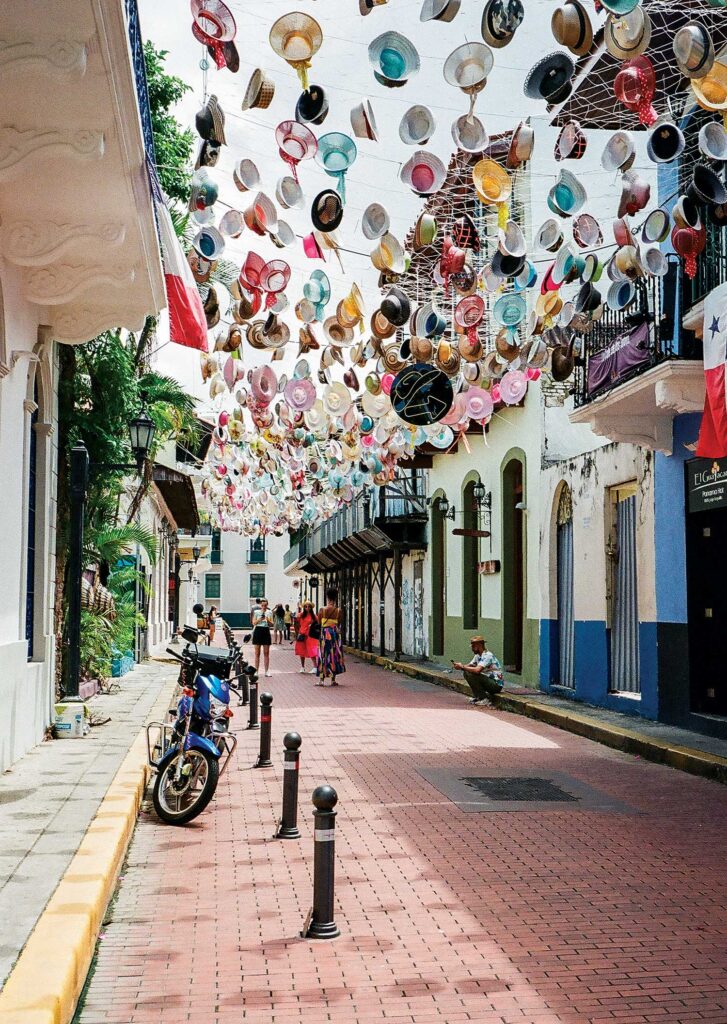
Because of the canal, Panama is home to cultures and people from all around the world. It’s a melting pot, and you see it all over the country. Many anglers come just to fish, but they’re missing out. Yes, you’re going there for world-class fishing, but there’s so much to explore and learn about Panama’s history and its indigenous people.
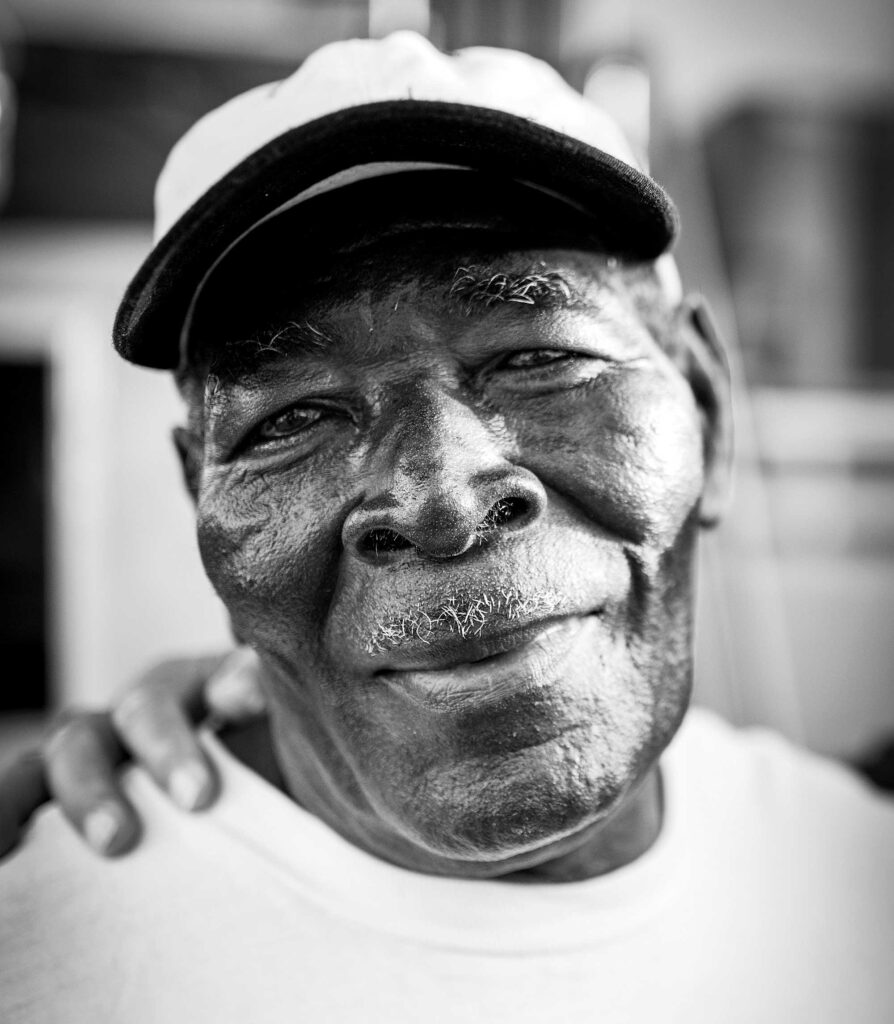
Piñas Bay, home to Tropic Star Lodge, has a rich culture. Many locals live in thatched-roof, platform homes. They make ornate baskets using local plants. I think my in-laws, my husband and our family might have the largest basket collection outside of Panama.
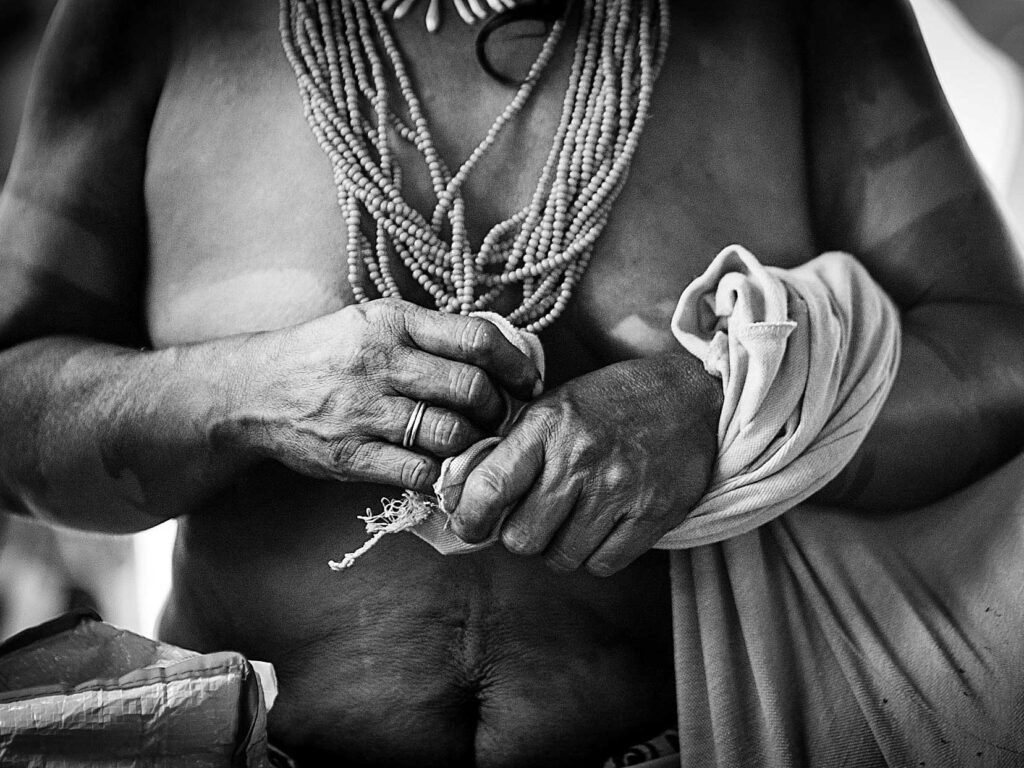
It’s a really interesting culture, and we got to see so much of it because of the local guys who worked for us. I’m so grateful for those experiences, but I wish I had photographed it 50,000 more times.
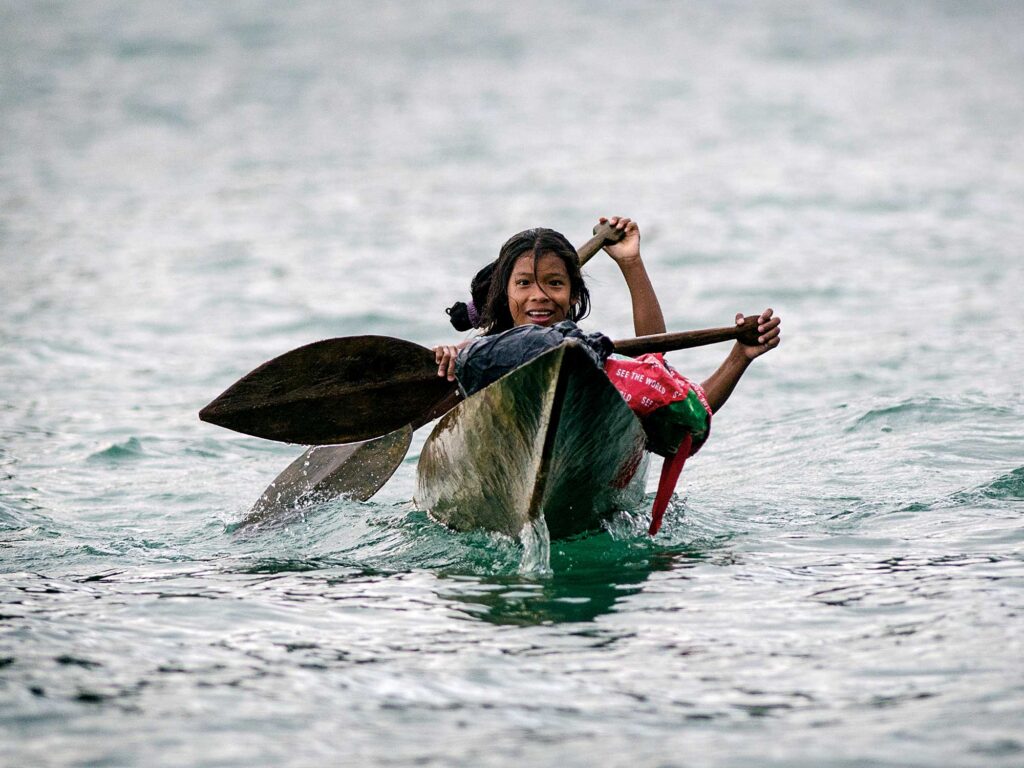
Put me in any place, and I can figure out how to capture it. Panama lit a fire within me to harness everything I could in my photos. Yes, the fishing is exceptional, but experiencing Panama off the water makes time spent there even more worthwhile.