A couple and their 21-month-old son were rescued in June after activating their personal locator beacon when a sudden storm overwhelmed their boat during an inshore fishing trip on Christmas Bay, near Freeport, Texas.
In a video documenting the ordeal, Wesley Clepper hailed his ACR Electronics PLB as “life-saving” and urged all boaters to carry a beacon when adventuring outdoors.
The family headed out early on the morning of June 14, with the forecast predicting about a 30 percent chance of rain. After stopping at a sandy beach, Clepper noticed a dark, black cloud quickly approaching from the east, with winds increasing to 25 to 30 mph and a worsening sea state.
They aimed for the boat ramp, about 3.75 miles away across the bay, but were hit by gusts of 40 mph, forcing Clepper to head for the nearest land in 3.5-foot waves.
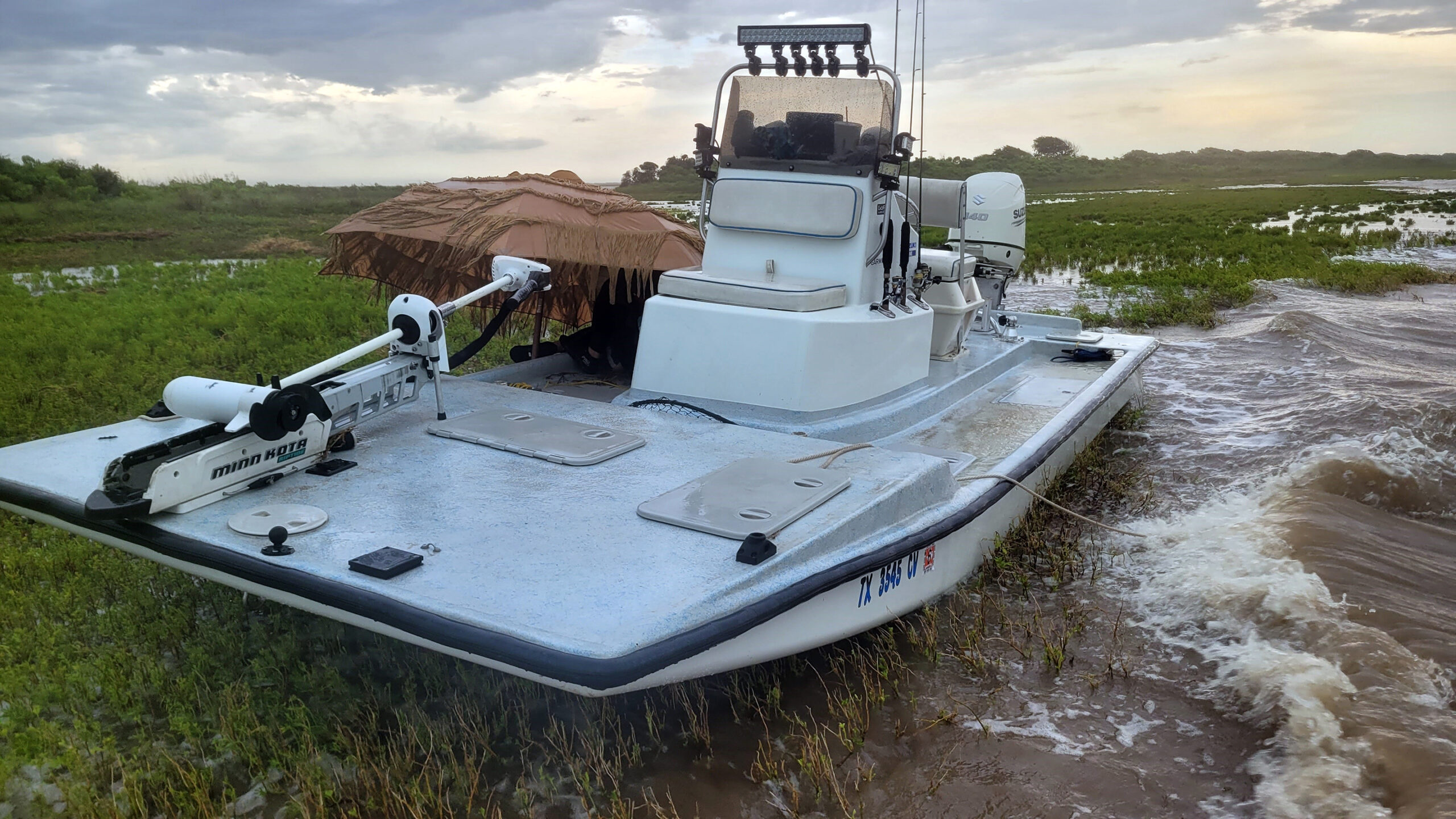
“Once we were about 40 feet from land, I got into the 1-foot-deep water with my two anchors,” Clepper said. “After fighting the waves for 15 minutes while standing on the anchors, I was exhausted. The boat finally washed up on the land, and walls of water kept crashing over the boat until it [filled]. I knew we were not going to die because we reached the safety of land. That’s when I activated my PLB.”
After three to four minutes, Clepper received a call from the Coast Guard out of New Orleans, but the call dropped. Shortly after, the Brazoria County Sheriff’s Office called to say they were contacting the Gulf Coast Rescue Squad.
“At that point, I knew three agencies were aware of our situation,” Clepper said.
After about 90 minutes, the wind and rain let up, and Clepper was able to pump the water out of his grounded boat. As the helicopter arrived, the Coast Guard in New Orleans called to ask if Clepper wanted to leave with the chopper. “I told them the rescue squad was on the way, and if I got ungrounded, I could make it back to the ramp,” he said.
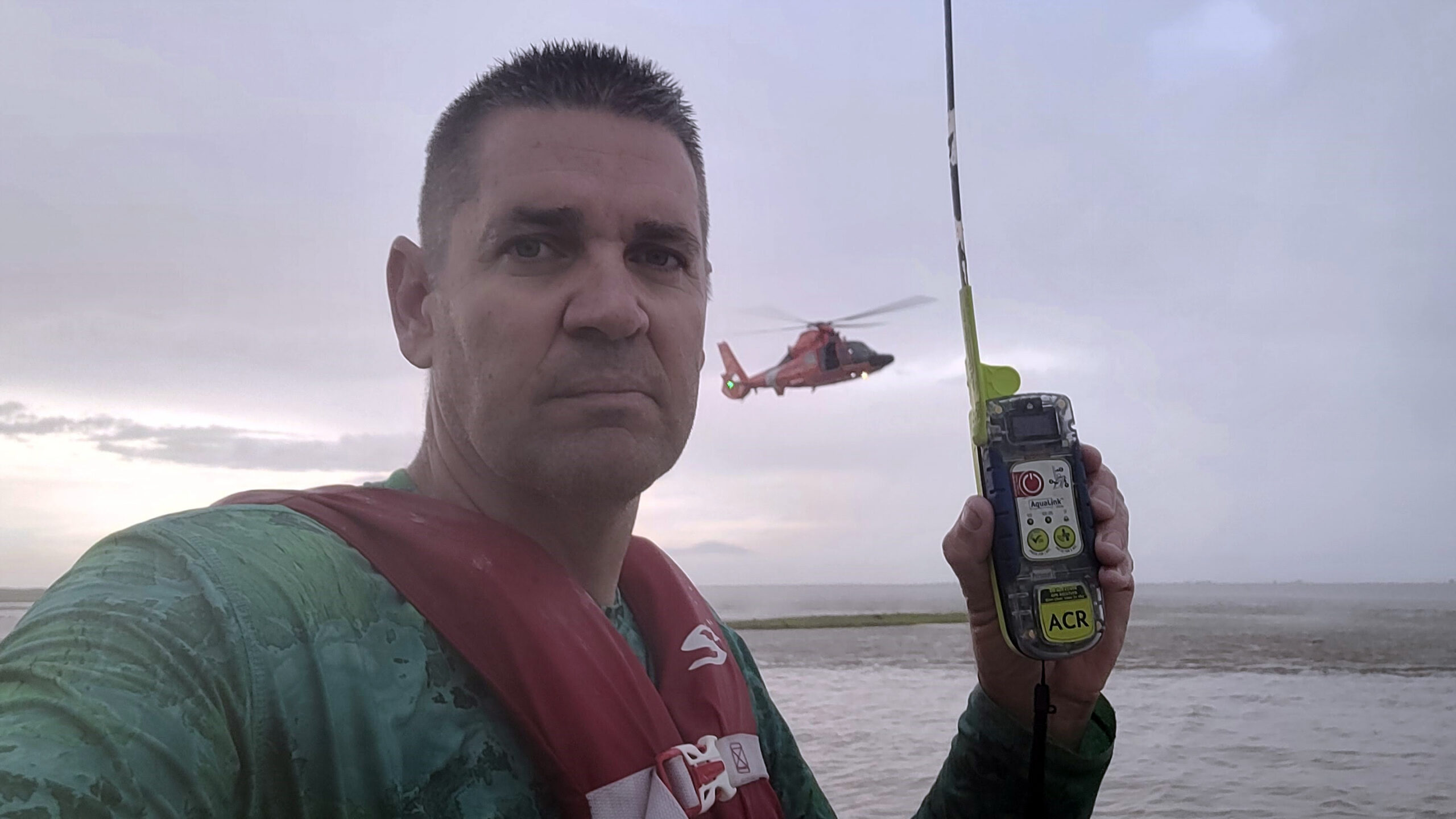
Spotting the Coast Guard helicopter, two men from another boat checked on the situation and were able to unground Clepper, then followed the family back to the ramp.
“Once I loaded my boat on the trailer, I will never forget how my son looked up at me with his innocent smile,” Clepper said. “We were finally safe, and it was over.
“I don’t care what body of water you’re on — no matter if it’s the ocean, an inshore bay or a freshwater lake — or off-roading or hiking or whatever outdoor adventure suits you, I cannot stress to you enough how important it is to carry a PLB,” he added. “I never thought I would need a PLB inshore fishing as long as I had my cell, but keep in mind, if it’s pouring down raining and the wind is blowing, your touch screen cellphone is basically non-functional and worthless. I found this out the hard way.”
Clepper said he was concerned that the saltwater could short out his electrical system and start a fire, so he “killed the power. So that means no VHF radio, either. Only thing left that was a guarantee was the beacon.”
ACR’s Prepared to Survive campaign reinforces the difference 406 MHz emergency beacons can make in life-threatening situations and aims to ensure that more boaters (and anglers) carry a registered PLB or an EPIRB for their boat.