In setting out to reflect on 60 years of fishing, I assumed it would be the old battles with fish large and long sought that would remain most sharply etched in memory. I was wrong. Except for some milestone fish — first striper from the surf, first 50-pounder, a linesider taken as a young teen in a snow squall, that sort of thing — my most durable fishing memories are the people.
It’s the people and their stories that stick with me. The tales told by a slew of fishing friends and others I’ve encountered on beaches, on the rocks and on the docks when the weather kept the boats tied up. It’s our oldest story: family, friendship, kinfolk, camaraderie, loyalty, bloodlines. “Nothing,” Springsteen intoned in his world-weary voice, “feels better than blood on blood.” The striped bass fishery is still populated by hundreds of small, close-knit bands of mostly secretive anglers, many fishing under the cover of darkness.
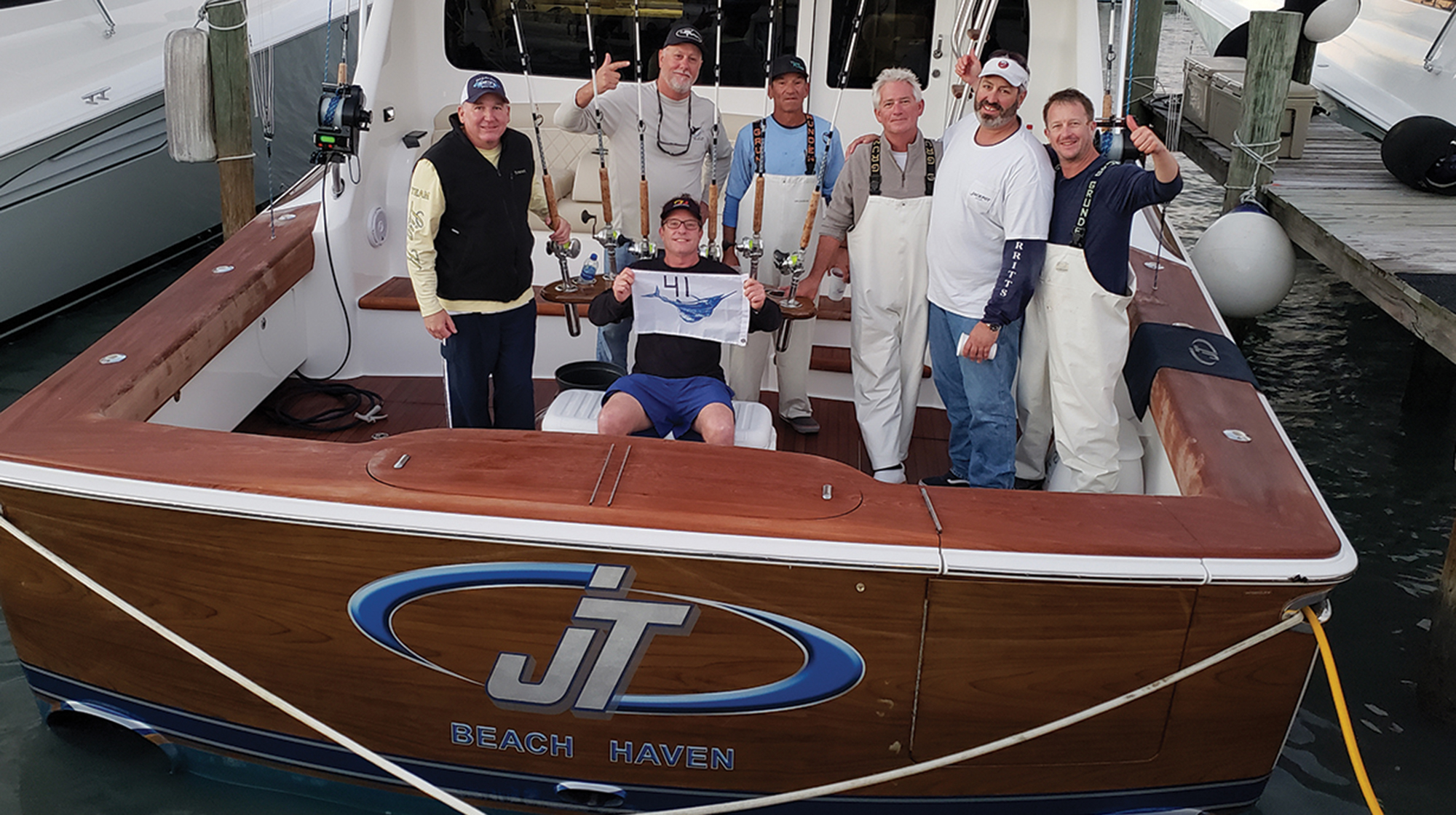
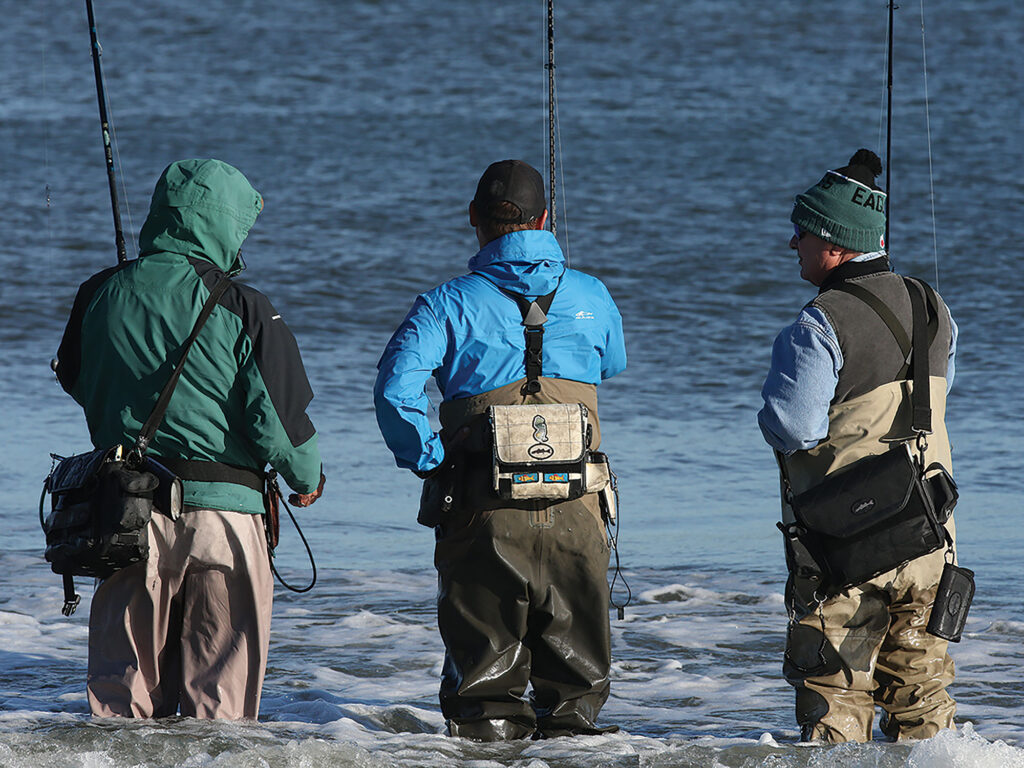
We carry to the water remnants of our tribal past, whether we are bouncing around in small skiffs, dressed in waders or racing to canyons in $10 million sportfishing rigs. The fish certainly matter, but it’s the actual pursuit that makes my brain purr and scribes my most indelible memories. That’s been true ever since stripers first slipped deeply under my skin when I was a boy. It was more about the hunt than the cranking.
For some, catching is just another way of keeping score. The one who lands the most or the largest (or both) is conquistador for the day. I’ve chased numbers, and I’ve chased weight, and the elation each brings has proven surprisingly fleeting. What I remember more deeply is the wild country and lovely waters that striped bass have drawn me into. And, most of all, the people, friends and the stories made on the journey or recounted on dark boats and windy beaches.
Lifelong bonds develop between partners who spend hundreds of hours fishing from small boats in the middle of the night. The same is true whether you are streamside, wading a tropical flat or blasting to a distant canyon for tuna or marlin. Friendships built over years of fishing with like-minded souls — be they free spirits, nut jobs or fellow Swamp Yankees — have proven impervious to the travails that upend most of life’s pairings. Those ties endure, and eventually your partners begin to feel like family.
You’re Not Dreaming
One thing I’ve learned is that a lifelong captivation with the angling arts can spring from the smallest trigger. An old-timer long gone remembered the nibble of a winter flounder on a handline as well as he did the numerous trophy fish he had taken. I interviewed him years ago, and I can still see him slightly move the index finger on his right hand to mimic the wary bite of a flatfish. “That’s how it all started,” he said, recalling what first sent him down the rabbit hole.
I remember my surprise when a Costa Rican mate spotted me reading a book of poetry at 6:30 in the morning as we made a three-and-a-half-hour run to a sea mount 85 miles offshore.
“You like poetry?” asked José Francisco Brenes, whom everyone called “Poncho.”
“I do,” I said.
“Do you know Neruda?” asked Poncho, 29 at the time, referring to the great Chilean poet Pablo Neruda.
“Yes.”
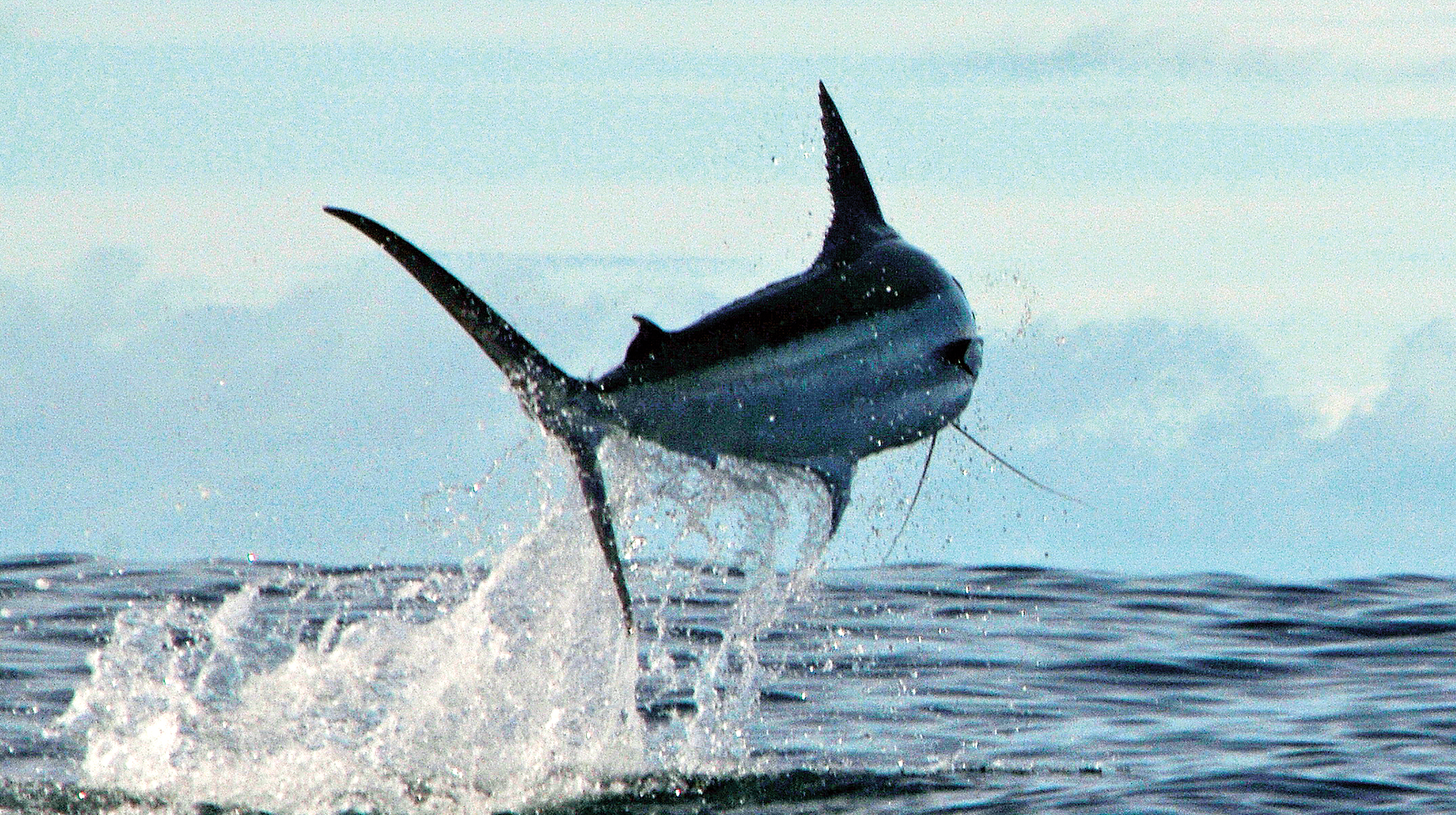
With that, Poncho recited from memory a poem by one of the greatest poets of the 20th century. I responded by reading Ted Kooser’s “At the Bait Stand.” And the fishing? It was three of the craziest hours I’ve ever experienced on a boat. We raised 25 blue marlin, had 15 bites and brought nine fish to the boat ranging from 150 to nearly 400 pounds. We’d had a couple of double-headers. And for a few exciting moments, a triple raced every which way. We were fishing 50s on stand-up rods with 80-pound mono, using lures, live baits and pitch baits. I am only able to recite those numbers from looking back on the story I wrote. I remember the controlled chaos in the cockpit and marlin skying 100 yards off the boat, but no individual fish stands out.
The bite started less than a minute after the spread was set. By 11:30 a.m., the action slowed. We took a breath, watched the spread and had a cold drink. “Ouch!” said our host, Will Drost, wincing. Poncho had snuck up and pinched Drost’s arm hard enough to leave a blood blister. Drost is a sturdy 6-foot-3; Poncho is a foot shorter.
“Why’d you do that?” Drost asked, surprised and a little annoyed.
Poncho lit up. “So you’d know this wasn’t a dream.” Those are the bits and pieces that make up a fishing life, the stories we remember.
I hung out recently with an old fishing buddy whom I hadn’t seen in several years. We sat on a beach in Rhode Island as he recalled a September night 20 years earlier when we drifted eels over a nearby reef. He caught and released a perfectly proportioned striper that weighed about 30 pounds, a nice memory but not the night’s highlight.
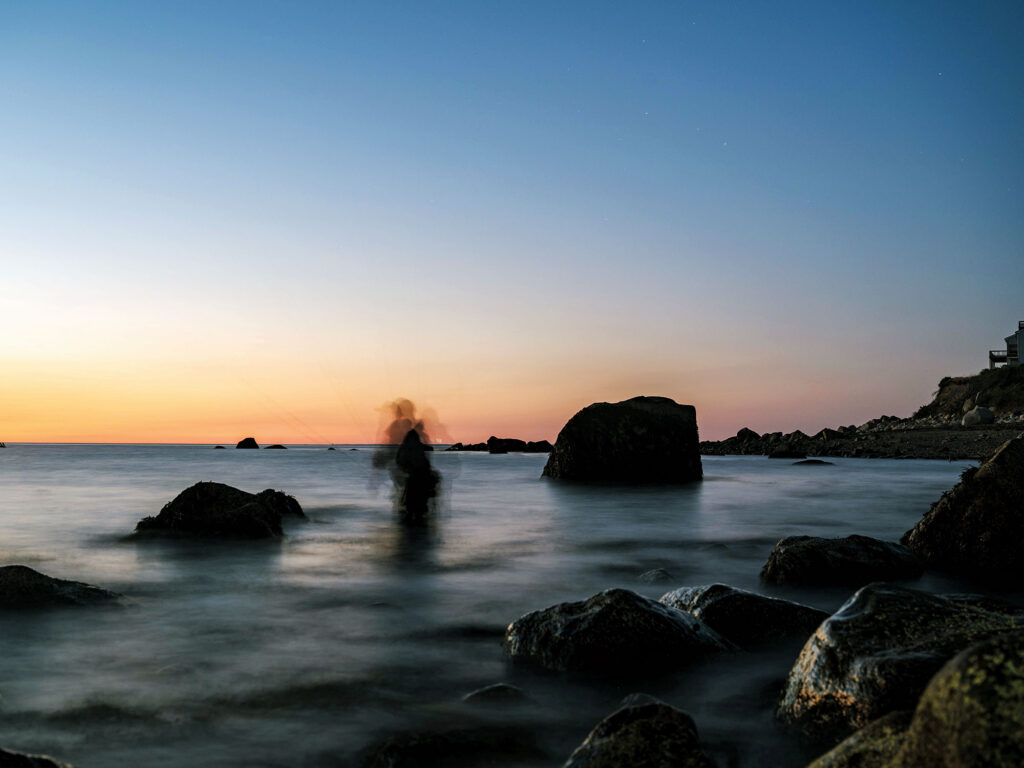
“Do you remember that orange moon that rose right out of the water?” he asked, his voice rising as the magic of the evening returned. Who could forget? It was a harvest moon on a flood tide. I can still see the misshapen, reddish-orange orb break free from the sea horizon. All we could do was stare, bewitched, dumbfounded. The fishing was good, but it was the moon ascending like an ancient goddess over miles of saw-toothed waves that makes me think that, for one tide, we’d found a slice of paradise.
Passion vs. Compulsion
It took time to learn this simple truth: Whether you trade stocks, pound nails, sell insurance or wash dishes, chasing your favorite fish with passion is so unlike anything else we do day to day that it washes away life’s mundanities and makes our hair tingle. I’ve never lost my childhood fascination with the water or fish. That boyhood wonder ignited a flame that I find no reason to extinguish.
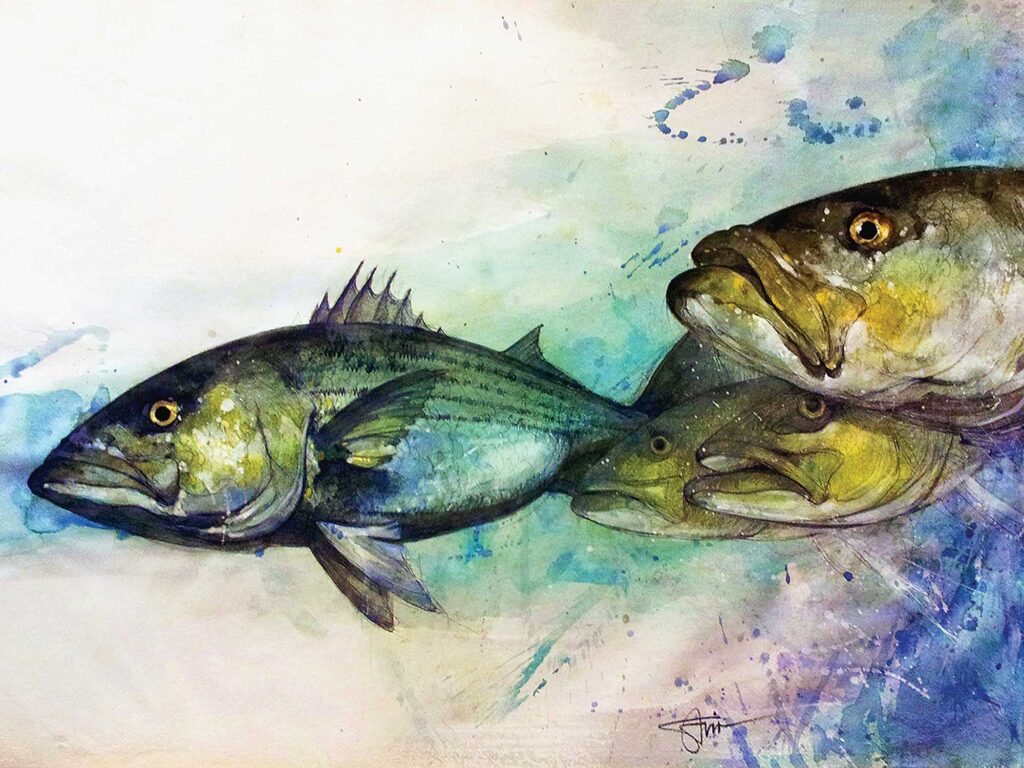
You can take the chase too far, as many of us have. A writer once observed that there was something “frighteningly narcotic” about an obsession with chess, which of course made me think immediately of striped bass. (You can substitute your own species.) For many seasons, I chased linesiders as if they were my moon, stars and sun. I could keep up with work, but it took a toll on my family and personal life. When waves of bass were moving with the tides, I hardened up and became my primitive doppelganger, selfish and single-minded in my pursuit. What was I chasing? Lord knows. Perhaps some ancient longing or hunger that had little to do with fish. I know I’m not alone.
The obsession some of us dance with reminds me of a conversation I had with Stan Blum, who died in 1998. A World War II Navy veteran, he was a fine striper angler and boatman who lived in New York and, for his last 20 years, in Florida, where an artificial reef off Fort Pierce is named after him. Blum helped acquire the 450-foot cargo ship that served as the reef.
As much as Blum loved fishing, he told me that it was never his whole life. He’d never let his hunger for catching get the best of him. “I’ve never neglected the rest of my life,” he told me that afternoon. “I love theater. I love music. I used to go to the opera all the time. I never got obsessed.” He paused and raised the fingers of one hand to signal wait. “I take that back,” he continued. “Yes, I did. When I was 18, I got very obsessed. I said I was going to catch more bass than anyone on the beach. And I did. But nobody would have anything to do with me. I was not a good guy. I learned my lesson. I caught more fish than anyone, but it was not a good situation.”
I could have used more of Blum’s wisdom in my life.
One Man’s Mission
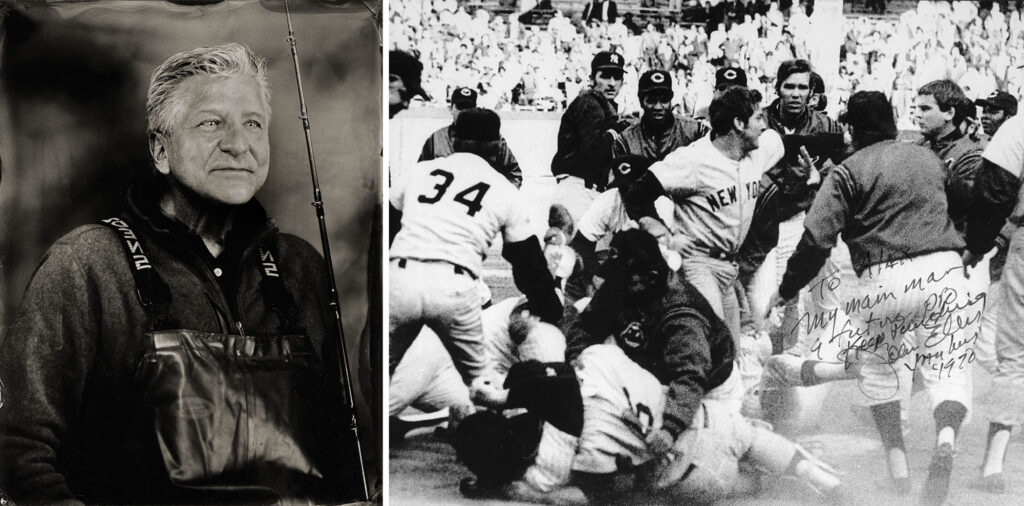
I feel fortunate to have met John Ellis about 15 years ago. The former big-league baseball player who had a 13-year career with the New York Yankees, Cleveland Indians and Texas Rangers lived in Old Saybrook, Connecticut, and fished Long Island Sound, where he caught his share of large fish.
Ellis was a battler on the ball field and in his life. The former catcher wasn’t expected to live very long after he was diagnosed with Hodgkin’s disease at 38. By that time, cancer had already claimed a brother, a sister and a sister-in-law, all before the age of 40. “I had no expectations of living,” he told me. “Absolutely none. I figured that was the end of it.”
He made the kind of promise one might make in a hospital — or on a plane you fear may crash. When the danger passes, our well-intentioned pledges are usually forgotten. Not the case with Ellis. “I made a deal in the hospital, and it’s one I stuck to,” said Ellis, who was 65 when I first interviewed him. “And that was, if you let me live, I’ll help people the rest of my life. That was my promise, and it’s been the purpose of my life.”
One year after he recovered, in 1987, Ellis founded the Connecticut Sports Foundation Against Cancer (now the Connecticut Cancer Foundation Inc.), which has given out more than $7.4 million to cancer patients and their families. I interviewed Ellis several times. The last time we spoke, I was busy scribbling notes and hadn’t noticed that he had asked me a question. “You know what the purpose of life is?” Ellis asked. I assumed it was a rhetorical question. The pause lingered, and I looked up. Ellis was staring at me, waiting for an answer.
“It’s complicated,” I answered, lamely.
“No, it’s not. It’s easy,” he said. “It’s helping other people — that’s it. Helping other people is the underlying principle of a successful life.” Ellis died in 2022 at age 73, after his second bout with cancer.
Fellowship
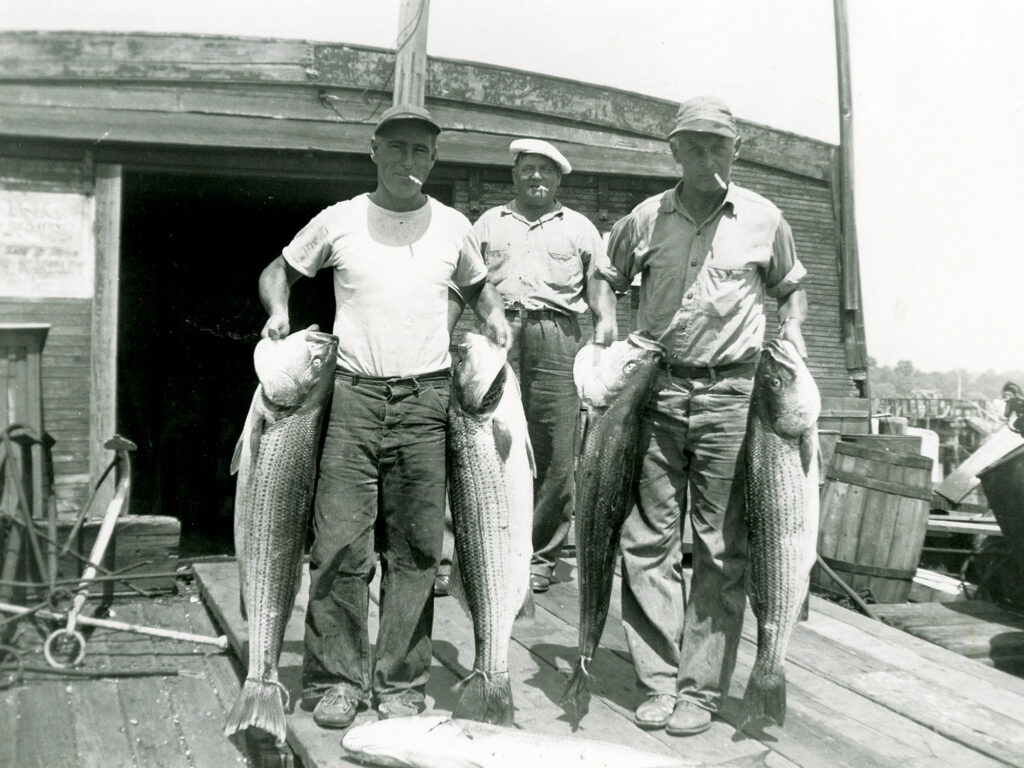
A lesson in the importance of camaraderie came when I was too young to fully appreciate it. More than 30 years ago, I joined Capt. Elbert E. Palmer for a day on the water with his so-called “Over the Hill Gang.” By the time I caught wind of the geriatric collection of bait dunkers, Palmer, a former police officer and fisherman, had been taking old-timers porgie fishing every Wednesday and Sunday for almost 30 years. He took his gang of friends and acquaintances out for free.
Palmer, who was 89 when I met him, ran a fun but tight ship. His fishing friends assembled on a dock in Noank, Connecticut, before daybreak on a breezy fall day. One regular was spraying ether into the carburetor of the starboard engine as Palmer cranked the starter. “We got some work to do on her,” the Yankee chuckled. “The choke’s stuck.”
The engines dated back to 1955. Palmer’s 34-foot, round-bilged Dorothy V was built on Long Island in Freeport, New York, in 1935. Palmer purchased her in 1959 and never changed the name, for reasons of luck. “You never been on boat like this, I bet,” said Palmer, dressed in a heavy black-and-white wool shirt and black cap. “Got to put some wood in it. That’s all I’ve been doing since I’ve had it. Putting in timbers, floor timbers, frames.”
The makeup of his group had changed considerably over the years as age and illness picked away at the crew. “Had about 15 or 16 die since I started taking ’em,” Palmer told me. “Three or four others had to give up on me. Had a lot of good times on her just the same.”
On this day, the men were fishing for porgies or scup and maybe a blackfish on a couple of rockpiles in eastern Long Island Sound. The youngest member of the crew was 68-year-old Woody Woodhall, who said he’d been dragged out to do anchor duty. After about 10 minutes, Palmer yelled, “All right, Woody,” and we were fast to the bottom.
It didn’t take long for the first scup to be hauled in. The fish were coming aboard at a good pace. It had been some time since Palmer steamed south of Block Island, Rhode Island, to harpoon swordfish. He’d happily adjusted to the simple pleasures of late-life fellowship — remaining on the water, sharing laughs, busting stones and catching dinner.
“The only reason I kept the old boat was to keep these guys happy,” said Palmer, who died in 1995. I asked how he found them. “They find me,” he said.
Woodall remembers when there was a wait list to get aboard Dorothy V. “It was so bad at one time that someone had to die to get in the crew,” he said. “Hell, seven or eight have died since I’ve been fishing,” including two gents who fished into their 90s.
On this outing, the men landed 35 porgies and a few blackfish, down from the 100-porgie catch of a few weeks earlier. “I’ll start manufacturing these fish pretty quick,” Palmer said, sharpening a knife. “See if I can whittle a few.” With that, the tough, old fisherman filleted the entire catch.
In hindsight, I realize Palmer provided a unique model for exiting the world with friends, laughter and fish. I’m now looking for my own Dorothy V.
Unanswerable Questions
Fish long enough, and you’re likely to experience things that are unexplainable. That’s part of the mystery and magic that inevitably surfaces over a lifetime on the water.
I was on Martha’s Vineyard in the fall of 1994 to fish and interview Arnold Spofford, who had retired from corporate life and moved to the island off Cape Cod, Massachusetts, where he fished the surf, and made and sold lures. He was 80 and recovering from cancer treatment. We sat in his living room, surrounded by dozens of packages he was preparing to send to tackle shops.
We had talked for more than an hour when he paused and said, “There’s this story.” He hesitated. “There’s a story,” he began again. “I don’t think you’d really be interested in it. I’m having trouble deciding whether anyone would be interested in it. People might think I’m crazy or something.”
I assured him that I would not question his faculties, no matter where the story went. He began slowly, setting the scene. The incident he circled warily took place on a beach on Plum Island near Newburyport, Massachusetts, in the mid-1940s. Spofford worked at Western Electric, once the manufacturing arm of AT&T. He commuted to work for 28 years with good friend Leo Holt, who also was his fishing partner. “We’d talk about fishing almost all the time,” said Spofford, who remembered modifying muskie plugs sent from Minnesota together and building an early spinning reel.
When they fished Plum Island, they walked to the beach on a trail. As soon as they hit the sand, Holt would work to the left because he was left-handed, and Spofford fished to the right. “We went out there one night following a storm,” the old-timer recalled. “It was just beginning to break up. And there was a little bit of moonlight visible through the clouds, so it wasn’t pitch black.” The men had a few rules. They never shined a light on the water, and when they unhooked a fish, it was always done facing away from the water. They rarely spoke on the beach.
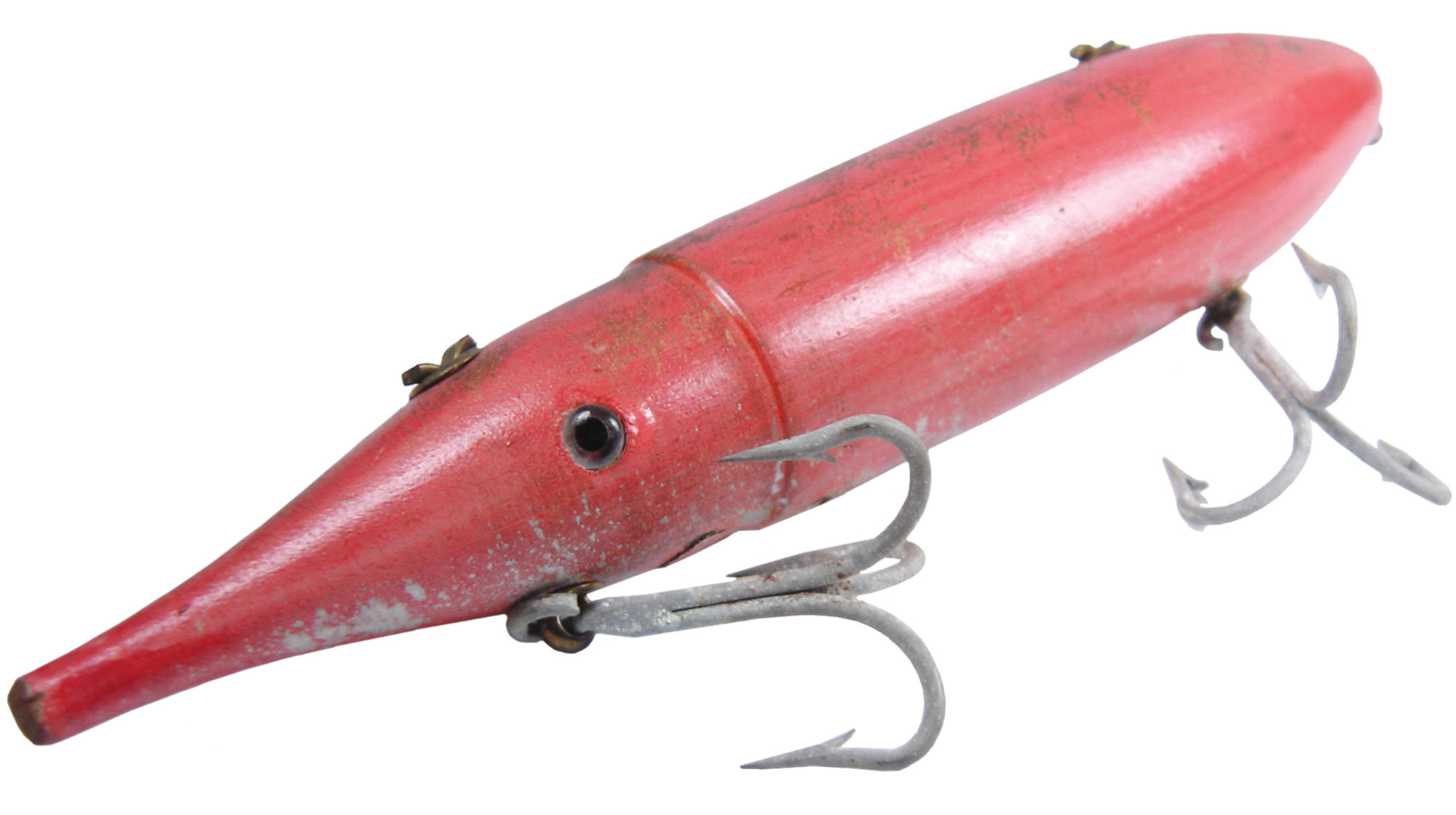
“I worked right toward Emerson Rocks, and he worked left toward the polio camp,” remembered Spofford. “The surf was pretty big, and we were throwing these big, 8-inch, 3-ounce plugs made by Blue Streak. We were using big surf rods with conventional reels. You’d cast out, and the problem was, the plug would get in the undertow and pull like hell.”
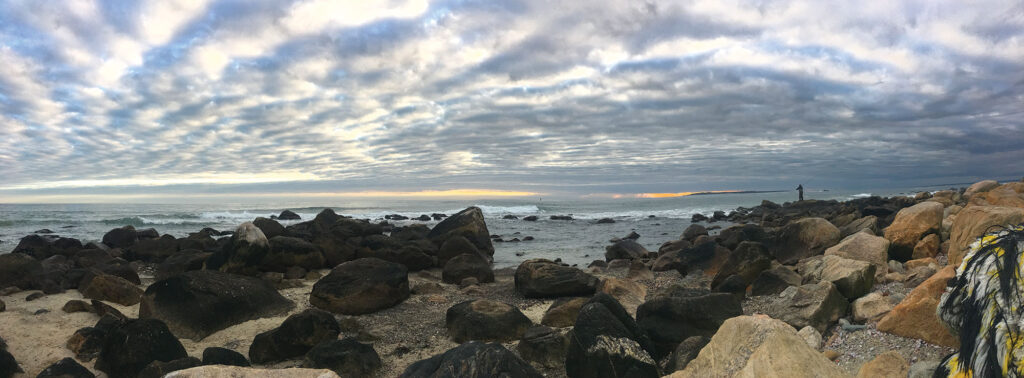
The pair had been fishing for some time and were about 100 yards apart. “Well, I thought I felt a hit, but it was the undertow,” he said. “And the plug came flying out and hit me full in the face. I didn’t say anything. The wind was blowing like mad, so Leo wouldn’t have heard me anyway.” Spofford stood there bleeding and contemplating his next move, stunned by the impact.
“All of a sudden, boom, boom, boom, Leo came running down the beach,” Spofford continued. He paused and began to weep quietly at the memory. “I can’t figure it out,” he told me, shaking his head. “I asked Leo, ‘How’d you know anything happened?’ He said, ‘I just felt something was wrong.’ ”
Spoff never turned on his light or shouted for help. “How’d he know? How’d he know?” Spofford died the following spring.
The answer that Spofford sought might be the same answer to why we spend our lives searching for fish, shining tides and partners who become our brothers. It’s the stories. All we have are our stories.