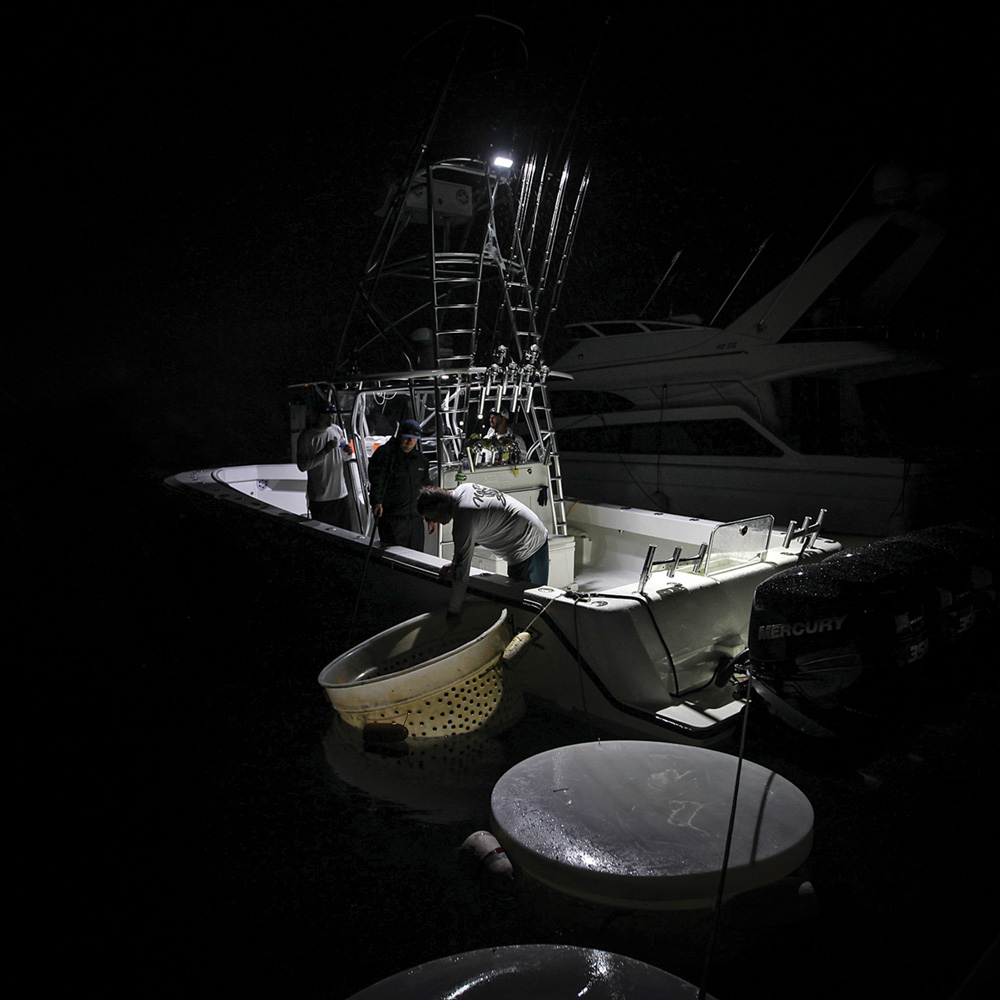
It’s 4:30 a.m. The world around me is a dark smudge until the blinding glare of an overhead recessed light slams into my eyes, cutting through my foggy brain like a 2,000-lumen spreader light blasting off freshly waxed gelcoat. I lie on a pull-out sofa, the closest thing to a bed I’ve had in a week. I’m at the mercy of our crew’s early risers — chief among them Capt. Art Sapp, who wakes well before the sun each day to search for something that swims.
Two hours to go until we throw lines. The clock is ticking, and we’ve got to transfer 200 baitfish from their floating pens to Native Son’s live wells. Disrupt their scales or slime coat? That ain’t happening. These fish are more than bait — they’re the lifeblood of our obsession. They must be handled with utmost care, scooped one at a time, counted out one by one.
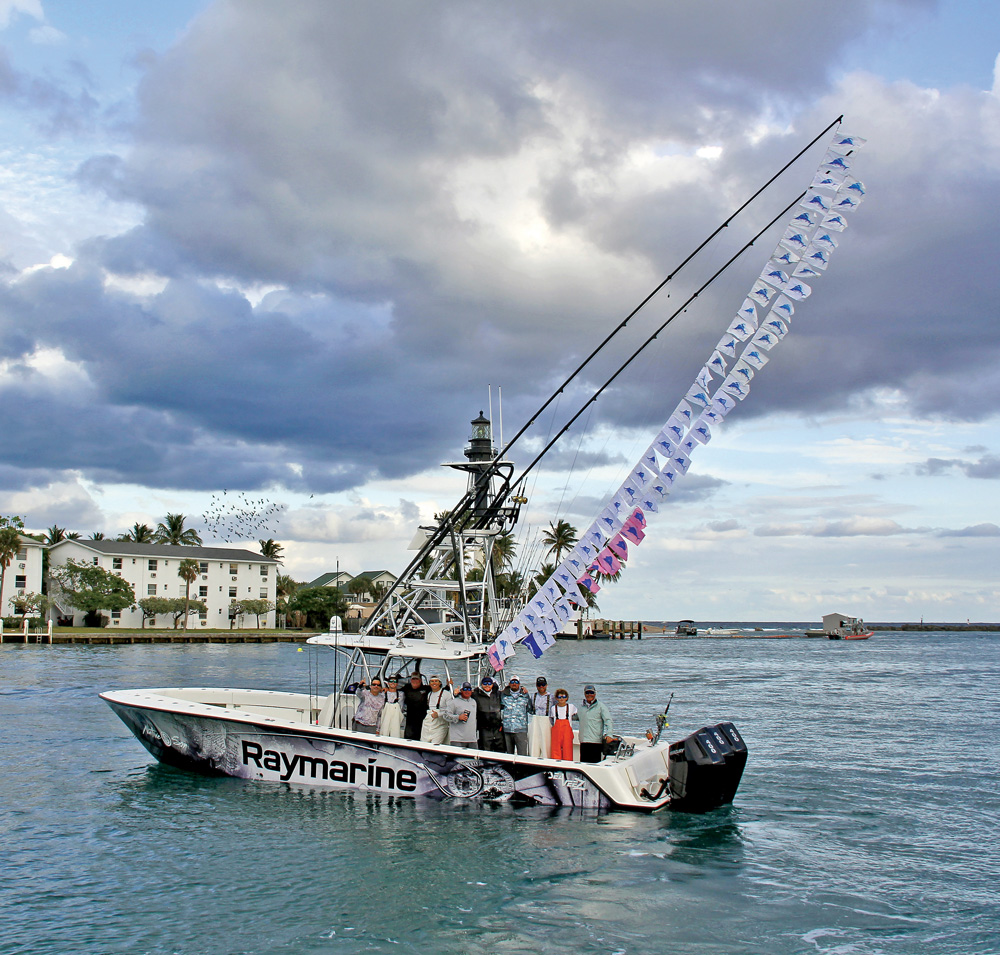
It’s the first day of Final Sail, the last event of the three-leg Quest for the Crest sailfish series. We’ve anticipated this Miami tournament and know full well that every ounce of hard work and experience will collide in a perfect storm of competition for the coveted burgundy jackets bestowed upon the top team in the three-tournament series.
Evolution on the Water
It’s been a decade, and we’re still hunting those damn burgundy jackets. In that time, I’ve seen things that send shivers down my spine — record catches, brutal seas, injuries that nearly ended careers, and a pile of trophies and accolades we still hold tight.
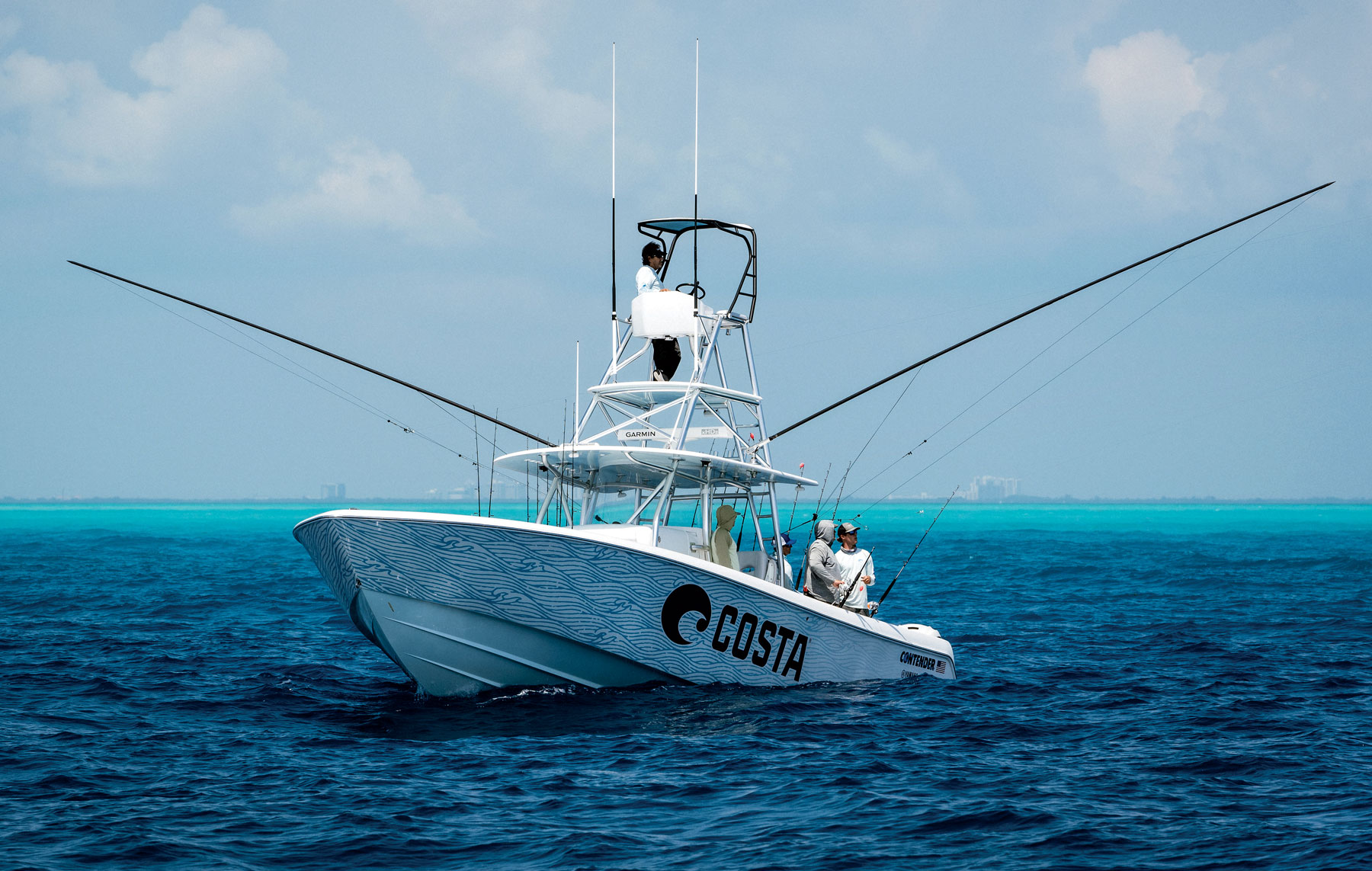
As one of the team’s anglers and deckhands, I’ve watched Sapp command this crew from the deck of a 39-foot SeaVee. Sapp is a seventh-generation Florida fisherman whose office sits atop a 15-foot gap tower, where he scans the water with the intensity and focus of a frigatebird. Like the black-plumed seabird, Sapp always finds the fish.
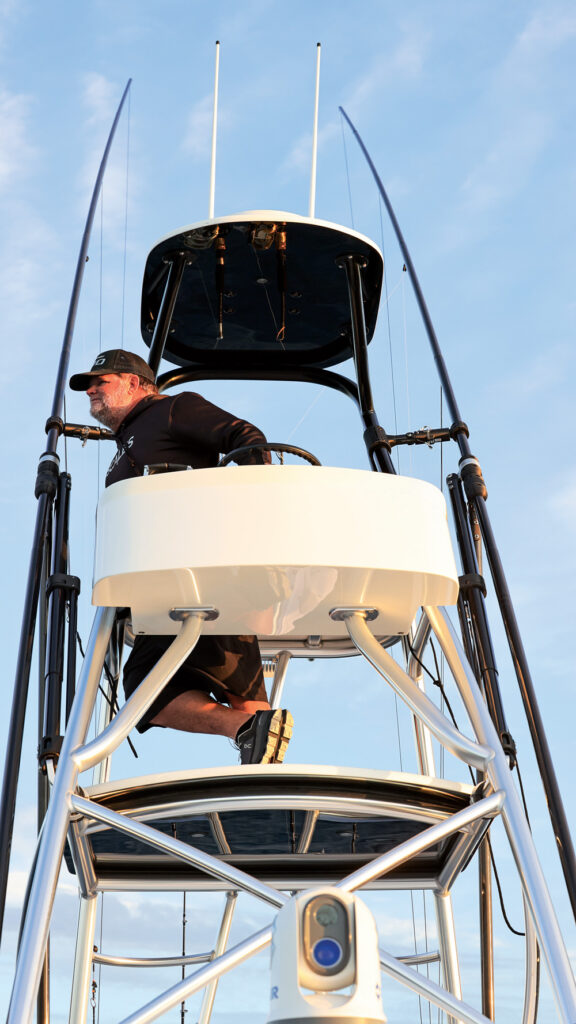
Over the years, we’ve fished three 39-foot SeaVees. We started on a 390B with a standard hull and graduated to a 390Z stepped hull. The 390Z is powered with triple 400-hp V-10 Mercury Verado outboards and equipped with the latest Raymarine electronics. Our gear has evolved, but despite the changes, the steady rhythm of our crew remains constant.
Most of our team — Keith McDonald, 51; Bernard Paul-Hus, 57; Rob Deignan, 51; Mike Gulla, 42; Jay Jones, 45; Chris Kniskern, 29; Chad Troncale, 51; Jim Steel, 50; and Jim DeMarco, 47 — have been fishing together for more than 15 years. At 40, I’m one of the younger members, but I’ve been fishing with Sapp since 2013. In addition to our core crew, Parker Steel, 14, and James DeMarco, 17 — who started with us as anglers in the peewee and junior angler categories — join our tournament lineup whenever school allows. We aim to always have 11 people on the boat: Sapp in the tower, seven anglers with rods in hand, one guy on the leader, another running the camera, and one helping spot fish from the tower, rigging gear or jumping in wherever needed.
Sapp has nearly memorized every detail of each tournament from 1998 to the present — current, wind, water color, who missed fish and which baits worked best. He won his first sailfish tournament in 2008, the now-gone Mayor’s Cup, and continues to be a formidable competitor in every tournament he enters.
Down the Coast
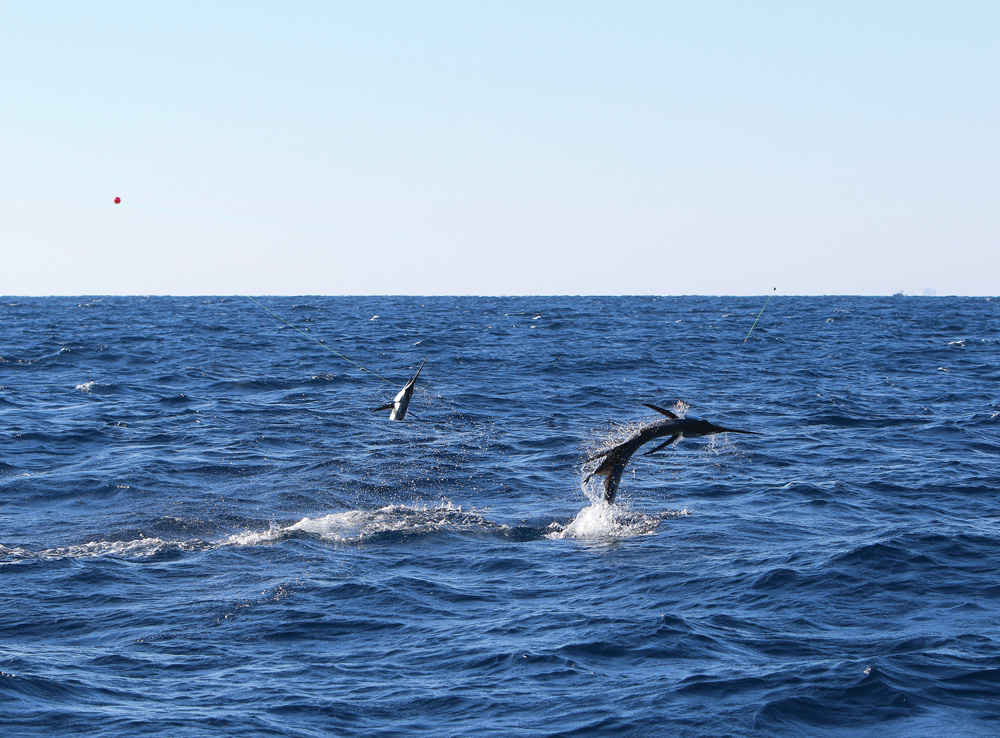
Late winter and early spring usher in windy weather down the Atlantic coast of Florida, stirring up rough seas and billfish activity. Packs of sailfish congregate along their natural migration path, aptly referred to as “Sailfish Alley.”
Kite fishing is the name of the game from Jupiter to Key West. Presenting baits with a kite is both an art and a science — a delicate dance of wind and patience that tests every ounce of an angler’s skill. Armed with a fleet of kites for every wind condition, anglers become puppeteers, tweaking the angle and spread of the kite with precision. Kites don’t just fly themselves. The wind must be just right, and even the tiniest shift — a slight change to the kite bridle or adding a 1/16-ounce splitshot — can send the kite soaring upward or crashing into the drink.
In this fishery, live bait isn’t just important — it’s everything. The best sailfish anglers are masters at catching the right size and species of baitfish. From threadfin herring, goggle-eyes and Spanish sardines, to pilchards, ballyhoo, blue runners and speedos, a thriving bait supply is essential.
Every day brings a new challenge in keeping the bait pens full. We may be catching blue runners off Pompano one day and sardines off Palm Beach the next, followed by threadfin herring off Miami. Sapp’s pens may have 1,000 baits swimming in them at any given time, but only the largest, most pristine baits make the cut on tournament days. It’s a constant cycle of catching and curing.
Rhythm to the Chase
As first light breaks on tournament day, I fall into a familiar rhythm. The team moves like a well-oiled machine, prepping the boat, fine-tuning tackle. We’ve fished together so long on Native Son that we move without words. “Nothing gets done that doesn’t need to be done,” Sapp says. “If it needs to be done, it gets done fast. No one has to tell anyone to move; they’ve seen it, felt it, lived it.”
Sapp is up in the tower, scanning the horizon, looking for conditions that scream sailfish. Staring at the kite floats above the water for hours can wear you down. Sometimes I wish I could swap my Costa sunglasses for a welding mask to combat the blinding glare. Mind and body start to break down under the brutal sun, and the sea’s moods can be downright cruel. We’ve stood in rain for eight hours straight. We’ve fished in 10-foot seas that kept other boats tied to the dock. Somewhere amid the fatigue and unforgiving ocean, we find our drive. There’s always the next fish. We accept whatever the ocean gives us and gear up for battle.
“After a tournament, I go goggle-eye fishing,” Sapp says. “The peace of the dark waters — no distractions, no voices in my head — that’s when I do my best thinking. I go through the day, every decision, and wonder what I could’ve done better. You’ve got to be a student of this game. You have to learn why the successful guys win and understand what they do. It’s so much more than just fishing.”
Mental toughness is the key to survival. A missed fish can haunt you for weeks, but a bad attitude on board is like a wildfire; it’ll burn through the crew until it can’t be put out. Positivity is the only antidote. A good day lies ahead, even if you’re behind on the leaderboard.
We trust Sapp. No questions asked. Even when the fish aren’t biting and our spot on the leaderboard looks grim, he’ll see something the rest of us miss. “Wind’s shifting. It’s our time now,” he’ll call out. “Watch this. We’re gonna get 20 bites right here.” And before long, we’re toasting a win.
Lessons Learned
In 2014, we were in contention during the Jimmy Johnson National Billfish Championship, one of 47 teams gunning for a $540,000 purse. With just minutes left before lines out on day two, we hooked a double-header. The tide turned in our favor. We managed 11 releases overall, securing a hefty $206,650 payday. But it wasn’t just the money that felt so gratifying. It was the taste of victory after the sting of defeat.
We’ve come oh-so-close many times in this game. Always a hair behind the prize we want — the burgundy jackets. In 2014, we finished second in the Quest for the Crest, taking home $411,230. But that wasn’t the story we wanted to tell. Several days spent scanning the kite spread and chasing bites from Palm Beach to Key West, we wrapped up the season just one fish shy of victory. Those missed fish haunt you. Memories of sails spitting the hook are ghosts that never fade.
In the middle of big payouts and broken dreams, the Silver Sailfish Derby, hosted by the West Palm Beach Fishing Club, stands out. Founded in 1935, it’s the oldest-running sailfish tournament in the world, and the one we look forward to every year. We’d been chasing the event’s Henry R. Rea Trophy for years, and it finally came together in 2016.
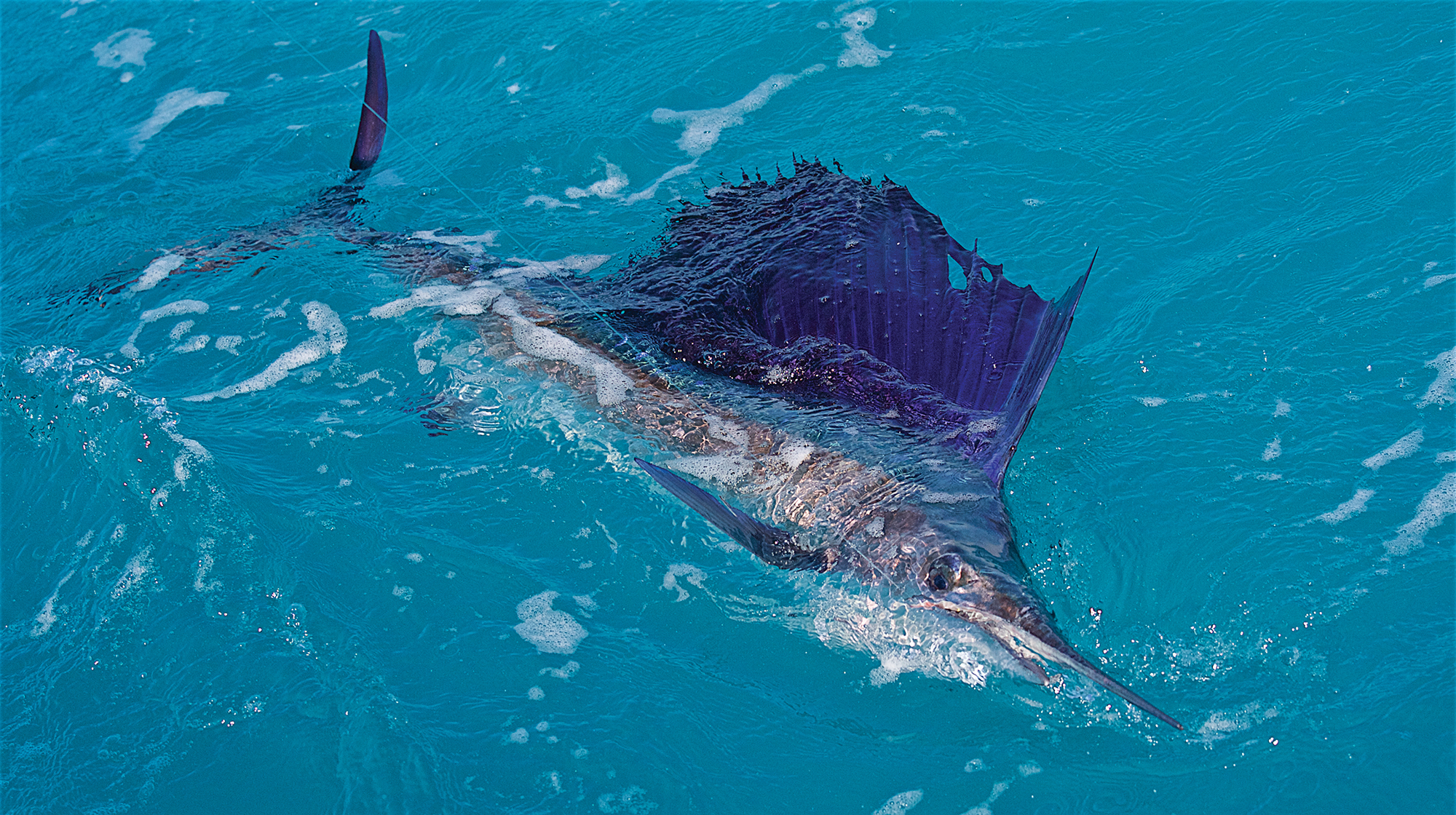
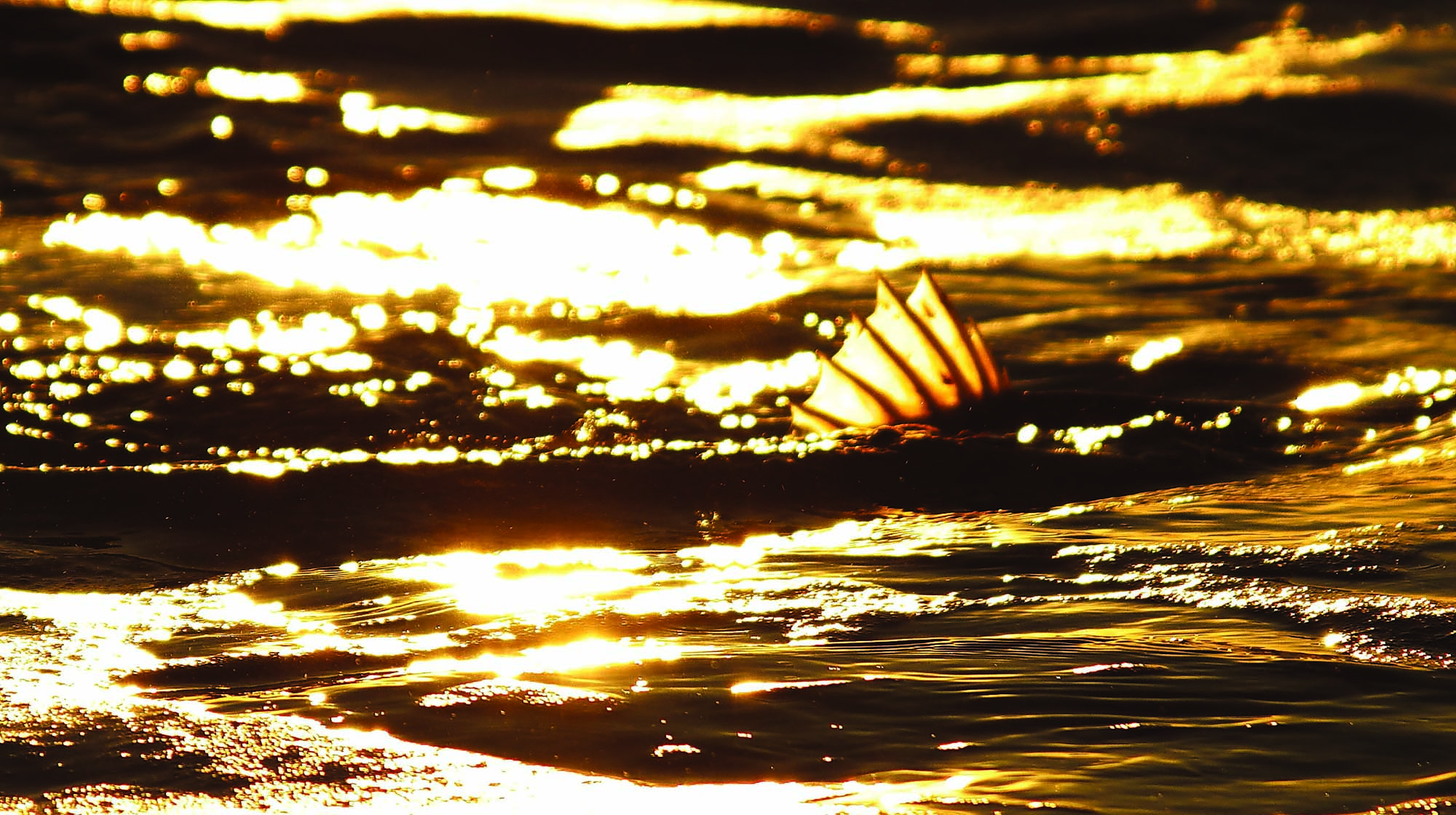
Day one threw thick fog and 5- to 7-foot seas at us — we managed only two releases. On day two, the wind dropped out, and kite fishing became a distant dream. We adapted. We fished spinning rods and slow-trolled, grinding away, one release at a time. Just when it seemed like victory was slipping through our fingers, Sapp spotted a sailfish tailing on the surface. A threadfin herring bridled with a 5/0 light-wire circle hook went flying out. The sail wolfed it down. At 3:47 p.m., we released our ninth fish. We called it in with 13 minutes to spare, snatching another last-minute win.
Fast forward to January 2024. We showed up to fish the Silver Sailfish Derby and were greeted with clouds and drizzle. I spent the day contemplating life’s choices aboard a center console, sans Seakeeper, without an escape from the never-ending rain, admiring our friends aboard nearby sportfishers with mezzanine seating and dry cabins. After a rough start, the reigning champions on Priceless led the day with seven releases. We caught only two, along with a soggy sense of déjà vu.
As the second day unfolded, closing the gap would require a significant effort, but it wasn’t impossible, especially with Sapp in the tower. Our first fish didn’t come until 11:24 a.m., but it provided the spark we needed. Three more followed before noon. We released six more fish in the afternoon, bringing us to nine on the day — 11 total over two days. Another comeback, another win pulled out of the fire. It was as if we’d already written the script: a late charge, teamwork and an unshakable will to win.
The 2019 Sailfish Challenge was a similar story. We hooked our 20th fish with two minutes left on the clock, stealing the lead in the final moments. In 2021, another gut-wrenching finish. A double-header just shy of lines out secured our second Sailfish Challenge championship. All of these events live in my mind, but the 2025 Sailfish Challenge may be our crowning achievement.
Heading into the tournament, conditions looked grim. The bite had shut down the week before, but with three consecutive cold fronts in the forecast, anticipation was high. A brutal winter storm in the Mid-Atlantic pushed a wave of sailfish down the East Coast. Our Florida waters were finally flooded with sails.
We hit the water, and it was lights out from the get-go. Our first release came just eight minutes after lines in, and it was a non-stop sprint. We released 21 before 10 a.m., 34 by noon. At the end of the day, we’d released 48 fish — the most ever in a single day of tournament fishing in the Atlantic. With an 11-fish lead heading into day two, we were not about to slow down. We added 17 more releases, finishing with 65 and a $213,175 payday. It was the best day of fishing we’ve ever seen on Native Son, but still the burgundy jackets for the Quest for the Crest series eluded us — so we keep fishing. With Sapp in the tower, we always believe we can win. We don’t stop. We don’t doubt. We don’t give up. “Watching your guys go from a funk to I can’t give up on this guy anymore, seeing your guys reach that level of belief is as good as winning an event,” Sapp says.
To stay on top, you’ve got to catch nearly every fish that bites, because if you don’t, another boat will. It takes a 90 percent conversion rate to win. Victory is sweet, but the sting of failure cuts deeper than a hook through the hand. That’s what drives us. We’re hooked, and we’re not letting go.