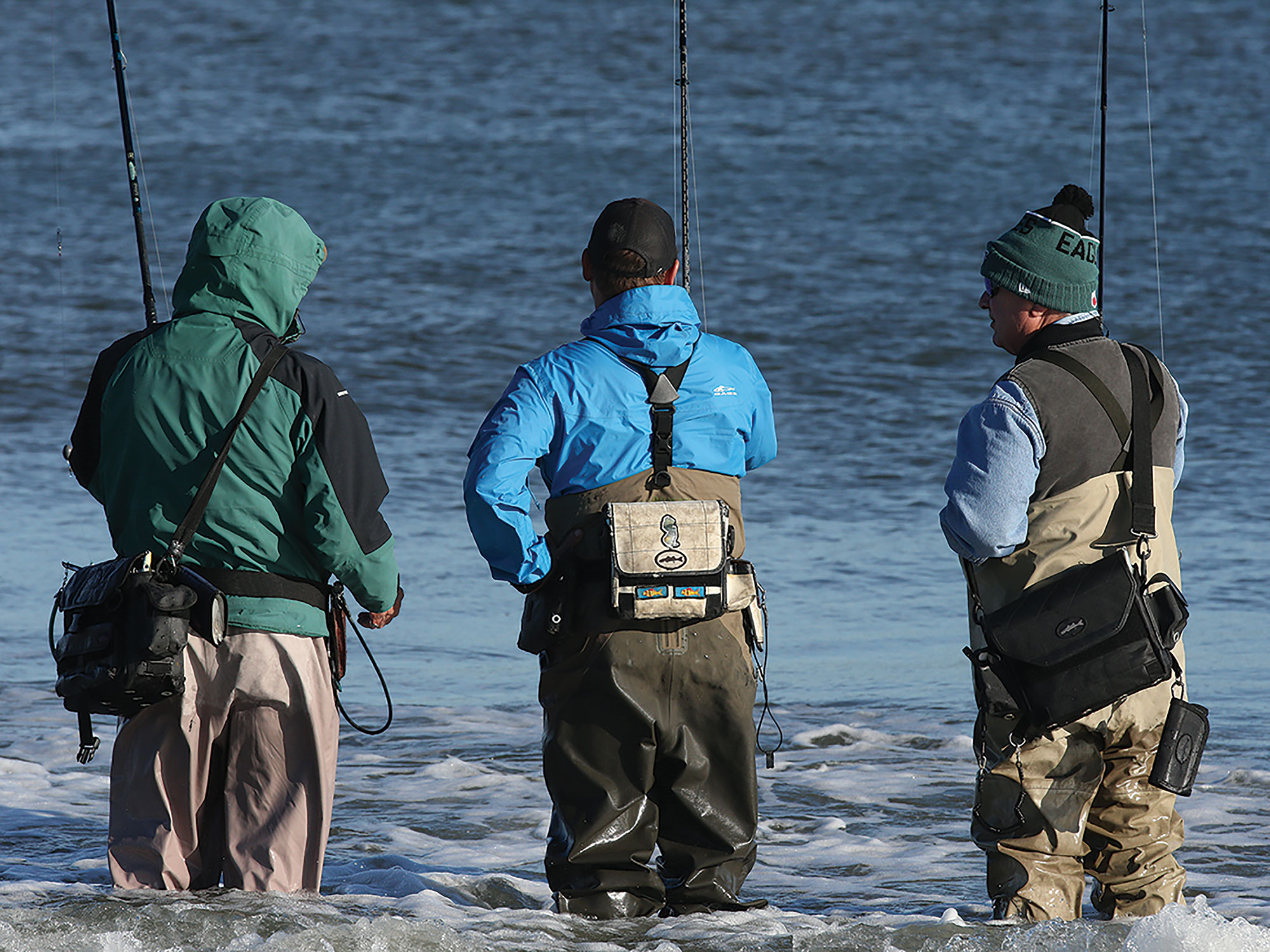
As waters warm into the 50s, anglers watch for squid boats along the Rhode Island coast. Talk of “tubes” — sharpie slang for chunky 12- to 18-inch squid that pounce on jigs — breaks the long winter silence for the saltwater sect. The fishing cracks open in May or early June when darting squid zip through lights shining down on Newport Harbor. Whether fishing day or night, the cold requires heavy bibs pulled over pants and waterproof deck boots. The foul-weather gear also provides a shield from the stink and stain of the squid’s black ink.
 While short-lived, the Northeast squid bite awakens anglers from their winter slumber.Jessica Haydahl Richardson
Acres of squid flood in on the moon. It’s a good push, and the jiggers slip out into the darkness. Capt. Max Dispoto, fresh-faced and bright-eyed, has eagerly awaited the arrival of squid since he hung up his offshore gear a few months earlier. “The squid are the first thing we get every year on the salt side,” he says. “It’s the inauguration of the season. We look forward to it because of what follows. It’s what we wait for all winter. It shakes the rust off.”
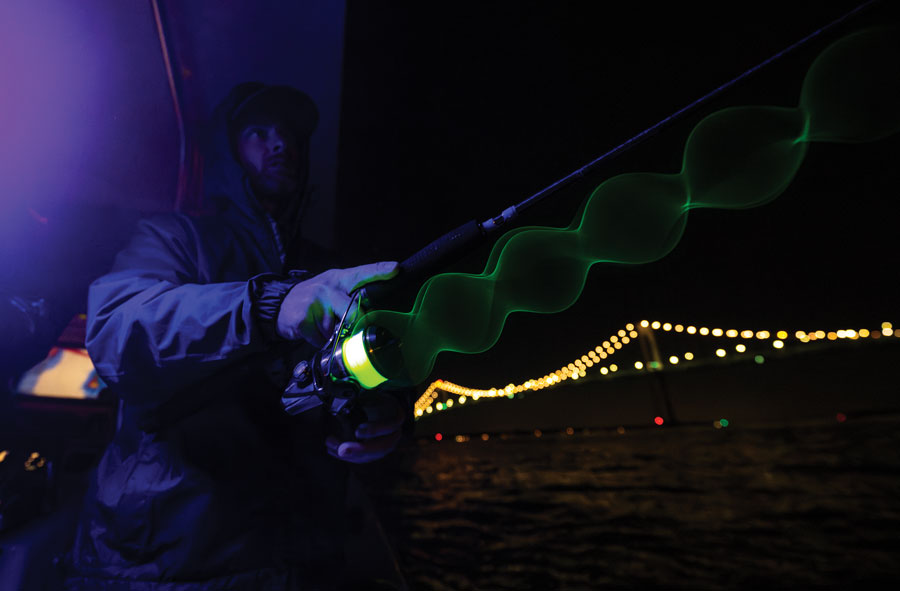 Squid begin to appear in May or June and fishing heats up under bridge lights in Newport Harbor. Jessica Haydahl Richardson
At 23, Dispoto lives to fish. The recent college graduate finished his schooling online, often muting himself during lectures so the zing of a reel’s clicker wouldn’t give the professor any inclination of his location. He started mating on charter boats as a teen during the summer months and now has his own boat, targeting striped bass until the tuna fire off later in the summer. His true passion is bluewater fishing.
Squid migrate into the area, taking up residence in the glow of bridge lights or flooding shoals in waters up to 40 feet. News of the first squid of spring travels quickly. Anglers head to commercial docks lit by tall lights hoping to fill coolers. The speed and power of a squid on a light spinning outfit can be a surprise. “You wouldn’t think they’re as aggressive as they are,” Dispoto says. “They’re hunters.”
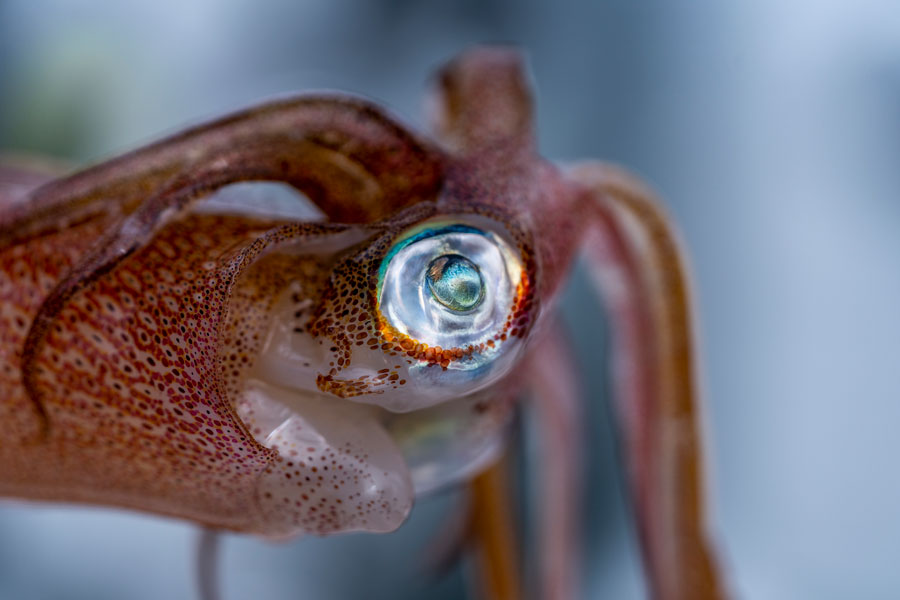 Squid are visual hunters and attack jigs fished on light tackle. Jessica Haydahl Richardson
Dispoto fishes from a 29-foot SeaVee, the twin 300-hp Suzukis providing more than enough power to move from hump to shoal to bridge depending on the night. When the squid concentrate, he’ll drop the hook, but he often makes long drifts to cover ground. “If I’m fishing structure like a bridge or a dock, I’ll anchor or maybe even tie off on it, but drifting across a big flat or shoal seems to be more effective,” he says.
When the boat floats over a motherlode, the fishfinder comes alive with red clouds, signaling the time to deploy specialty squid lures. Dispoto fishes Shimano Sephia Clinch jigs, which have a slight S-curve and a reflective plate suspended inside on two springs. The bouncing plate shimmers constantly, even when the lure is paused. The squid can’t resist the glimmering, bouncing shine, creating a reaction strike — squid are visual hunters. “It’s amazing what that little shaking light does to squid,” he says. “A lot of times, slowly moving the jig is enough to get a squid to commit to it.”
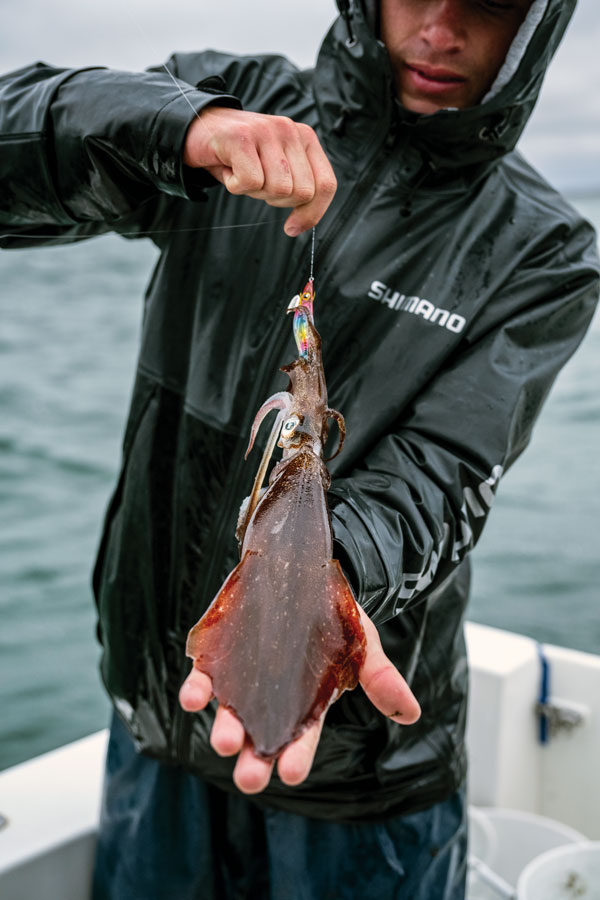 Max Dispoto uses Shimano Clinch jigs to target squid in various depths. Jessica Haydahl Richardson
Jigs are fished on light, inshore rods rigged with 10- or 12-pound test. When the squid sit deep, usually during daylight, Dispoto ties two loops in the leader to create a high-low rig. He’ll fish two jigs of different colors and use a 2- or 3-ounce sinker to bounce the bottom. Tide helps, he says, and you don’t want to fish the slack.
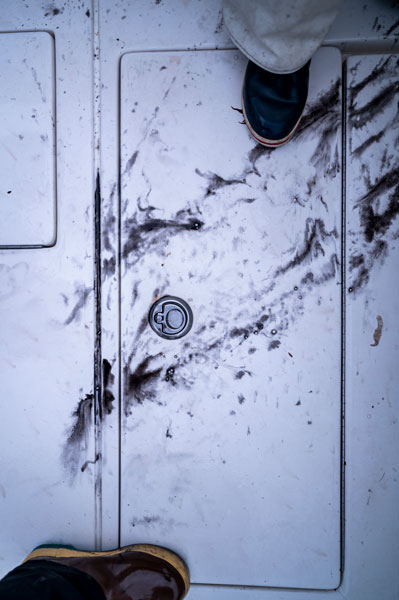 The tell-tale sign of a successful squid outing — black ink on deck.Jessica Haydahl Richardson
When the squid rise into the light, he ditches the weight and fishes them like any other jig. An integrated chin weight helps the cast so he can pitch the jig to darting squid. “You’ll see them up in the lights, throw it out to them, it sinks horizontally down to them, shimmering with the flash boost, and that works really good,” he says. Shore-based anglers fish parallel to the structure, casting along docks, letting the jig sink and working it back.
Catching squid is like a childhood game of tag. A shot of ink is expected yet always surprising. You don’t want to take one in the face. Letting them ink in the water may scare off other squid nearby, but it also means less of a mess, a tradeoff. Dispoto keeps a clean boat, and he doesn’t mind a bit of a stinky, black slick in the water. “If it hurts the fishing a little bit to not get the boat dirty, I’m OK with taking that sacrifice,” he says, but a few black splotches are unavoidable. This isn’t the time to wear a new, $70 fish shirt. “Everyone knows what they’re getting into; it’s part of the fun.”
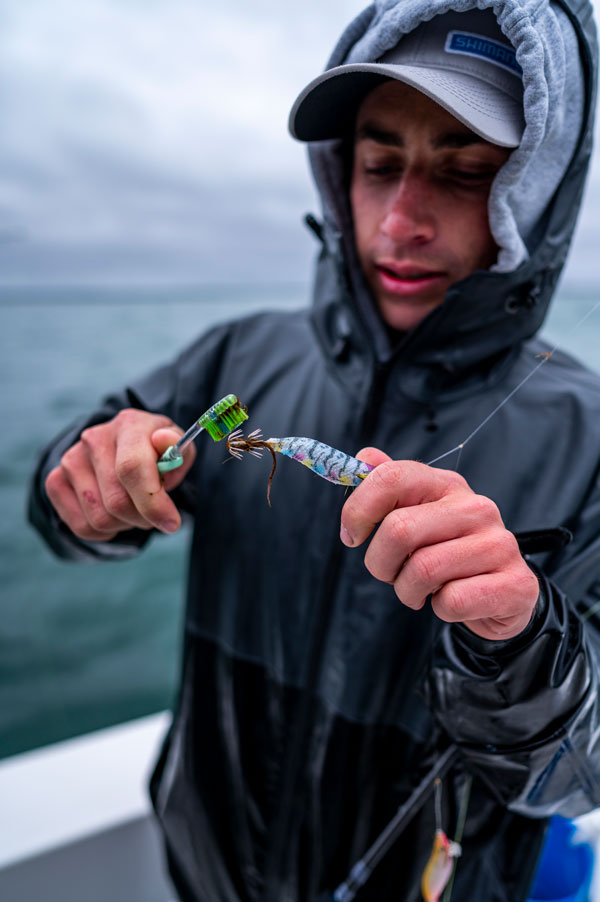 A toothbrush is a handy tool to remove squid remnants from jigs. Jessica Haydahl Richardson
When the squid is removed from the jig and placed in a cooler, a toothbrush is used to clean the slime out of the spikes of the jig. The larger squid are kept for offshore baits to tempt swordfish and giant tuna. Smaller squids work well cut into strips for fluke and sea bass. A few others will be cooked up fresh.
The bite doesn’t last long, a few weeks tops. Once the schoolies show up and the scup and sea bass move inshore, the squid door closes, and the striper door opens.