As the plane approached Freeport International Airport, I glanced out the window at the clear skies stretching across the horizon and the azure waters shimmering in the distance. The picturesque June weather was a far cry from the catastrophic conditions wrought by Hurricane Dorian four years earlier, in 2019, when the storm’s eyewall pounded Grand Bahama Island for 40 hellish hours. Soon, the rebuilt terminals came into view as the plane touched down on the airport’s only runway. Dorian had submerged this tarmac under six feet of water and turned it into a debris field. Looking at it now, you’d never know.
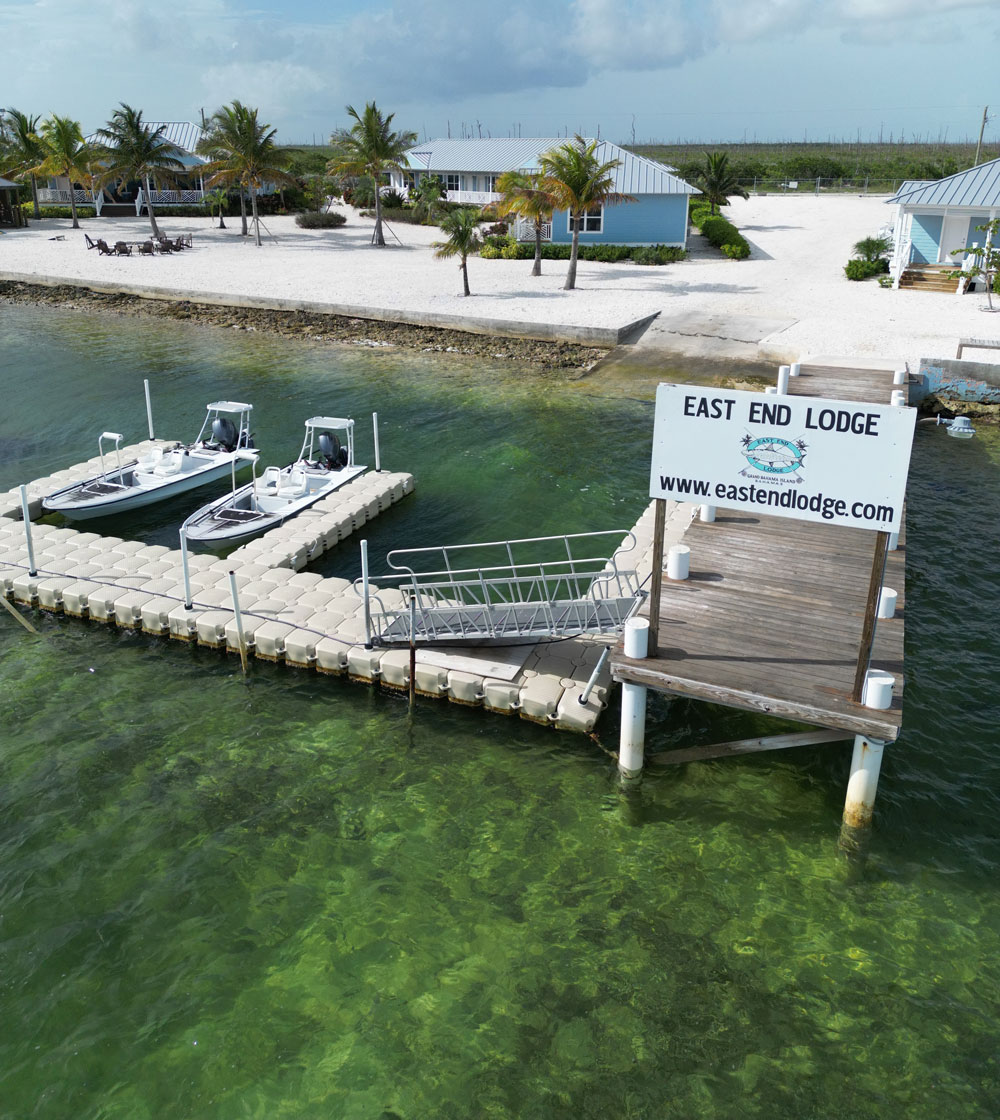 While scars from Hurricane Dorian remain, East End Lodge is open and bonefish are prowling the flats.Nick Roberts
Robert Neher, the owner of East End Lodge, picked up me and my wife, Laura. After an oceanside lunch at Banana Bay, the three of us headed east along Grand Bahama Highway, a two-lane road spanning the center of the 96-mile-wide island. A native of West Palm Beach, Florida, Neher, who is 58, began visiting Freeport in his teens with family and friends, and over the course of the 40-plus years between then and now, he’s seen Grand Bahama wade through a number of phases as political leadership shifted and the tourism economy ebbed and flowed.
“When I first started coming over in the early ’80s, Freeport was famous for its casinos,” says Neher, dressed in an East End Lodge fishing shirt, khaki shorts and flip-flops. “The Rat Pack used to gamble here, and Howard Hughes lived for a while in the penthouse of the Xanadu hotel.”
The island has always been known for its flats fishing, especially bonefish, and I was eager to find out how the bones had weathered the storm. Targeting bonefish in the clear Bahamian waters was the impetus for Neher to open a lodge in 2009, located in McClean’s Town, a settlement 50 miles from Freeport in the rural East End area, which has long attracted anglers. “Not only is the East End one of the Bahamas’ most versatile fisheries, it has amazing guides and amazing people,” Neher says. And it doesn’t take long for visitors to be welcomed into the McClean’s Town bonefish brotherhood. “Everyone knows each other.”
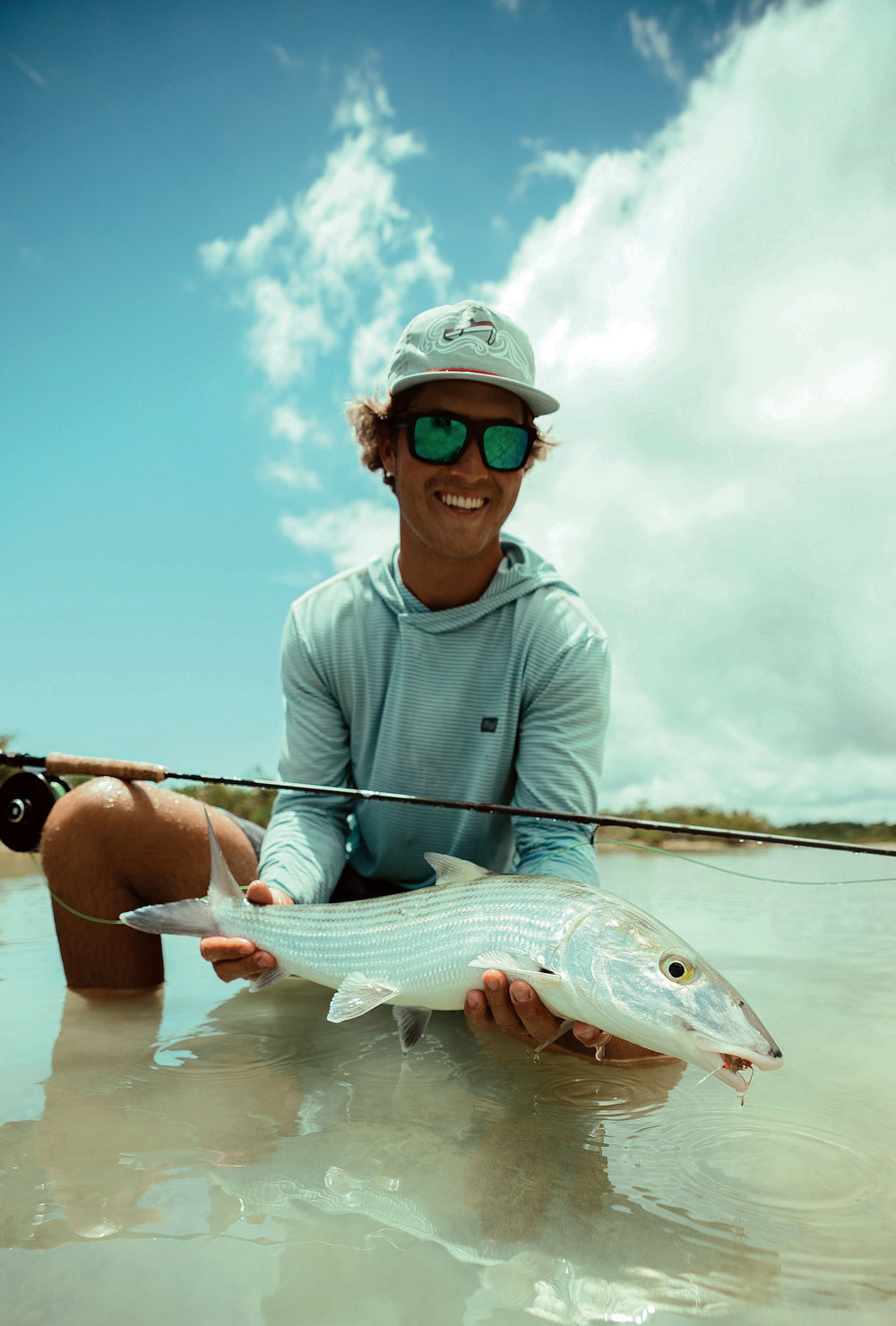 Casting to tailing bonefish on a pristine Bahamas flat will always draw anglers looking for a fly-fishing fix.Joseph Evans
What sets the East End apart from many other flats-fishing destinations is its topography. Five large channels run through Grand Bahama’s eastern horn from southwest to northeast, providing anglers with ample wind protection and the ability to fish optimal tides throughout the day. The tides cycle through an expansive network of flats and creeks, and since there’s a three-hour difference between the tides on the north and south sides of the East End, you can go from fishing a high tide to a low, incoming tide (or vice versa) in as little as five minutes.
We retraced the westward path of Hurricane Dorian as we drove, and the scars from the storm were all around us. On both sides of the road, bare pine trees sat at half mast, their tops snapped off like toothpicks by Dorian’s winds.
The storm ultimately veered north, largely sparing Freeport and those who sheltered there. The same cannot be said for Grand Bahama’s East End, where Dorian made landfall late at night Sept. 1, after slamming into the Abaco Islands earlier in the day. Dorian battered the East End’s close-knit communities with sustained winds of 185 mph. Neher pointed out areas where the storm surge crested to an unimaginable 24 feet, covering the pine forest and swallowing the modest houses along the road.
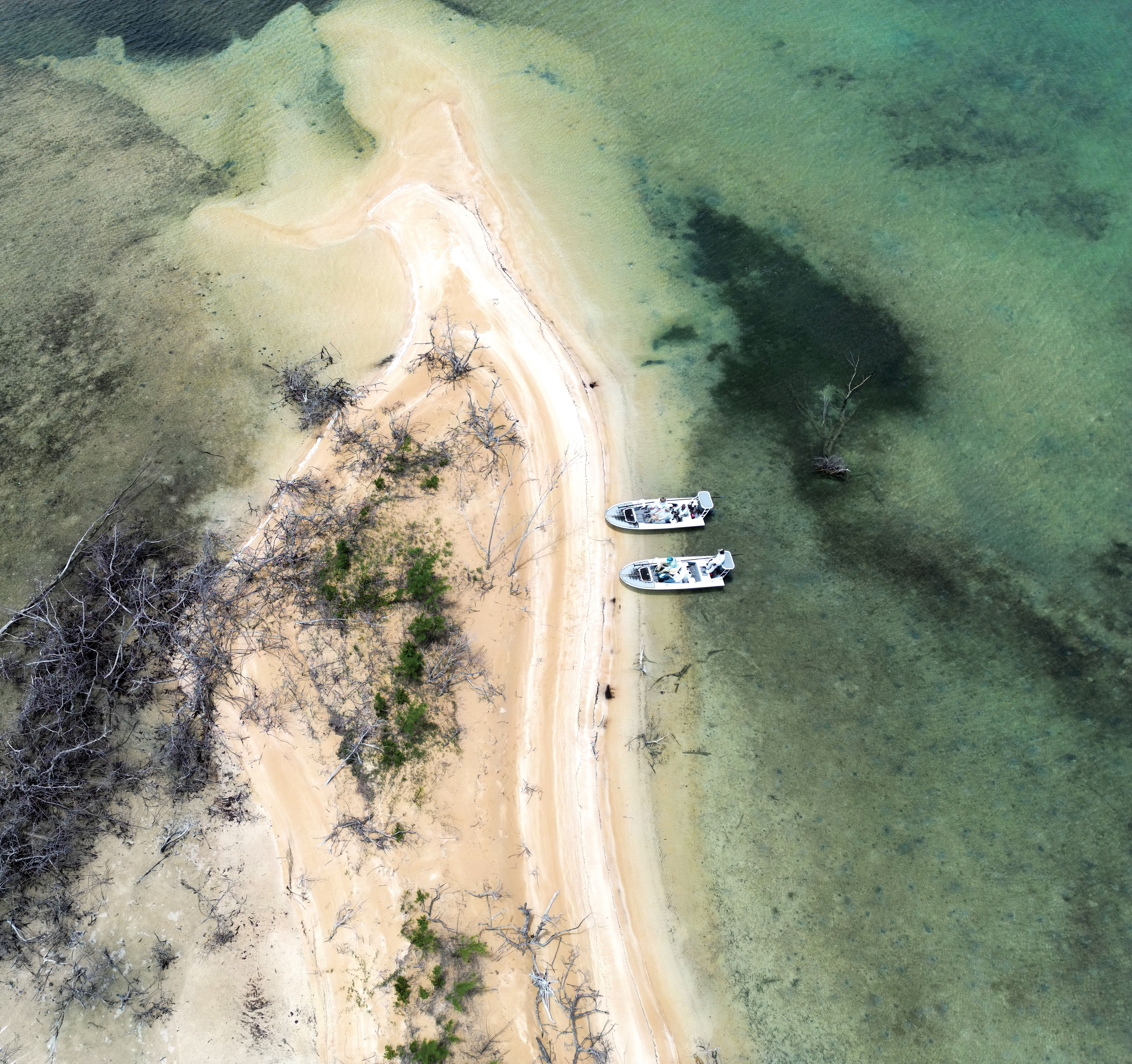 The guides fishing out of East End Lodge have been poling these flats for decades.Nick Roberts
As we passed through the communities of Pelican Point and Rocky Creek, Neher retold one of the many tragic stories of locals swept from their homes by the floodwaters and lost at sea. But amid the lingering ruins left by the storm that will forever haunt the northern Bahamas are ample signs of rebirth and new construction — endeavors rooted in hope and resilience. Locals are looking forward, not back. We passed the bustling ferry landing in McClean’s Town and arrived at the newly rebuilt and remodeled East End Lodge, which reopened in March 2021 after suffering major damage.
Asked about the difficult decision to rebuild, Neher says, “I talked to my head guide and founding partner, Cecil Leathen, and his wife, Sharisia, our general manager, and I was like, ‘Guys, do you want to do this again?’ And they said, ‘Yeah, absolutely,’ and I said, ‘Good, I do, too. But we’ve gotta be all in on this.’ And we were all in.” For Neher, the decision was also personal. “I feel like I’m supposed to be at the end of the road at the end of the island. That’s my destiny in life.”
More than two years had passed since I’d last fished out of East End Lodge, and I was thrilled to see familiar faces. Palms rustled in the breeze, and the sun danced on the water as I strung up our rods in preparation for what tomorrow might hold. Hopefully the bonefish were also thriving in their home waters.
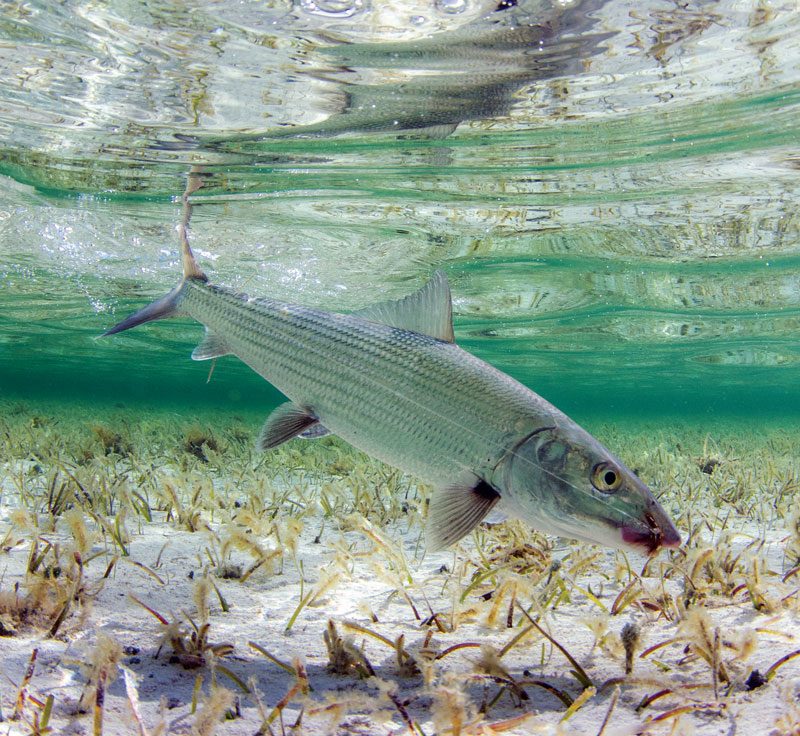 “The trick to seeing if bonefish have been around, or how long they were there, is to look at the feed spots on the bottom where they’ve been digging up crabs. Some people call them ‘puffs’ or the ‘mud-feed,’ but I call them the ‘foot tracks’ of bonefish,” says guide Randy Reckley.Adrian Gray
Chasing Ghosts
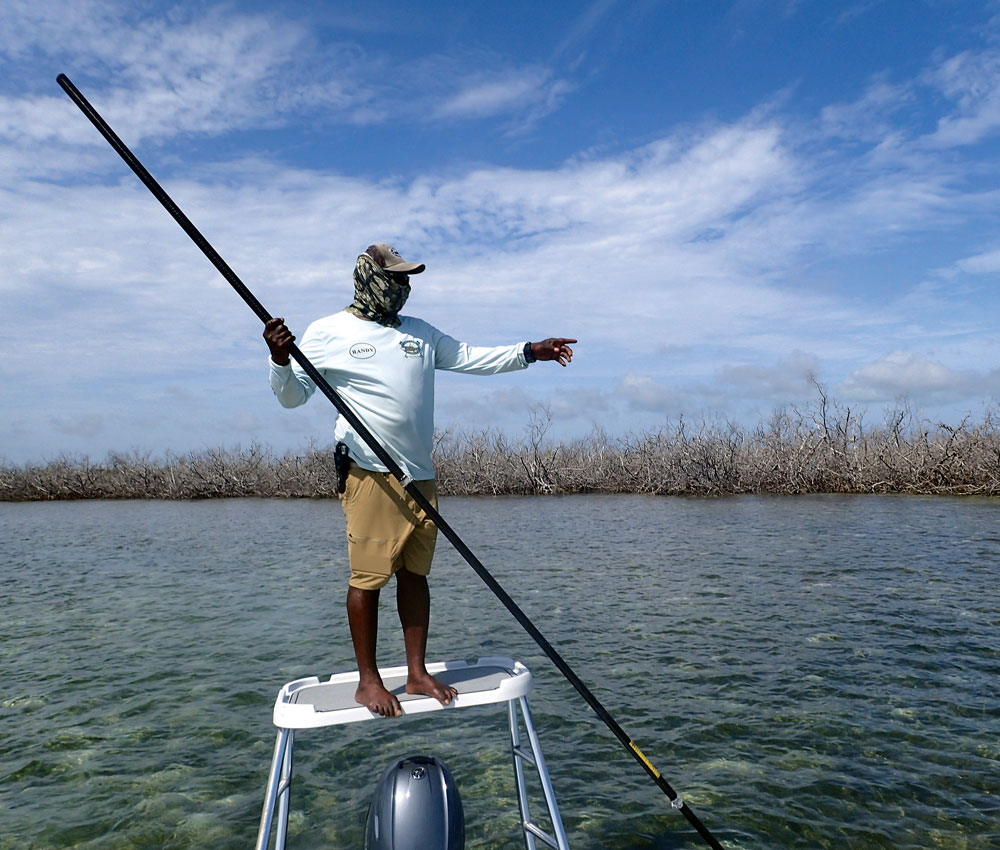
The bow of the 16-foot Dolphin Super Skiff sliced through the light chop as we headed out with guide Randy Reckley, whose older brother Walter also guides for East End Lodge. Bonefishing pumps in the Reckley brothers’ blood. They know East End’s maze of cays, creeks and flats by heart. “This is my backyard,” says Reckley, who grew up in Rocky Creek, just down the road from McClean’s Town. He is still in the process of repairing the damage to his home wrought by Dorian. Randy and Walter’s late father, John, was a pioneering bonefish guide in the ’80s and passed his knowledge to his sons, who have carried on his legacy and guided for more than 20 years.
Bonefishing is a lifeblood for the town and a major economic driver for the Bahamas. The sport generates $169 million annually for the island nation, according to a 2018 economic impact study funded by the Bonefish & Tarpon Trust, a science-based conservation organization headquartered in Florida. With only one lodge remaining in East End, the jobs and tourism it brings to the local communities are crucial. After Hurricane Dorian, the population of McClean’s Town dwindled from about 175 residents to just 40 or 45. Displaced residents resettled in Freeport or moved to other islands.
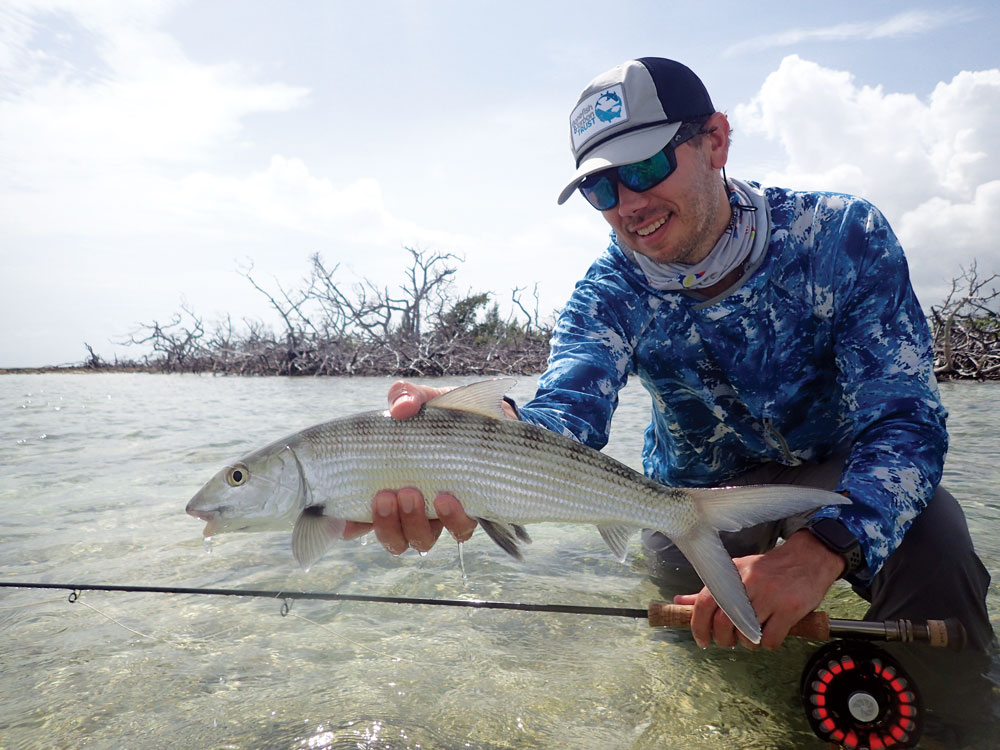 The writer, Nick Roberts, with a respectable bonefish caught on fly while wading the flats of Grand Bahama. Nick Roberts
We cruised into the channel along Big Harbour Cay and passed what remained of historic Deep Water Cay lodge, which once hosted a who’s who of legendary saltwater anglers, including Joe Brooks and Ted Williams, before succumbing to Dorian’s wrath. As we motored north to the bonefish flats Reckley had in mind, vast expanses of dead mangroves lined both sides of the channel.
In the wake of Dorian, BTT funded a study by Dr. Michael Steinberg, a mangrove expert at the University of Alabama, to assess the damage. Utilizing satellite imagery and on-the-ground surveys, Steinberg and his team found that Dorian had damaged or killed roughly 74 percent of Grand Bahama’s mangroves and 40 percent of Abaco’s across an area of 69 square miles. The devastation is a major concern given the critical importance of mangroves to the marine ecosystem, the fishery and coastal communities. Mangroves literally hold the flats together, preventing erosion and providing essential habitat for myriad species, including bonefish and the crabs and shrimp they feed on. These resilient evergreen trees also shield coastal communities from storms by blocking wind and reducing wave height and flooding.
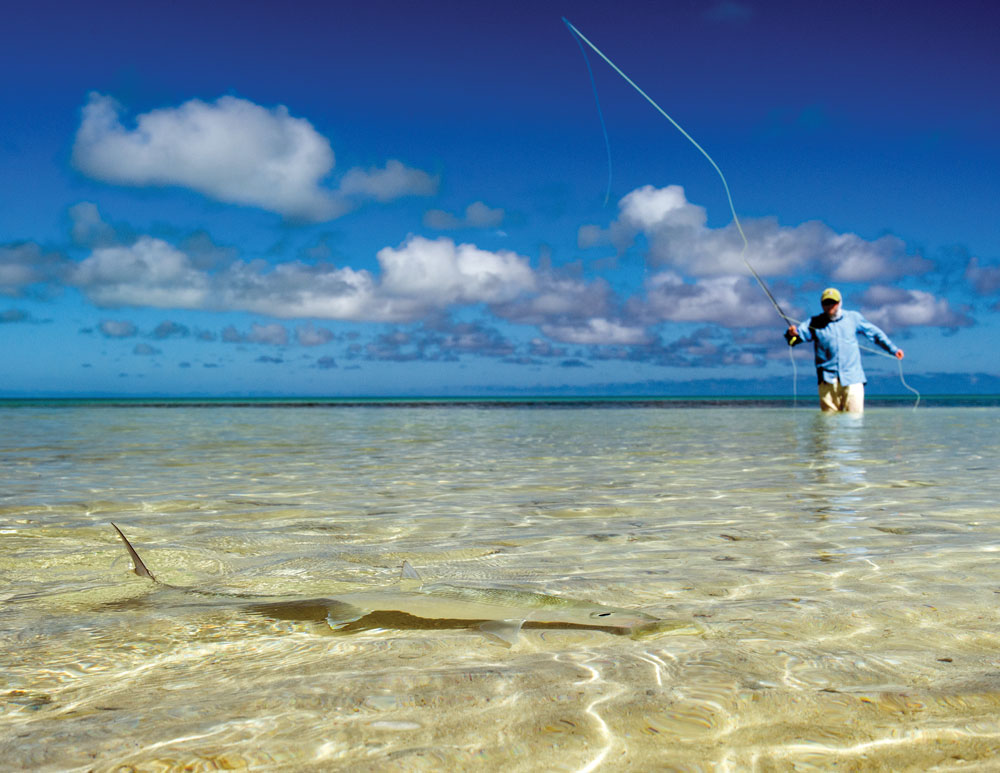 Groups such as Bonefish & Tarpon Trust are working to replant mangroves in the Bahamas that were destroyed by Hurricane Dorian. Mangroves provide essential habitat. Jim Klug
While mangrove forests are capable of regenerating after hurricanes, the damage Dorian caused was so severe that the seedbanks were wiped out in the hardest-hit areas. Without human intervention, the islands’ mangroves could take more than a decade to recover, and regrowth at the most severely impacted sites may not occur at all, according to Justin Lewis, BTT’s Bahamas Initiative Manager.
To kick-start the recovery process, BTT partnered with several Bahamian non-profits and MANG, a Florida-based apparel company, to launch the Bahamas Mangrove Restoration Project, which has planted 55,000 trees to date with the help of local bonefish guides, students, volunteers and government officials. East End Lodge and its staff have played an active role in the ongoing project, from providing logistical support to ferrying volunteers and trays of mangrove seedlings to planting sites. By lending a hand to restore the mangrove-lined flats and shorelines in their “backyard,” as Reckley says, the guides are helping to ensure the long-term health and sustainability of their fishery.
— Subscribe to the Free Anglers Journal Newsletter —
As we motored up the channel, I eyed new growth emerging amid the sun-faded skeletons of dead mangroves. I was especially pleased to see a stand of young, rooted mangroves that I helped plant with a group of students, volunteers and guides in the spring of 2021 at the mouth of Roemer Creek. Their roots and life felt symbolic of my own return to this region to fish for bones. Reckley, too, sees signs of recovery along the flats. “People are getting more comfortable,” he says. “The fish are getting comfortable on the flats, too. The mangroves are coming back, turning green.”
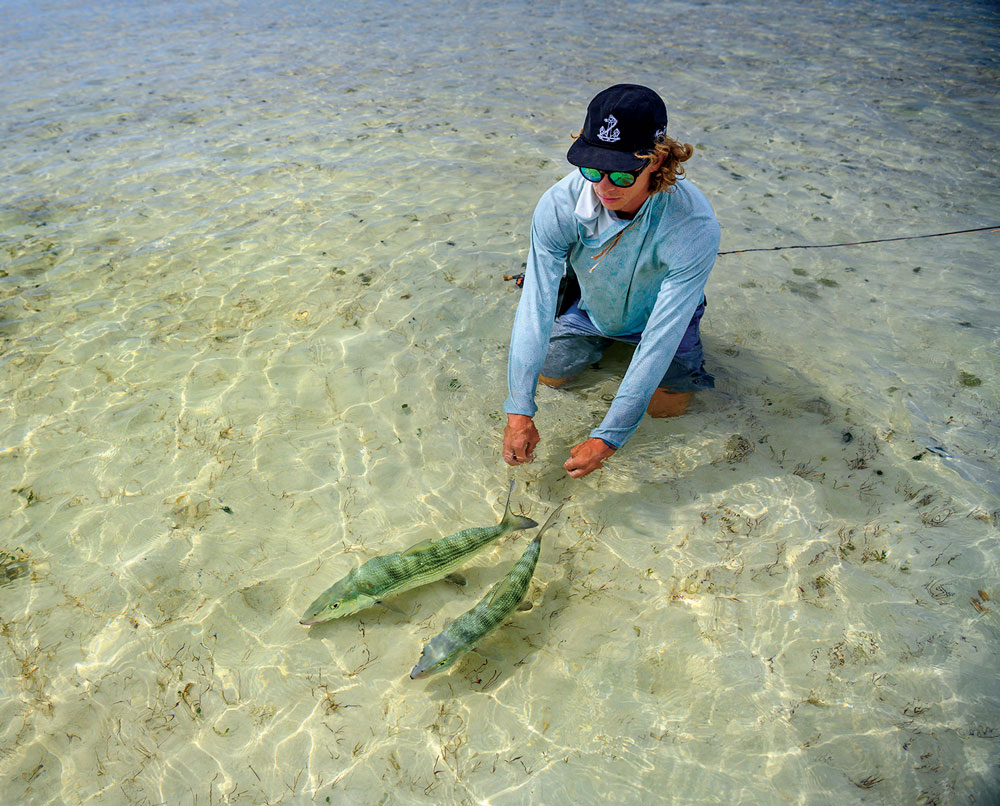 Bonefishing generates $169 million annually for the Bahamas and provides jobs and opportunity for island residents. Jason Stemple
When we reached a sandy flat within a bay shielded from the steady wind, my wife stepped up to the bow platform with rod in hand, and Reckley began to pole the skiff along the shore. The falling tide was still high, so we fished close to the mangroves, hoping to intercept bonefish as they followed the tide out. We scanned the clear water for flashes of silver and other tell-tale signs of feeding fish.
“I like to hunt stuff, and this is the closest thing to hunting,” Reckley says. “Once you get on a flat, the trick to seeing if bonefish have been around, or how long they were there, is to look at the feed spots on the bottom where they’ve been digging up crabs. Some people call them ‘puffs’ or the ‘mud-feed,’ but I call them the ‘foot tracks’ of bonefish.”
Like footprints left in the sand, Reckley is able to discern how close the bones are and in what direction they’re traveling. “If the spots are fresh, they’ll look bluish. Get ready,” he says. “But if they’re light and faded, that means the fish were there maybe a half-hour ago and you need to look a little further.”
Before long, Reckley eyes a set of fresh tracks, and we stealthily follow them to their source to find a dozen or so bonefish merrily feeding along the flat with the outgoing tide. Laura placed a cast in front of them and stripped the spawning shrimp fly until a fish snatched it and streaked toward the middle of the bay, making her reel sing. After she released the fish, Reckley poled farther down the shoreline and honed in on another school. I caught one from the group, and more fish appeared on the flat within minutes of me releasing it. The steady action brought to mind a similar morning I’d experienced with Reckley’s brother, Walter, two years earlier. The East End’s bonefish were just as strong and plentiful as I remembered.
 After a major rebuilding, the crew at East End Lodge is ready to welcome visitors back to the flats. Nick Roberts
Changing Tides
Back at the lodge, I caught up with head guide and founding partner Cecil Leathen on the porch. He had just finished a three-day stint guiding a hall-of-fame golfer with a passion for bonefish. Leathen and Sharesia live in McClean’s Town, a stone’s throw from the lodge, and together they run the day-to-day operations. Growing up in East End, Leathen did some fishing with his dad, but it was Walter Reckley who taught him how to catch bonefish. “I saw the way Walter and a few other guides poled the boat, and I said, ‘Man, I think this is something I would love to do,’ ” Leathen says. In 1994, he started working at Deep Water Cay, where Walter was guiding at the time. Now, almost 30 years later, the men continue to work together on the same waters where they cut their teeth.
Leathen is grateful to Neher for starting over. “For me, it’s the best thing that ever happened in the East End of the island,” he says.
The following afternoon, Reckley took Laura and me to a narrow flat that borders the open sea and has a reputation for big fish. From the bow, I scanned the mottled sand-and-seagrass bottom for signs of life. Reckley soon spotted a meandering pair of bonefish in the distance from the poling platform. As we closed in on them, their dark silhouettes came into focus. They were larger than average and slowly quartering away from us. When we got within range, Reckley said, excitedly, “11 o’clock. Shoot it!” I let a cast sail, and the fly landed in their path. The closer of the two immediately turned and sucked in the fly. I stepped out of the skiff and fought the fish as I walked along the flat, bringing it to hand after a few thrilling runs.
This scenario has played out among the guide, the angler and the gray ghost countless times on the vast flats of East End, and will continue to as the wounds left by Hurricane Dorian slowly heal. East End residents speak of Dorian as a dividing line: life before Dorian and life after Dorian. Recovery continues. Momentum is on the side of the fishing guides and their fellow East End residents who are committed to working toward a better tomorrow and finishing the job they set out to do after Dorian moved on. “I thank everyone who comes,” Leathen says. “They’re helping us build our town back.”