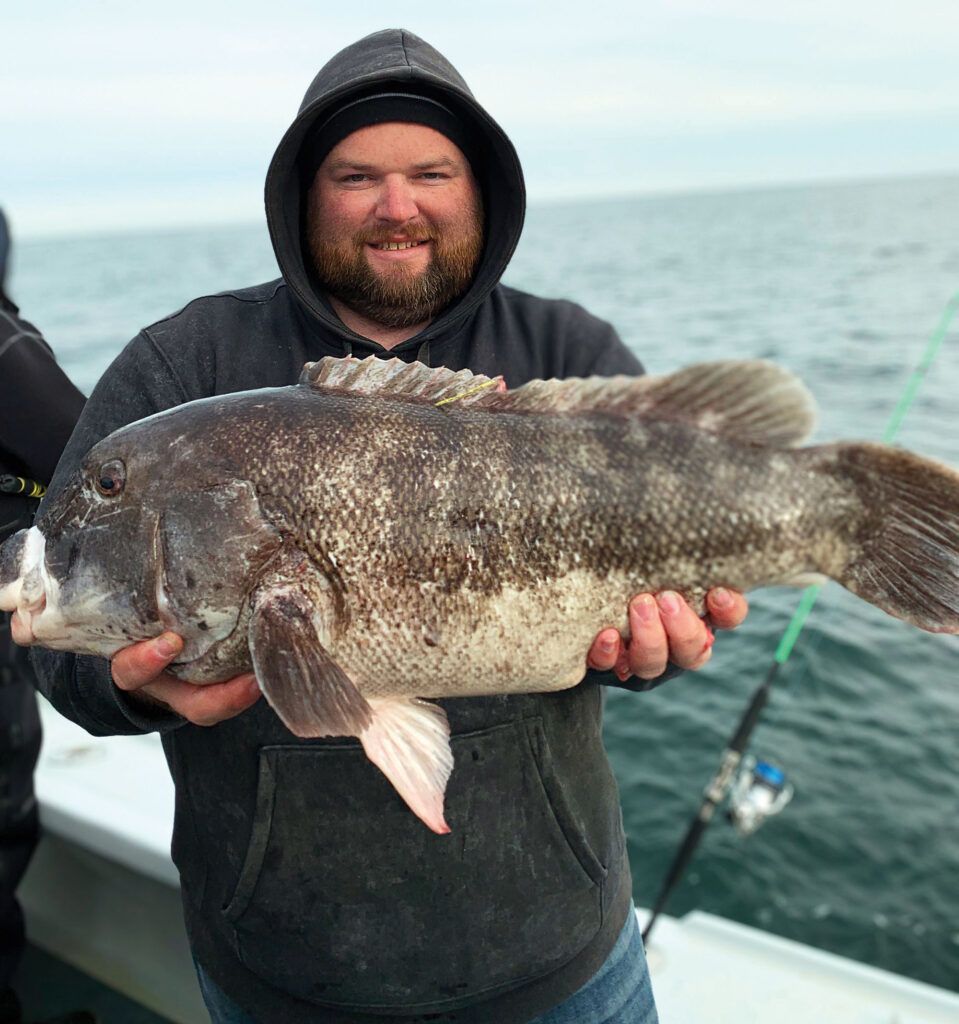
Tautog (Tautoga onitis), or blackfish, are a wrasse unique to a stretch of the East Coast from the Canadian border to South Carolina. These bottom dwellers prowl waters ranging from shallow boulder fields to offshore wrecks. Dining primarily on crustaceans, mollusks and gastropods, they’re brutish adversaries that die-hard aficionados are woefully addicted to. And it’s not just the challenge of catching blackfish they adore; it’s eating them, too. Highly favored as table fare, the fillets have a firm, mild, white meat that is often referred to as poor man’s lobster — a tired but true comparison.
Capt. Jon Azato grew up fishing in Delaware and has spent 20 years tangling with tautog, but he’s seen their popularity skyrocket in the last seven or eight years. I also grew up catching blackfish and worked as a mate aboard a charter boat on Long Island Sound, and I agree with him. Why have they become so popular? Technology has made it much easier to target togs. Relief shading, better bottom and side-scan imaging, and trolling motor spot-lock positioning might be contributing, along with a poor striped bass fishery. Whatever the case, the tautog is having a moment.
“The best way I can describe it? It’s like a cult fishery,” says Azato, who runs a 45-foot Young Brothers, No Limit, out of Rehoboth Beach, Delaware, and Newport, Rhode Island. “Guys will do anything and everything to catch a 10-pounder. I have groups book me for 15 days a year. It’s addicting, because you miss so many of them. You really gotta work for them. They’re not like other bottom fish, where they really just hang themselves. It’s more challenging.”
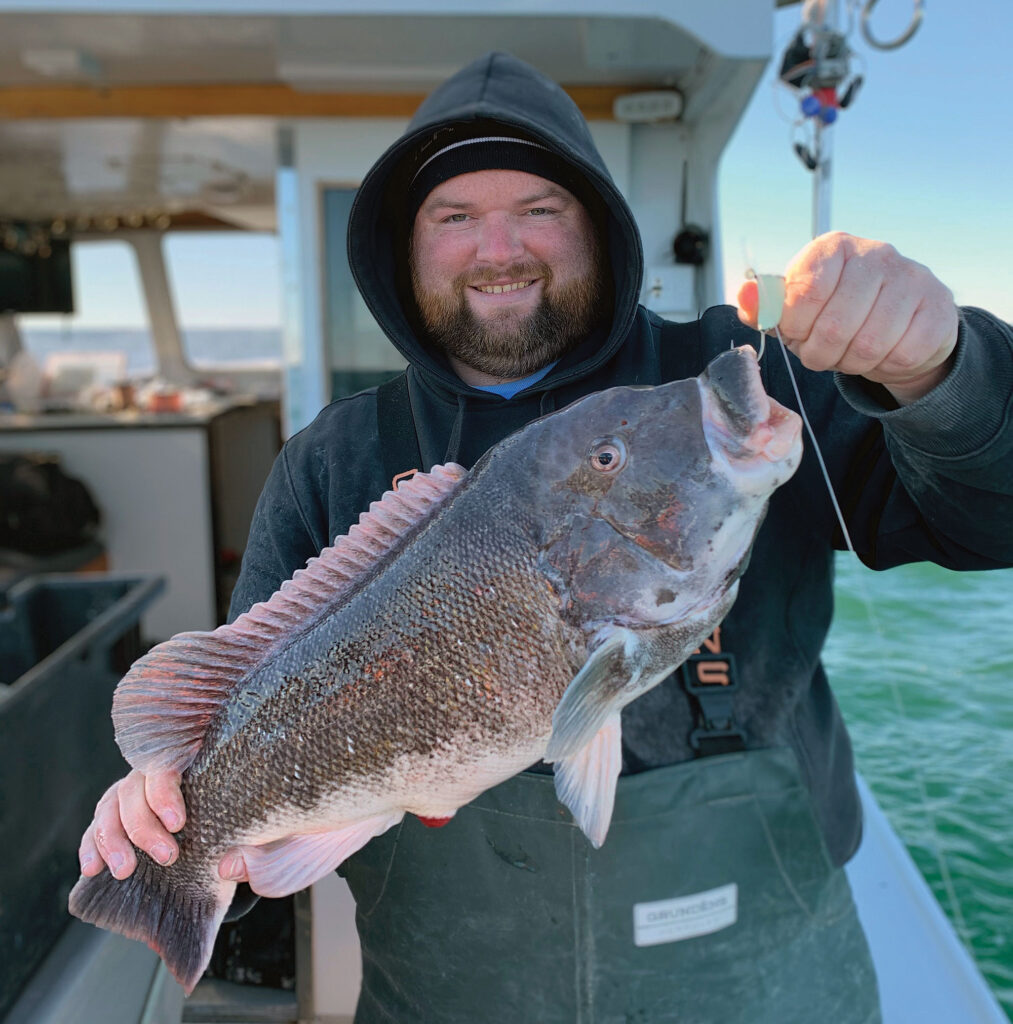
This style of fishing appeals to the intrinsic gambler within all anglers: “The more they miss, the more they wanna try harder, the more they wanna go again,” Azato says, “especially when they are successful.”
Whether it’s the action, the prospect of a trophy — or a world record, which is particularly likely in Azato’s home waters around Delmarva — or the dense, white flesh (which freezes remarkably well) that draws anglers to these snaggle-toothed reef prowlers, a little advice from a seasoned captain goes a long way.
Azato landed the 22.9-pound Delaware state record aboard No Limit in 2023. He currently splits his time between Delaware and Rhode Island, and keeps his finger on the fishery. He fishes a range of depths but says his three techniques are all you need to chase tog, no matter where you find yourself.
Crabs are the bait of choice for tautog. Other critters will work, but the most affordable and readily available options are (invasive) green crabs, (invasive) Asian shore crabs and white-legger crabs. Different crabs work better in different environments, and you’ll have to sort out what suits your locale best, but fish tend to prefer white-leggers when fishing deeper waters. Anything deeper than 50 feet calls for a hook-and-sinker rig, as the bottoms of areas where tautog reside, particularly around wrecks, tend to be sticky, and tides and currents make fishing a jig difficult and potentially expensive.
Azato uses a 60- to 80-pound pink Ande monofilament leader when fishing crabs, as tautog aren’t leader shy, he says. When jigging, Azato switches to a fluorocarbon leader for better abrasion resistance. When fishing with weight and hooks, a slider rig is preferred because it lets the crab ride more smoothly in a strong current or tide. Azato prefers a 4/0 Gamakatsu Octopus hook for these fish.
To make a slider rig, he slides a free-swinging hook onto the leader above a snelled hook. You can face the hook either way, so the hooks sit side by side or opposing one another (known as a “sweetheart” rig). Each hook goes into either side of the crab, and the concept allows you to more effectively fish larger baits without having them easily stolen. If you’re a world-record seeker, use a single hook, as the slider rig does not jive with IGFA rules. About 10 inches up the leader, Azato ties a perfection loop, and another loop knot at the bottom is used to affix a sinker.
A snafu rig also pairs two of the same hooks, but they’re snelled at either end of a leader (about 18 inches apart to start). A dropper loop is tied into the middle of the leader where, as with the slider rig, it connects to the main-line leader with a second loop beneath for the weight.
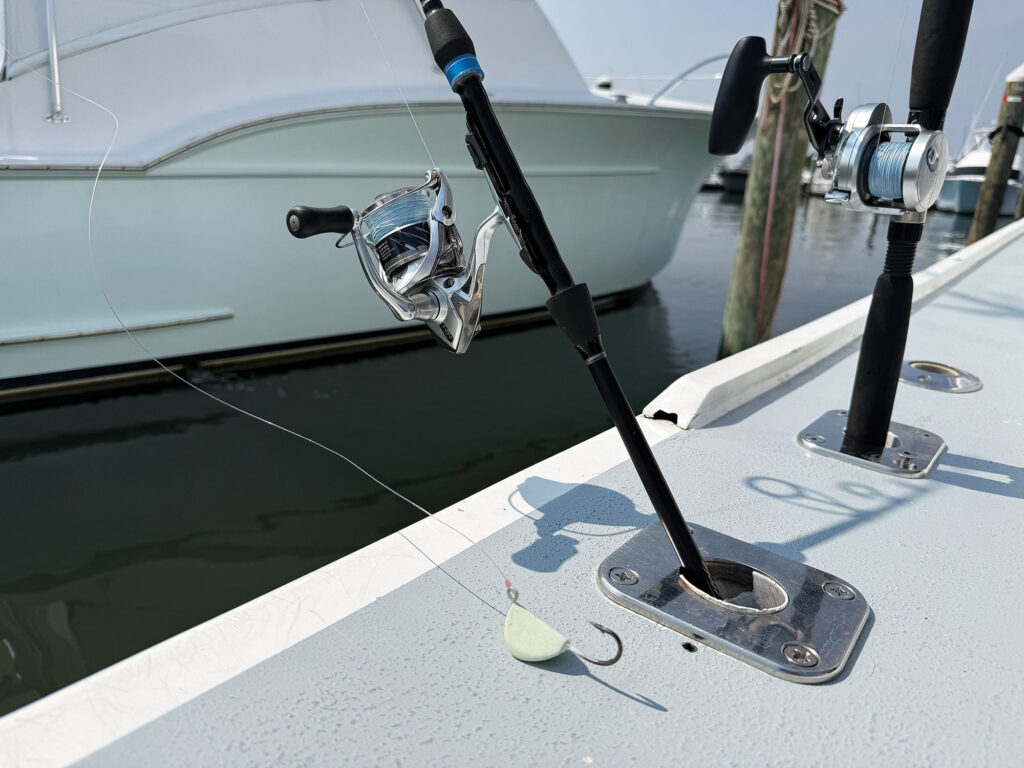
Lastly, and most trendy, is a tautog jig, which typically consists of a bulbous jig head for battling heavier fish. Azato prefers Magictail Back Bay Series tog jigs in a glow-in-the-dark pattern, from 0.75 to 3 ounces. The weight varies with the amount of current or tide, and the water depth. Azato attaches the jig to a 4- or 5-foot section of 60-pound fluorocarbon, which he admits is overkill in some scenarios but won’t deter bites.
To fish with Capt. Jon Azato out of Rehoboth Beach or Newport, visit fishnolimitde.com or call (302) 345-0545.