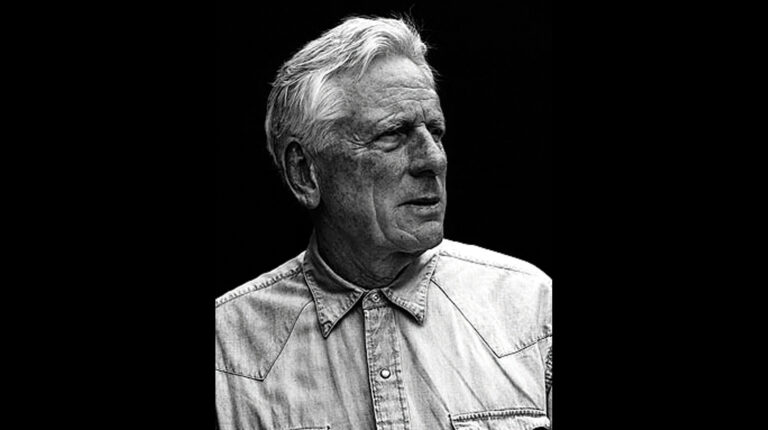
Sitting on a rock by the Rynda River on Russia’s Kola Peninsula, the tall man with tousled gray hair and big blue eyes greedily feasts on a piece of rare Moscow beef, the juice running down his fingers. He has spent the morning making graceful casts with his double-handed fly rod. His private MI-2 helicopter, a relic of the Soviet era, is perched on a ridge behind him, the pilot ready to whisk him off to the next salmon pool after lunch. Two quiet Russian fishing guides are hunched over a campfire, cooking him potatoes.
“You know,” says the man, with a smile. “It’s good to be at the top.”
In Stockholm, James Prosek, the artist and author, and I board the chartered Embraer 145 jet, bound for Murmansk, with 50 or so others who hail from Great Britain, Ireland, Scotland and Sweden. We are the handpicked guests of one Peter C. Power, the 64-year-old millionaire former British industrialist who, for all intents and purposes, owns two camps within 2 million acres of austere Russian tundra that happens to be veined with four rivers — the Kharlov-ka, Rynda, Eastern Litza and Zolotaya — which host some of the last pristine runs of Atlantic salmon in the world.
On the plane — his charter — there is chatter all around about Peter, who seems to grow more mythical, more mysterious, with each foot of elevation gained over the Finnish Lapland.
“It’s like he’s the lord of his own fiefdom,” an Irishman in the seat behind me says, his eyes incredulously wide. “It truly is.” It’s his third trip to Peter’s camp on the Kharlovka.
“I heard he knows Putin personally, that he can call him anytime he likes,” I overhear a Brit in front of me tell his seatmate between sips of a gin-and-tonic.
There are other rumors, of Russian women and big, silvery salmon.
On the plane, James and I sit on either side of Håkan Stenlund, the photographer from Sweden. James has insisted on calling him “Swenson,” for no other obvious reason than liking the sound of it. Swenson has been to Power’s camps a dozen times. “Peter is a nice guy,” he tells us. “You will like him.”
What about the rumors? “Well, you’ll find out for yourselves,” Swenson says, with an inscrutable grin.
At the airport in Murmansk, the gateway to the Kola, a homely old woman serves us steins of beer as we wait for the helicopters that will take us to the camps. The bar is dank and dirty. The speakers in the ceiling pipe in songs by the J. Geils Band and Foreigner. Our three beers cost $3. I give the old woman a $1 tip. She smiles, flashing a twinkling rack of gold teeth.
We hop into the massive transport helicopter, built during the Cold War. We are each given headphones and told to relax and make ourselves comfortable. The helicopter gasps and lurches as it takes off. Its rattle is felt in our teeth. Some of the wiring on the ceiling is held together by a piece of silver duct tape. We gaze out of the small windows. Below us, miles and miles of rushing tundra.
When we arrive at the Kharlovka camp, we are greeted by Peter. He strides up the wooden walkway to the landing platform, accompanied by two stout Russian men and a stunning, petite, blue-eyed, raven-haired young woman. They all walk a half step behind him. We gather around Peter in a semicircle, holding our bags.
“Camp rule number one is that all guests must play hard and work hard,” Peter says, smiling. Then his smile drops. “Camp rule number two is that all the women here belong to me.”
There are murmurs, half laughs, among the gathered. They are cut short when they are not reciprocated by Peter.
We walk to our cabins.
I turn to Swenson. Before I can say anything, he tells me: “That’s Peter’s summer girl.” Despite the fact that I am here to write a story about Peter, I won’t lay eyes on him again until four days later.
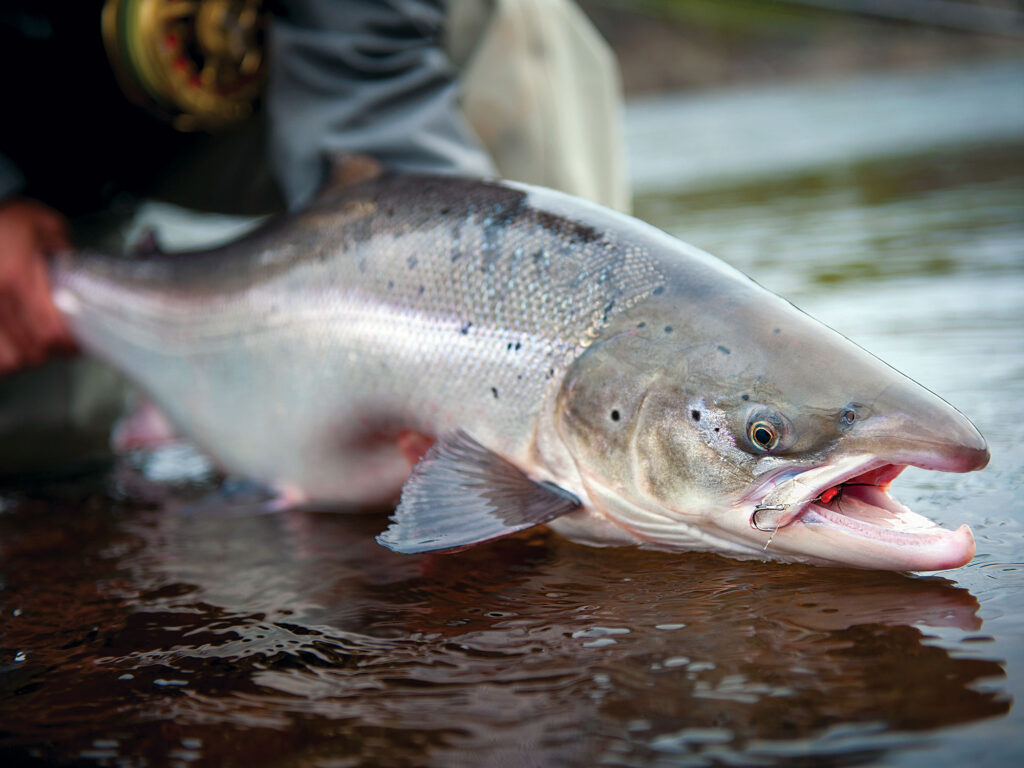
We fish for three straight days, on the Litza, Kharlovka and Zolotaya. We catch more Atlantic salmon during that time than most salmon anglers will catch in a season. They take swinging wets, dries on top. Most are in the 15- to 20-pound range. It is feverish.
But I am burdened a bit by worry. Every day, I ask when I might be able to speak with Peter. “Tomorrow,” I’m told, on three successive days. Peter seems to be avoiding me, and has gradually grown into some Kurtz-like figure.
And then he shows.
At breakfast, a great black bird of a helicopter swoops down from the sky and lands at the camp. “He’s here,” someone says.
As the blades chop-chop-chop overhead, Peter steps out of the helicopter. He’s wearing his waders and cupping a cigarette. He is accompanied by two guides — again, a half step behind him — but no woman.
The Russian employees all walk to greet him, hesitant but insistent, a mixture of love and fear in their wary postures. Peter puts them at ease, says hello, shakes their hands. With his left hand, he sweeps the gray hair away from his big blue eyes. In his right hand, he holds his cigarette.
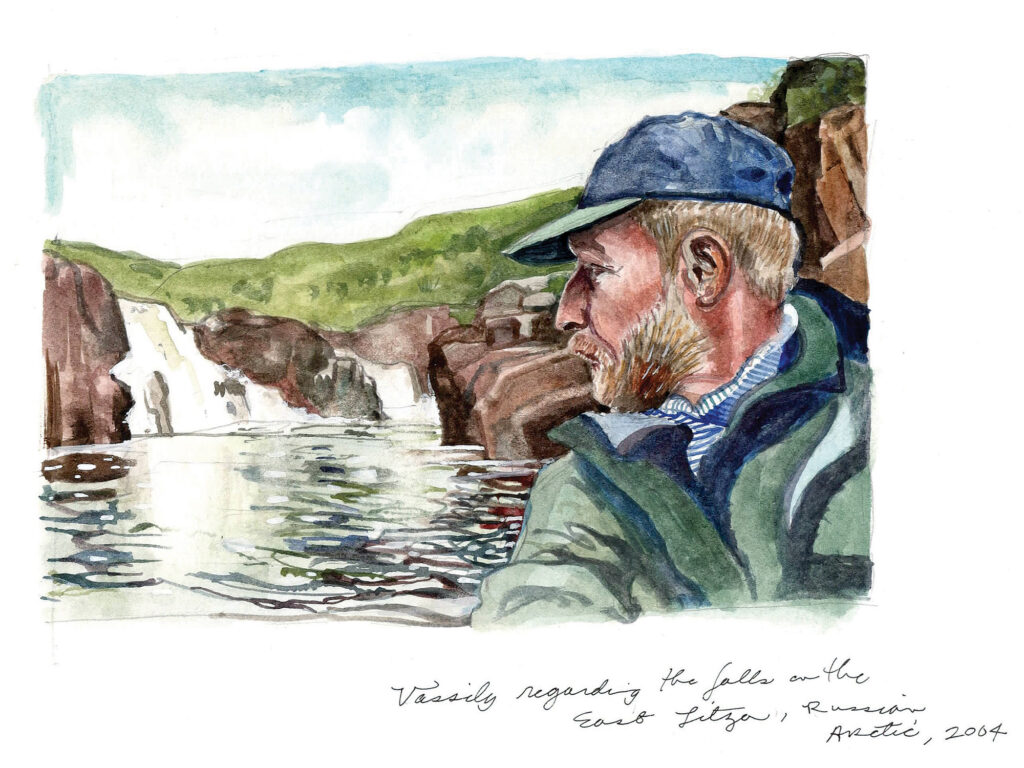
James, Swenson and I jump into the helicopter with Peter, who sits shotgun and points to various things with his cigarette as we fly over the camp. There is a homemade ashtray on the helicopter door. We stop first at his new dacha, one that he’s building on the Kharlovka to complement the one he already has on the Rynda, up the hill from that camp. “Some people collect art,” he tells me. “I collect houses on salmon rivers … and art.”
We fish that morning for native brown trout on the upper Rynda. The trout are absolutely beautiful, with big black spots on their flanks. They fascinate James.
At lunch, Peter turns to James.
“How do you prefer to be addressed, as James or Jim?”
James says it doesn’t really matter, but that “James” would be fine.
“OK, Jim,” says Peter.
That night, we move to the Rynda camp and join the festive, in-progress “young persons week.” Peter’s son and his friends are taking Camp Rule number one to heart. We eat fresh king crabs and drink vodka. Rupert, Angus, Duncan and the rest welcome us into the fold, telling stories about their public school days. Someone produces a guitar after dinner. We sing Don McLean’s “American Pie” a half dozen times. Perhaps the Brits are just being polite.
I fish with Peter for the rest of my time there. He tells me of growing up in the Midlands, of how he — one of six children — rescued the family business after his father died by, essentially, inventing the plastic wrapping that bundles newspapers. It’s one of those gee-whiz inventions, like the Post-It Note or Velcro, a little thing perhaps, but one that satisfied a need and became an absolute necessity and served an integral part in the distribution of newspapers all over the world. He tells me about selling the company for tens of millions to a U.S. concern, and then, directionless, going on a three-year bender that landed him in rehab. He tells me about emerging from rehab, sober and with a sense of purpose, and how he leased this property — off limits during the Cold War because of its military bases — for 49 years, with the idea of running camps that cost $10,000 a week to fish, and then plowing that money into ensuring the health of these last great runs of the threatened Atlantic salmon. He tells me about how the Russians viewed him as “an extremely rich nutcase,” and how he has his rivers patrolled by guards with Kalashnikovs to discourage poachers and how he hired bodyguards after receiving death threats. “This is the story of a man who took awhile to figure out how to live a great life, then decided he would do so by creating happiness,” he says. “It’s just magic. Bloody magic.”
The rumors about Peter, I decide, all contain within them kernels of truth. Yes, there are summer girls, and yes, Peter has, like Kurtz, gone a bit native. But I figure out that the more prurient rumors mostly originate in the Kharlovka camp, where the guests only see Peter once or twice during their week, and have the rest of the time to fill in the blanks with their own versions of his life, like the partygoers at Gatsby’s mansion.
Peter becomes, in some odd way, a sympathetic figure, even when he reprimands James and me for not being “serious” salmon fishermen because we do not use double-handed rods.
On our last night in Russia, Swenson and I decide to fish after dinner, in the haunting gray gloaming of the late Arctic summer. James stays behind in camp to play guitar. Swenson and I hike a few miles upstream, then hopscotch our way down, fishing each pool with intensity. At midnight, I stop at Peter’s Pocket, a small pool boxed in a canyon like a present from the salmon gods, and take a short cast. I think I am hooked on the bottom, and I throw repeated overhand casts to try to dislodge the fly. But the rock suddenly starts moving, and I hold on for dear life. For 10 minutes, the contest is an even draw, with neither the fish nor me budging. I can tell that it is the biggest salmon I’ve ever hooked into, possibly over the 30-pound mark that demarcates a “serious” fish. I want to catch it, for myself and to prove something to Peter. I yell in vain for Swenson, who is nowhere to be seen.
After a while, the fish makes its move. It starts slowly upstream, my line following the beast, then accelerates like no fish I’ve ever hooked up toward the rapids above the pool. It leaps, suspended for a moment in the air, and shakes its head and lands, and then surges again. My single-handed rod breaks in half, and the fish goes free. I sit on a midstream rock, my head in my hands, dazed and exhausted.
This excerpt can be found in Rivers Always Reach the Sea, available from Pegasus Books.