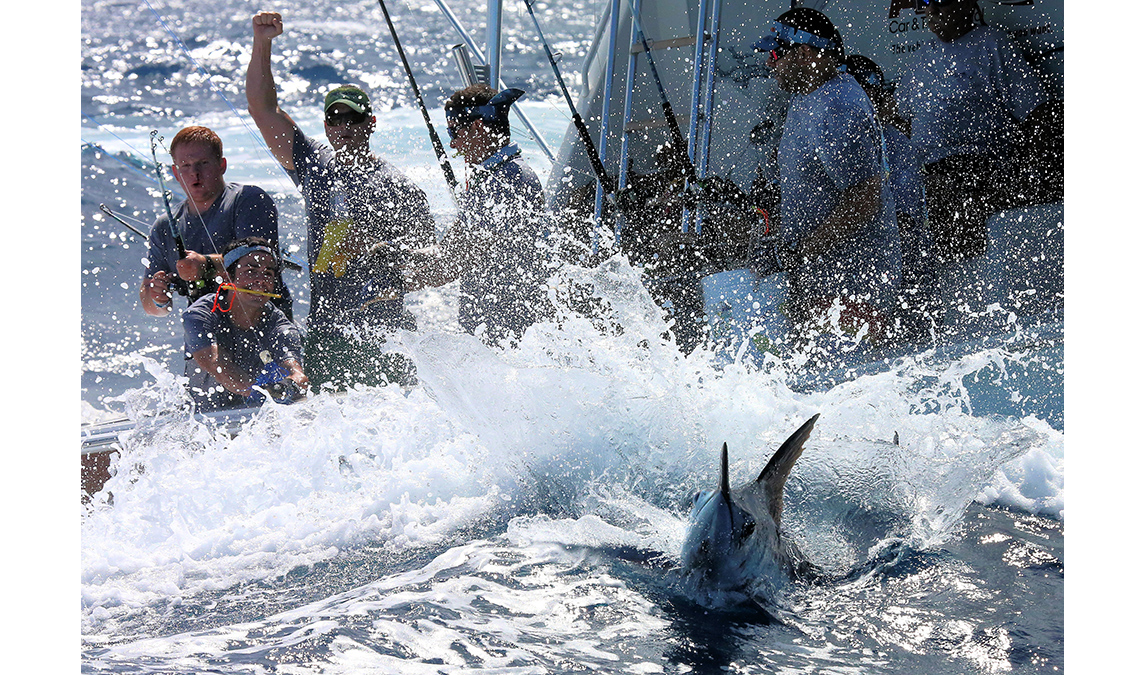
When I think of world-record catches, the image of Alfred Glassell’s 1,560-pound black marlin immediately pops into my head. Glassell landed the fish in 1953 during the heyday of the Cabo Blanco, Peru, fishery. It was a magical time in the annals of sport fishing, when the Humboldt and Ecuadorian currents converged off a nondescript, sandy cape, and the Pacific swarmed with anchovies, whales, birds and billfish. For roughly two decades, this location produced unthinkable black marlin action. Star-studded anglers such as Ted Williams, Ernest Hemingway and Michael Lerner fished these waters.
I’ve stood next to a mount of Glassell’s fish. It’s the size of a pickup truck and as thick as a redwood. I’m being a tad hyperbolic, but it’s massive. To think it was caught on primitive tackle (by modern standards) from a single-engine, non-planing boat with none of today’s high-tech electronics makes the catch all the more storied. It’s one of those records that may stand for eternity. Unapproachable, out of reach — the Everest of the fishing world.
How could I, a busy dad and weekend warrior, ever accomplish such an angling feat? Am I setting the bar a bit too high?
Some anglers are obsessed with obtaining world-record status. They tie every knot like their life depends on it. They test the breaking strength of their line. They spend weeks every year fishing for records at exclusive lodges. They carry an IGFA-certified scale whenever they hit the water.
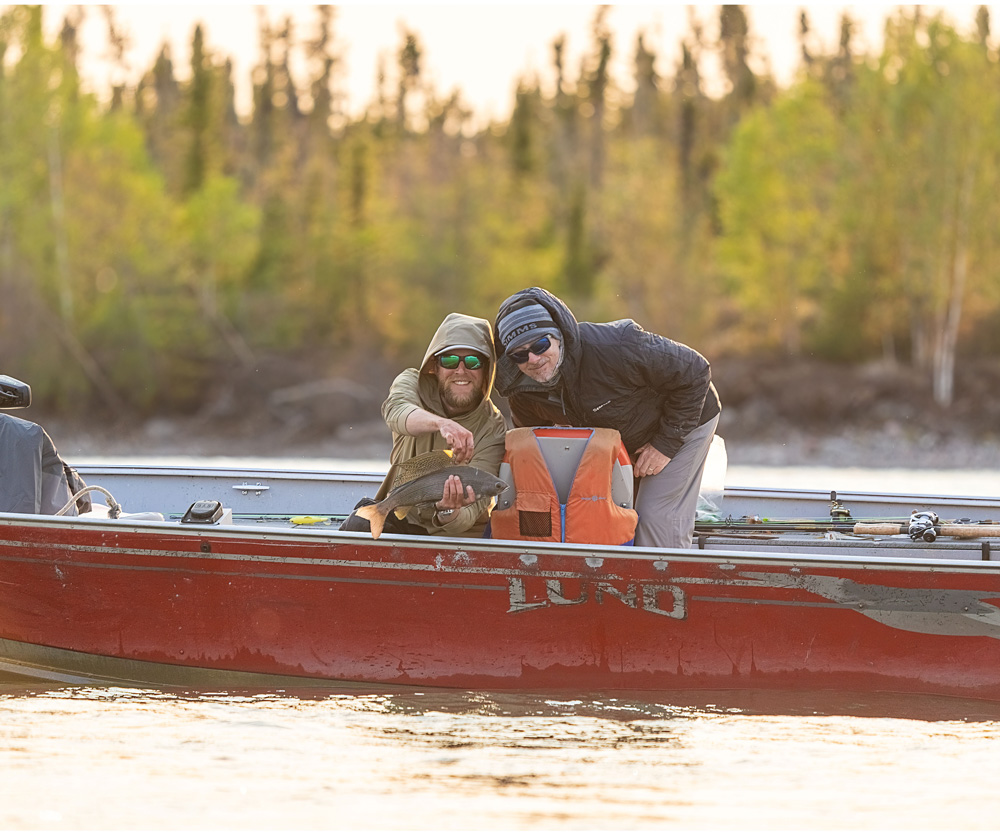
I’m not that guy. I’m not an obsessed angler in that regard. I’m more obsessed with just being out there, soaking it in, doing my best and hoping for a bite. But I don’t mean to diminish the drive or persistence it takes to get your name in the record book, of which there are basically two avenues an angler can take. You can go it alone — rig your gear, do your research, study the tides and moon phases, pick your windows and put in the hours. In my opinion, that’s the most admirable route. The easier route, though a far cry from “easy,” and quite expensive when done to the extreme, is to hire a guide, a charter skipper or an outfitter who has done the homework and can lead you to potential world-record fish — with the ideal tackle — and do everything but hook the fish and reel it in.
Many record-seekers fish with a guide, and there’s no shame in that. And then there are anglers like Emily Hanzlik, a 20-year-old who caught her first record with her dad, Paul, when she was 12. Hanzlik lives on the westernmost stretches of West Palm Beach, Florida, where she walks miles of canals with a fishing rod. She’s cleaned out the bowfin, grass carp and snakehead records. She now holds 72 world records, and all but one of the fish were caught from land.
“It’s not about catching that monster marlin,” Hanzlik tells me. “This is about catching what is near you. I’ve never liked to brag about my fishing accomplishments because, to me, I’m just fishing.”
Records are more attainable than I thought.
When I was headed to the Northwest Territories of Canada last summer to fish with Peter Fox for northern pike at Brabant Lodge, I skimmed through the IGFA World Record Game Fishes book to see if there might be some potential to catch one. I asked Fox about it, and he knew exactly which records to target: the length records for pike on fly and Artic grayling on conventional. The pike fishing was gangbusters (see “Slaying Dragons” in the Fall 2024 issue). Fox and I both caught pike on fly, but his 18-pounder was a lifetime catch. It measured 110 cm (more than 43 inches) and claimed the world record. One evening after dinner, it was my turn.
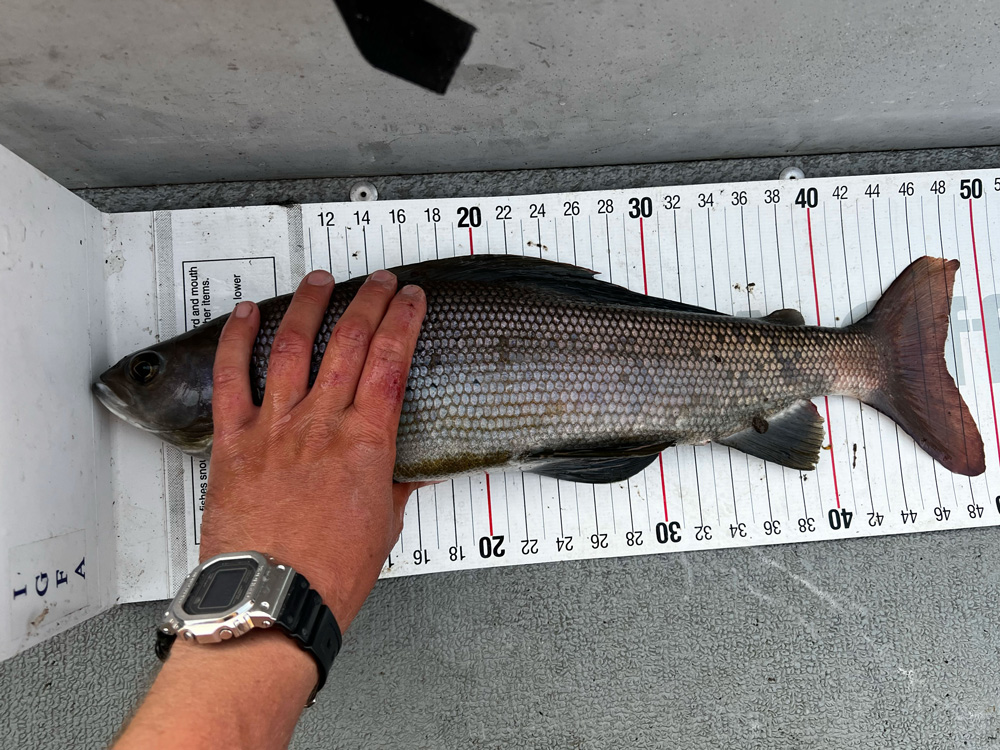
Fox took me to a quiet stretch of water on the backside of the island that houses the lodge. We drank beers and casually fished small crankbaits. The fishing was slow; I only caught one fish, a 47 cm (18½ inches) Arctic grayling. The tall dorsal was beautiful, but the fight was diminutive compared with a pike. I was surprised when Fox said it measured up as a new world record.
Fox was elated for me, but I felt undeserving. I was fishing on his boat, with his gear. I’d never even seen a grayling in the wild until this moment. He did the hard part. I turned the reel handle, but I can now say I’m part of a club that you can be a part of, too.