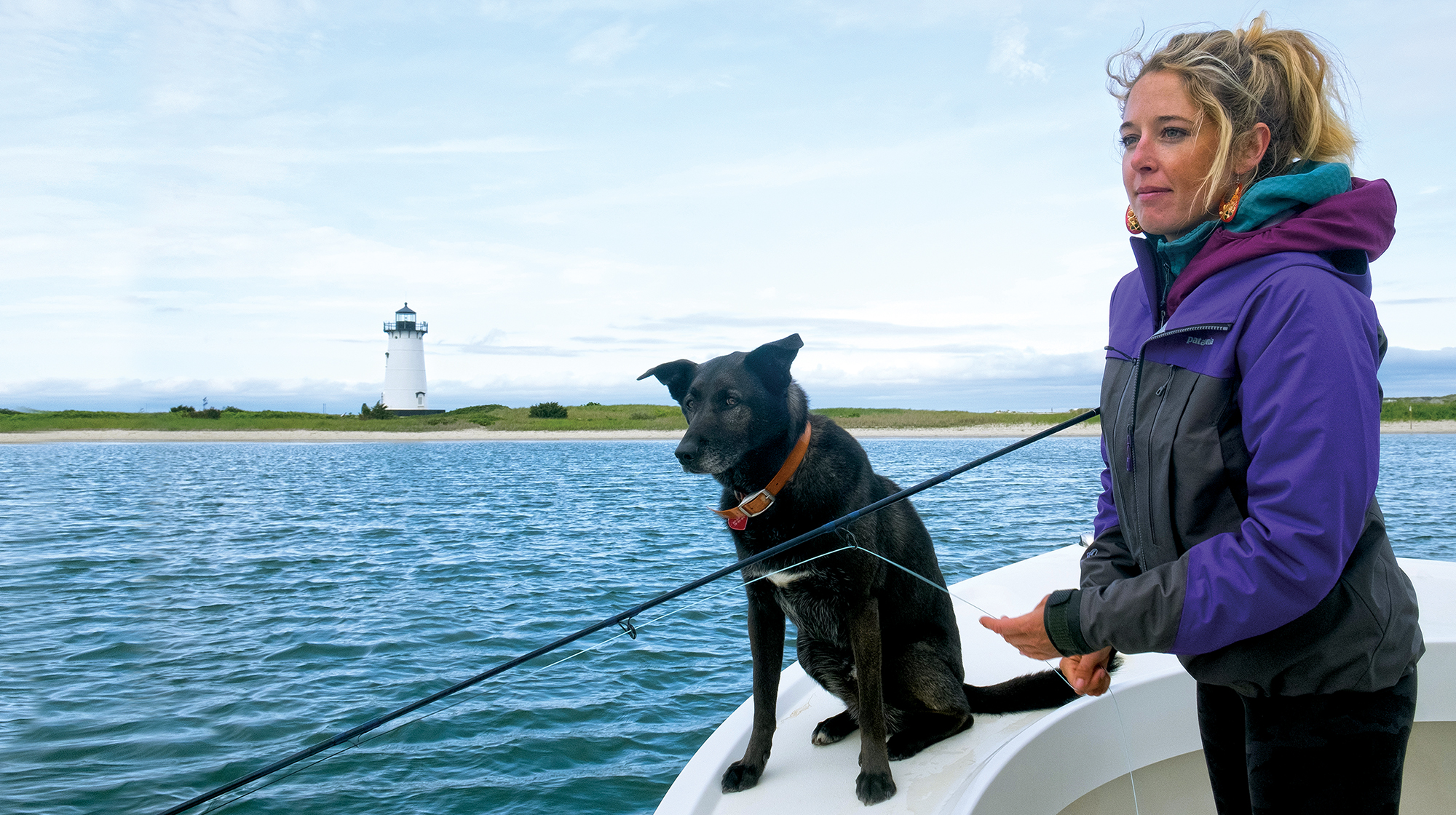
Capt. Bobby Rice is in his 25th season guiding out of his native Truro, Massachusetts, a fishy outpost at the northern end of Cape Cod, just below Provincetown. Rice has pioneered some of the most demanding light-tackle fishing on the planet chasing giant bluefin tuna. Alongside Capt. Dom Petrarca, Rice began focusing on bluefin tuna on light tackle roughly 15 years ago, around the time Shimano introduced the 20000 SW Stella spinning reel, a formidable foe for giant tuna, which he matches with Japanese-made Centaur rods.
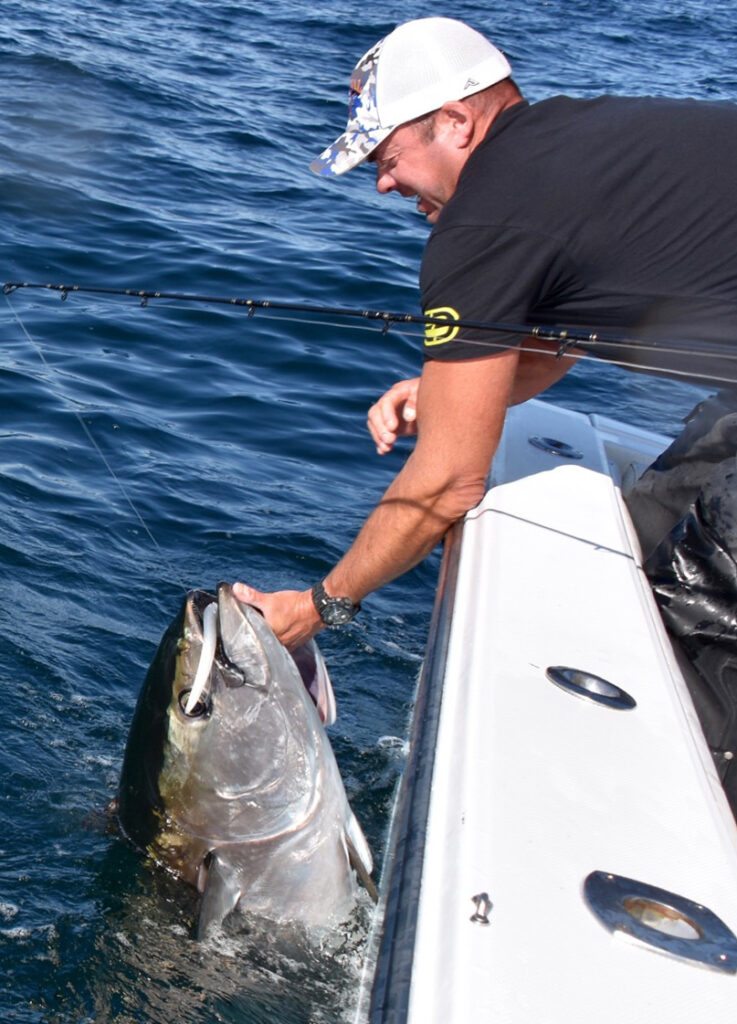
The two friends perfected this class of fishing and claimed unofficial record bluefin catches on spinning gear two days apart in 2014, Rice landing a 423-pounder and Petrarca landing a 597-pounder. Landing tuna of this size on spinning tackle was once unthinkable.
Another part of the equation is the tackle at the end of the line. Lure makers in the Northeast have fine-tuned halfbeak and sand eel designs so well that Rice has found them effective enough to “dead-stick,” letting the lures out to the desired depth, setting the rod in a holder, and letting the wave action and boat movement do the work.
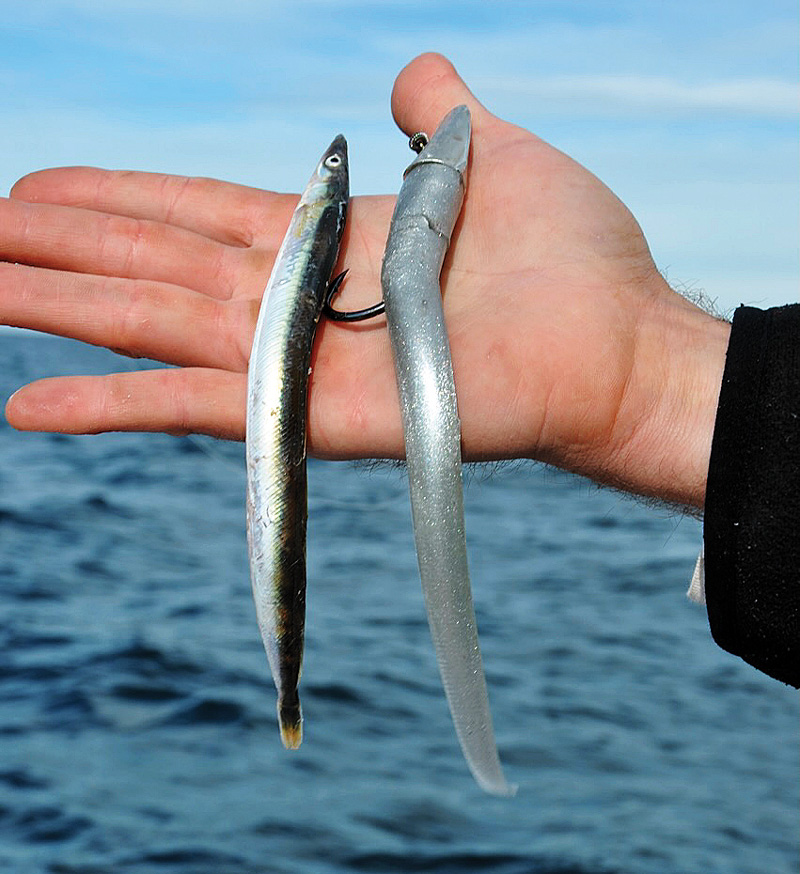
Rice fishes green and olive Hogy sand eels in 310 and 325 weights, and RonZ Big Game jig heads, particularly the heavier 50-gram models, which cast farther and sink faster. He likes a RonZ paired with silver or pearl sand eel tails (8- or 10-inch) to match the hatch. He also fishes Z-fin paddletails, which imitate whiting, in two-tone combinations of white, gold and silver. Rice attaches the lures to fluorocarbon leaders on 60- to 130-pound-test, which he stretches out and reties after every fish. It takes time to change out all those leaders, but risking a breakoff “just isn’t worth it,” he says. Anyone who’s spent time and money chasing large pelagics and had a tackle failure through their own fault will agree.
Rice prefers Cortland C16 Spliceable Hollow Core braid for spinning setups, ranging between 60-pound for topwater lures and smaller-class fish to 100-pound for jigging up giants. He splices, whips and glues 130-pound leaders to this line over as much backing as meticulous spooling will allow. Line capacity is key when chasing bluefin on spin. Even with a 20000-size reel you can still get spooled, which is why Rice buckles down the drag.
The bluefin bite around Cape Cod is predominantly a subsurface fishery, but there are points during the season, particularly in late June, when the topwater bite turns on. When fishing for surface bites, Rice likes a more castable 60-pound, hollow-core braid for his main line, and a Daiwa Saltiga Dorado Slider sinking slide bait, which fishes a bit like a pencil popper as opposed to the larger, louder, floating bottle plugs that many anglers use for tuna.
The last lure Rice keeps handy on bluefin outings, and the most timeless design of all, are Point Jude 260-gram Deep Force vertical jigs. These are deadly when fished right, but they require a shorter rod and a fast, rhythmic upward sweep that takes a little getting used to. This technique is the polar opposite of dead sticking. That said, a trifecta of slower-moving soft plastics, a topwater lure that matches the hatch and a heavy-metal vertical jig covers all your bases when chasing giant bluefin on artificials.
To book a trip with Capt. Bobby Rice visit fishreeldeal.com.