It’s mid-July, the muggy dog days of summer, and the breeze in our faces as we cruise at 25 knots feels wonderful. My buddy and I are headed for an island several miles off southern New England, which shall remain nameless. Seas are calm, resident stripers are settled in, and we’ve got all the time in the world.
We arrive shortly before dark and kill some time gauging the current and drift, making sure there are no prying eyes on us. The fish are spooky enough in the shallows on calm nights without having pilgrims blundering through with too much noise and too many lights.
My partners and I have put in enough time out here over the years to have figured out the summer bite. We are chasing bass on a Sunday night, when most weekend warriors have long since dragged their sunburned arses home. Avoid Saturdays if you can.
The tide and drifts should be good. The prevailing southwest breeze is light, and the tide is starting to ebb. There are two dozen eels chilling in a cooler. Leaders and knots are freshly tied, and the hooks are good to go.
This is our typical summer drill. We drift a cast’s length or two from shore, tossing eels as tight as we can, and slowly working them back to the boat. We’re careful with our lights and the noises we make. A good night for two anglers who know the drill is eight to 12 fish, with two or three weighing between 15 and 25 pounds. A 30-plus-pounder is always possible. Some nights are very slow, but those are the exceptions.
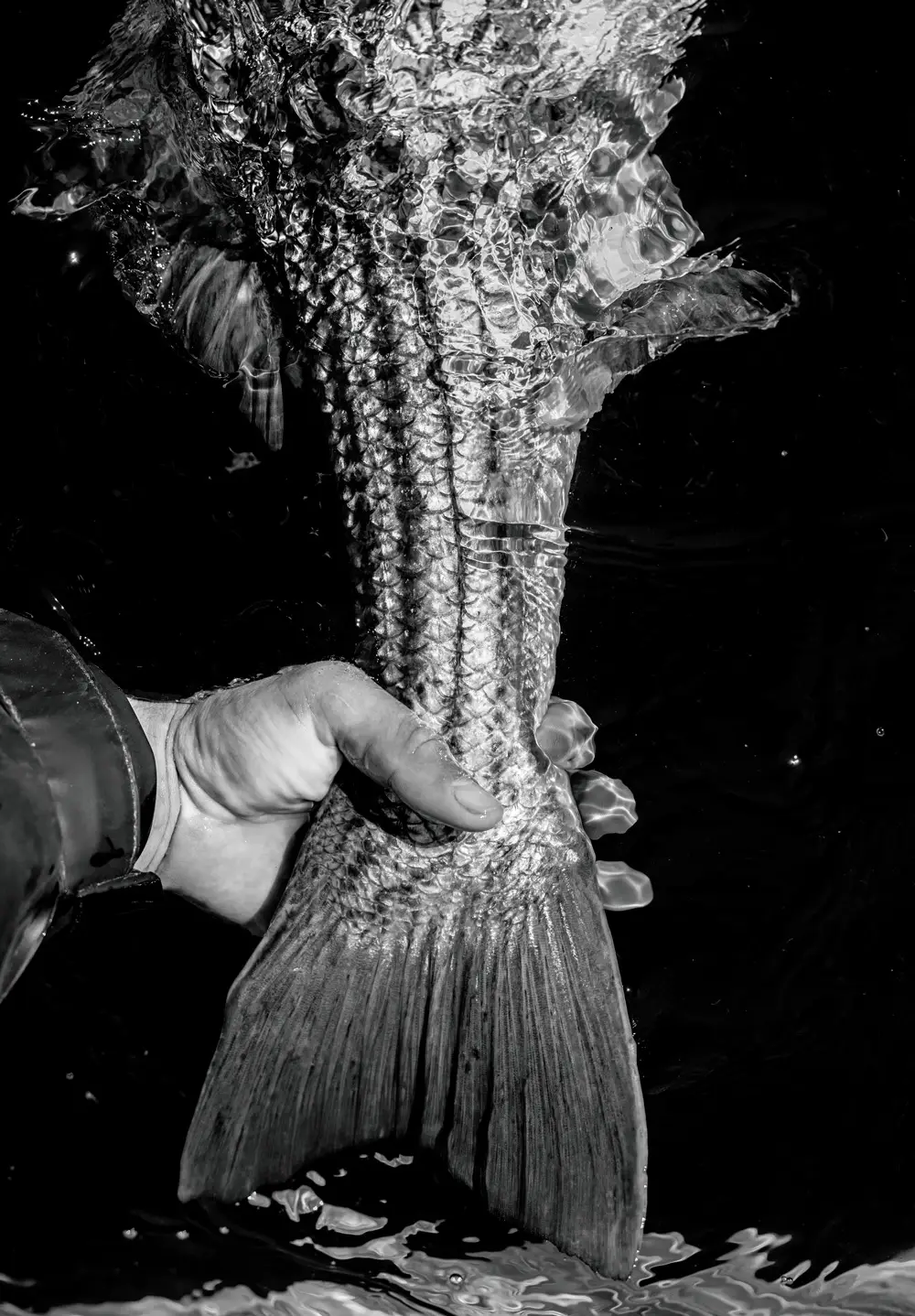
Tossing eels for big bass in the rocky shallows on spinning gear still revs my engine. A large fish is a handful when it races into the glacial rubble with a single circle hook in its jaw. Typically, it will pound the surface, then rip line as it streaks deeper into rough debris from the last ice age, shattering the stillness of a July evening in the best of ways.
To work a 40-pound striper out of her rocky hidey-hole takes a stiff rod, 50-pound braid and a 60-pound fluoro leader. I fish a tight drag and try my best to quickly get the fish out of the shallows and into deeper water. I use a stiff, 10½ foot rod for distance and pulling power; the length is also helpful in steering fish around rocks. And I carry the largest net I can find.
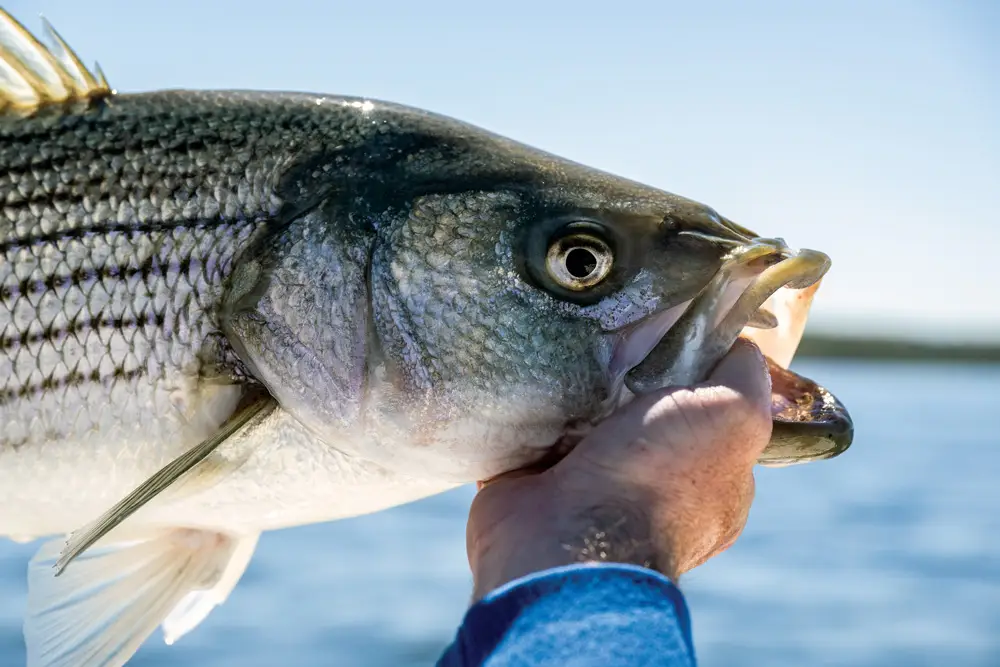
If the current is barreling past the shore on a moon tide, you need a partner who can adroitly and quietly bring the boat back up-current so you can fight the fish directly across from where she’s dug in. The rod is bent, the braid is tight as a garrote, and the adrenaline is flowing. It’s a great way to spend a summer evening.
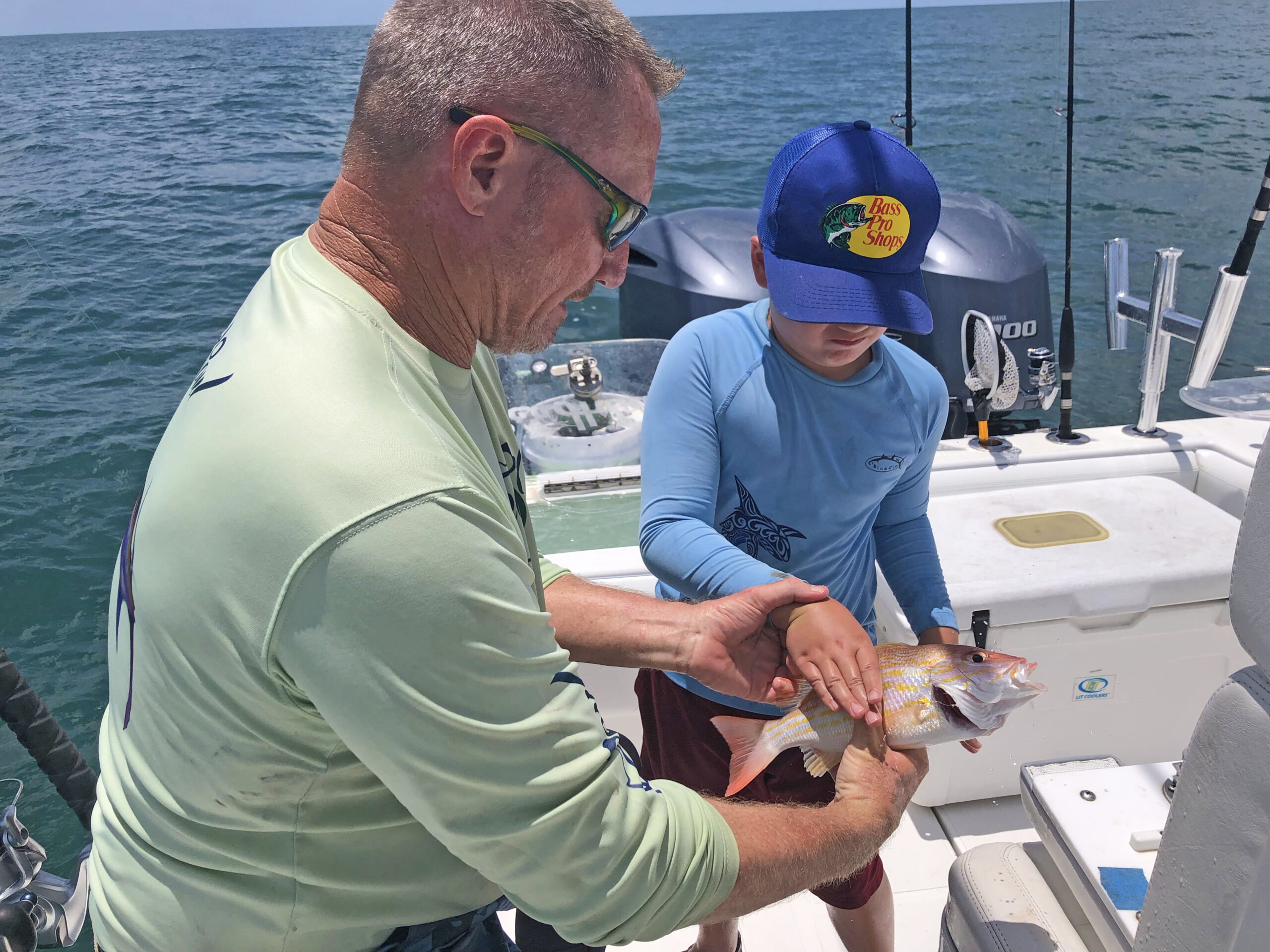
You also need to take the time to properly revive these fish boatside before releasing them. It’s the least we can do in exchange for the excitement they provide. And the spawning grounds can use all the females they can garner.
The fishing is more relaxed at midnight on calm summer nights with a sky full of stars or a slice of moon than in any other season. We fish in T-shirts, shorts and Crocs, sandals or ankle-high boat boots. I sometimes bring a radio and put on a Red Sox game for pleasant background chatter. If you’re a cigar buff, there’s no better time to light up. And I’ve watched some amazing fireworks set off from private, island homes while we happily caught bass drifting below the bluffs, unseen by the party-goers.
Summer is also a good time to take out casual anglers who want to hook a striper or two but probably aren’t the ones who would fish with you on a gusty October evening when spray is hitting you in the face and the fishing is all business. If they’re game for night fishing, take them during summer.
To get a better sense of summer striper tactics, I interviewed several captains who have years of experience and are well-versed in the ways of warm-weather stripers. They mostly fish deep over structure with artificials or live bait and side-scanning sonar.
Mike Roy
Capt. Mike Roy, who runs Reel Cast Charters out of Old Saybrook, Connecticut, enjoys the summer bite. “The summer is probably my favorite time,” says Roy, who is 40 and has been chartering for 15 years. “Summer is more live bait, fewer lures. It’s more structure-oriented fishing, and I like that.”
Summer is not the best time for artificials, unless you’re trolling wire or drifting bucktails on three-way rigs in fast, deep water, such as the tidal passage known as The Race in eastern Long Island Sound. “To get bit on lures, you need current, a rip line, and you need bait in the area,” Roy says. And topwater action, if it exists at all, is mostly limited to first or last light, he notes. “In summer they’re not chasing bait so much. They’re on structure.”
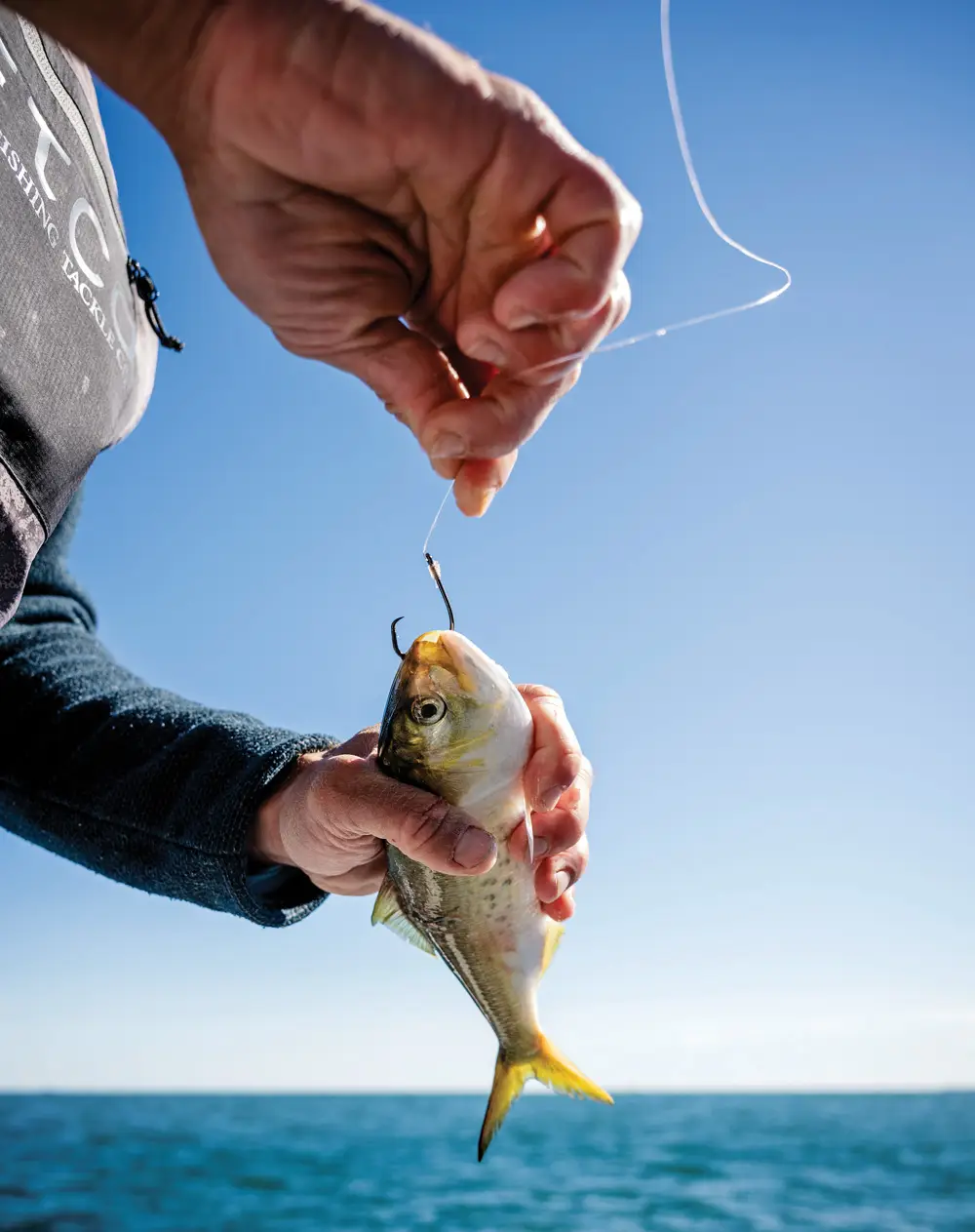
Roy fishes from a 27-foot Conch and also owns a 23-foot Pathfinder that his partner charters. He often fishes live bunker or eels. For anglers who want to improve their summer catches, Roy also recommends slinging eels. “At night, you could try casting eels,” he says. “The bass move tight into shore, into the boulder fields.”
A common theme among the captains I spoke with was using electronics and local knowledge more skillfully to find fish when they’re not showing and birds aren’t working, which is typical for summer. Roy addressed strategies for how long to stay in one spot. “Some guys just sit in the same spot for five hours,” says Roy, who calls it overcommitting. He also says younger anglers sometimes appear “too antsy. They keep going from spot to spot.”
Both strategies are flawed. Roy says if he’s on a spot that typically holds fish but he’s not marking anything, he’ll fish it for about 15 minutes, then move. In that time, he’ll work the surface, midwater and close to the bottom. “Make sure you cover the entire water column,” he says. “Sometimes you have to change your presentation.”
If he’s fishing a section of reef that isn’t producing, he’ll move to another spot on the same reef. Small moves, he advises, are often more beneficial than large ones. After you take a few fish off a spot, it’s not unusual for the fish to slide laterally, or move up- or down-tide as the current changes. “Sometimes the fish just naturally move,” he says.
Savio Mizzi
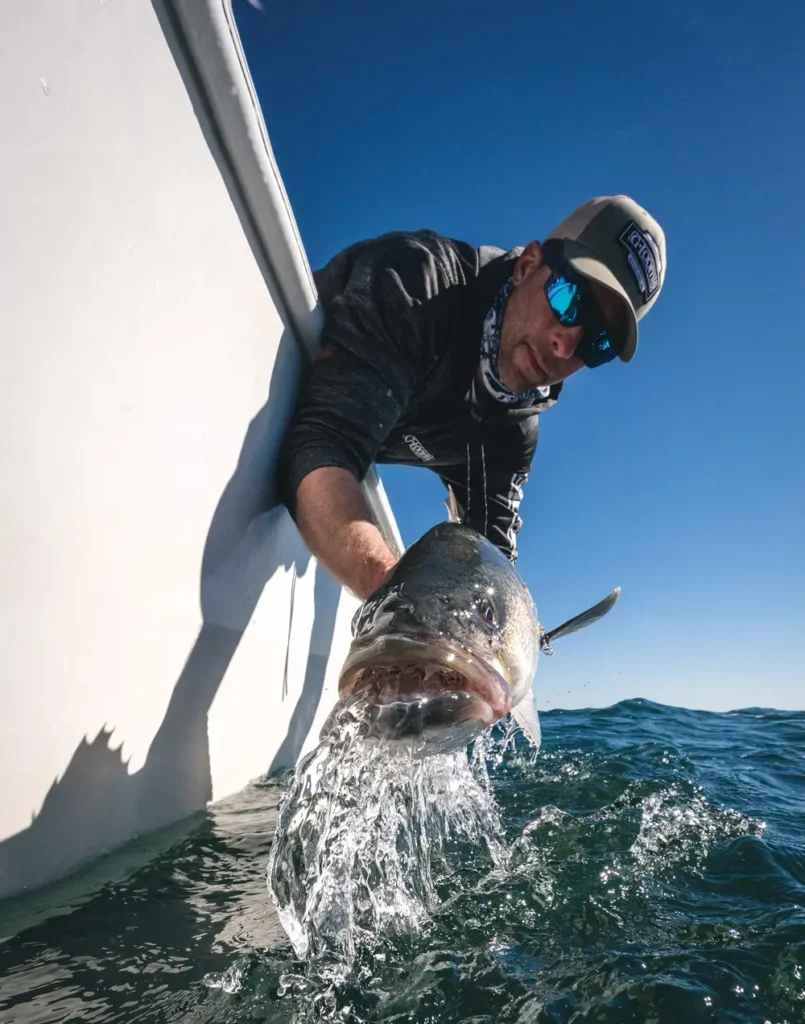
While live bait is a summer staple in the Northeast, charter skipper Savio Mizzi knows there is more than one way to fool a large fish in July or August. “I fish bucktails,” says Mizzi, who is 69 and runs Fishooker Light Tackle Charters out of Montauk, New York. “I’ll outfish guys with eels 10 to one.”
Mizzi’s specialty is drifting light, homemade bucktails (1-1½ ounces) in 20 to 50 feet of water on light line, using 10- to- 15-pound braid or 20-pound mono tops. He uses a loop knot for connecting bucktail to leader, with a minimum of 50-pound test. “Bass aren’t leader shy,” says Mizzi, who runs a 23-foot Parker. And color, he notes, doesn’t matter either. “It’s the action of the lure. No two of my bucktails are the same.”
Mizzi also ties hackle feathers amid the bucktail to give his jigs a more enticing action. He fishes within five feet of the bottom, which is where bass lay in summer. “Bass are lazy and opportunistic,” Mizzi says. “Summer is tougher. It’s a challenge. You have to fish early morning or late afternoon, but you don’t know. Fish will fool you.”
He works rips where the current is 2 knots or less. “A knot and a half is perfect,” the veteran skipper says. Mizzi drifts his bucktails; he doesn’t jig them vertically. “I don’t fish up and down,” he says.
Mizzi’s bucktail technique is as much a specialty as trolling wire, fishing eels in the shallows or sight-fishing stripers on summer flats with a fly rod. They take time to master. And the hit? “It’s all feel,” says Mizzi, who works a bucktail a little faster in summer. “That’s all it is. Nothing else.” Keep your line tight, he advises, and you’ll be able to feel a bass “breathing on it.” A zen stage of bucktailing.
Stephen Rhodes
“Summer is for those guys who really have a desire to catch a big striped bass,” says Stephen Rhodes, 55, of Morristown, New Jersey. “That’s when you have your shot for a bigger fish.”
A technology consultant, Rhodes fishes from a 35-foot Henriques, and his specialty is trolling homemade bunker spoons, which he learned to fabricate and fish from his late father. During summer, he plumbs the bottom third of the water column. Rhodes, who is not a charter captain, targets large, resident fish with either his spoons or live bait, primarily scup (porgies) after removing their spiked dorsal fin.
“What we look for is deep, clean, cool water that supports big fish,” says Rhodes, who cited research suggesting that dirty water irritates the gills of big bass. “We troll spoons deep or fish live bait. We live-line scup deep.”
He fishes Shrewsbury Rocks and sometimes inshore of the three-mile federal exclusive economic zone, which is off limits for striper anglers. Rhodes recommends known big-bass spots such as Montauk, Southwest Ledge off Block Island, and Fisher’s Island, New York.
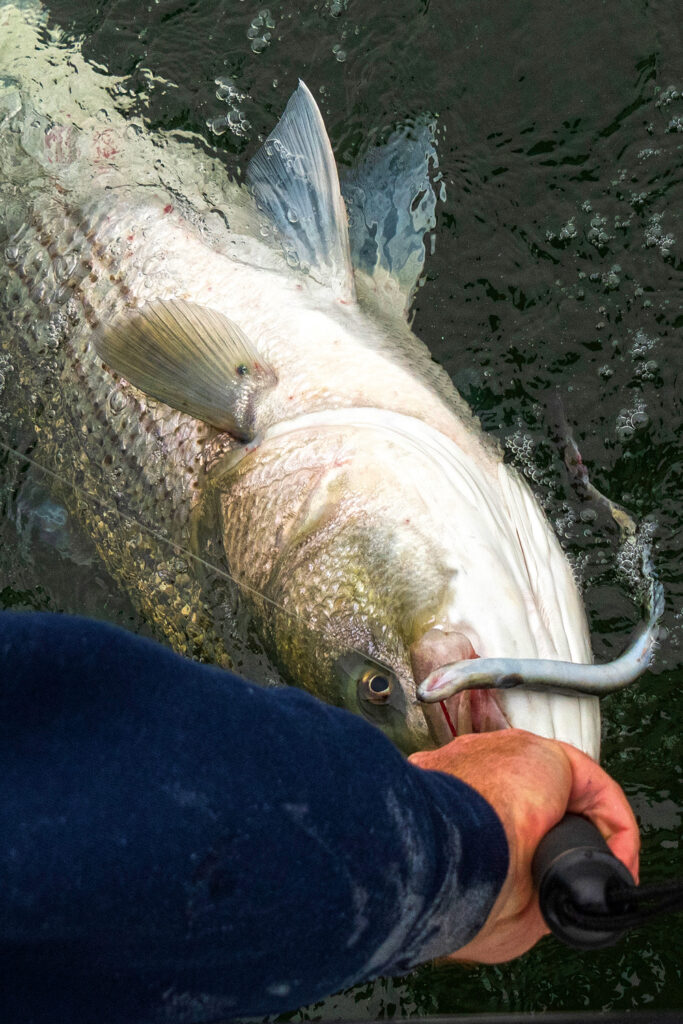
Fishing deep effectively may require learning new techniques and refining them for your area. You’re not likely to tomahawk stripers on wire and bunker spoons the way Rhodes is apt to. “I’ve been trolling wire line for 50 years,” he says and bunker spoons continue to take their share of large bass.
About four years ago, Rhodes landed two stripers off Shrewsbury Rocks that weighed 57 and 62 pounds on a spoon designed and built by his father. His son John caught a 50-incher that same day. “You can’t replace time on the water,” says Rhodes, who is constantly tinkering with the spoons he and his son make in his basement. “More time on the water means more fish.”
When you’re hunting stripers, Rhodes warns against losing your focus on bass and instead targeting black sea bass or fluke. “Don’t be tempted by the siren’s call,” he says. “The guys who fish for striped bass, that’s all they do — fish for striped bass.”
Erwin Heinrich
Capt. Erwin Heinrich runs the 32-foot Contender Scales N Tales out of Highland, New Jersey. A butcher by trade, Heinrich, who has been charter fishing for 19 years, considers himself an “artificial guy,” although he’s not beyond using an eel or live bunker when circumstances warrant.
Heinrich closes out this story because he’s the one skipper I interviewed who doesn’t target striped bass during the summer, instead focusing on fluke inshore, tuna and mahi offshore. For Heinrich, striper fishing is all about what comes next: the vaunted fall run, which is visually one of the most exciting times on the water, with stripers blowing up schools of bait and clouds of screeching gulls pointing the way.
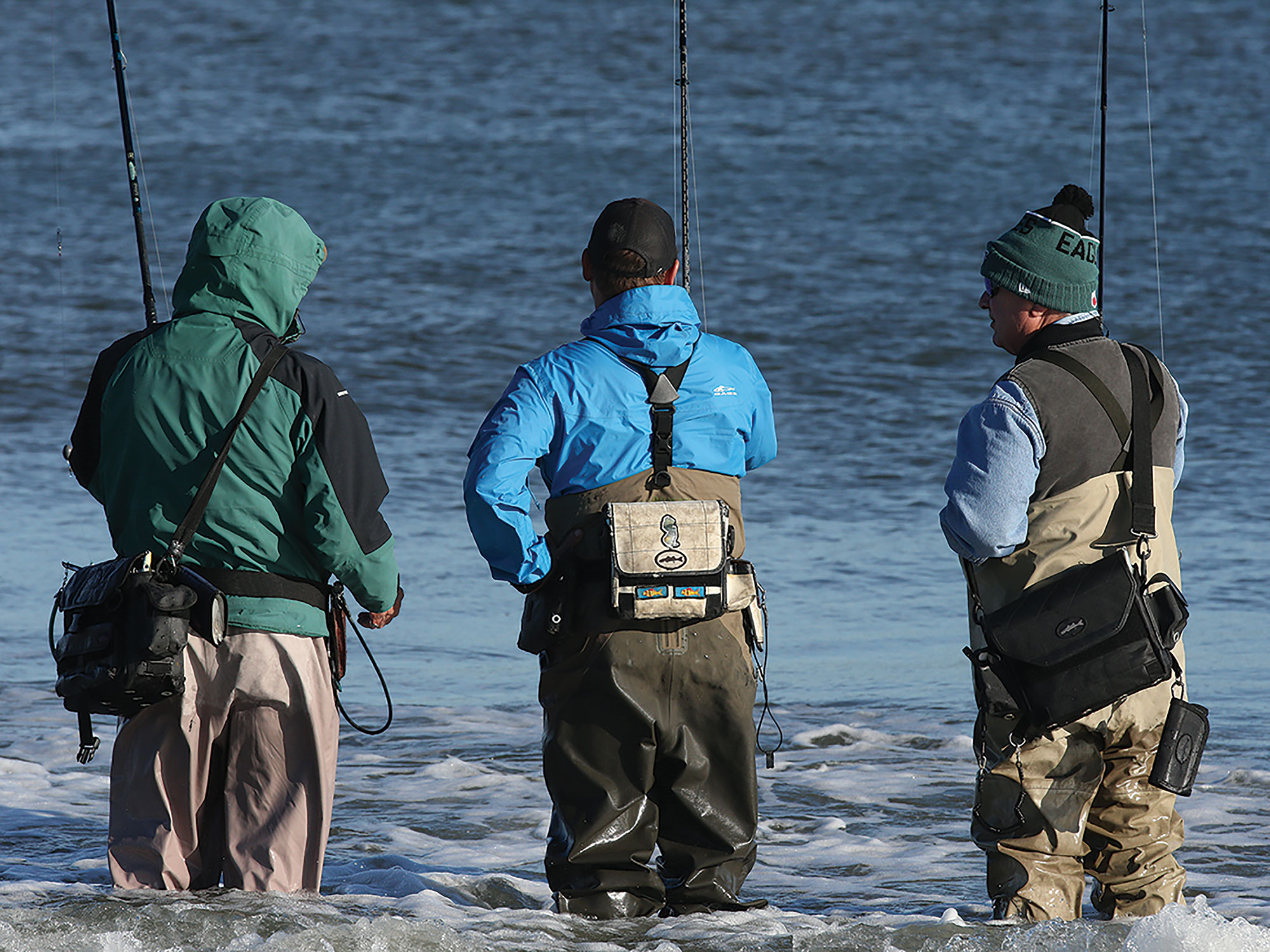
“Striped bass fishing isn’t T-shirt weather,” Heinrich says. “It’s a hoodie, a rain jacket and fingerless gloves. Striped bass means nasty-weather fishing. You have that chill in the air, the wind is blowing, and you have to get out there.”
For those of us who have trouble waiting, we happily fish summer stripers, too.